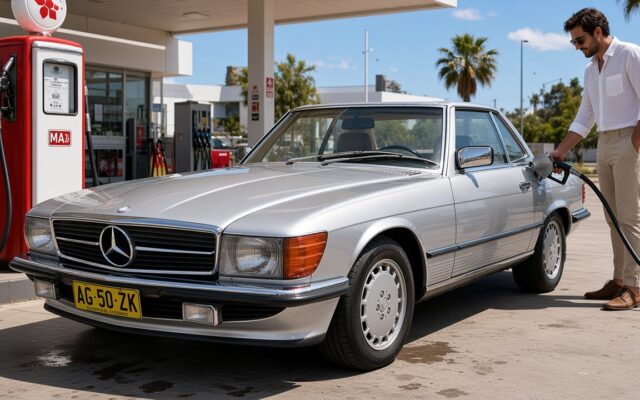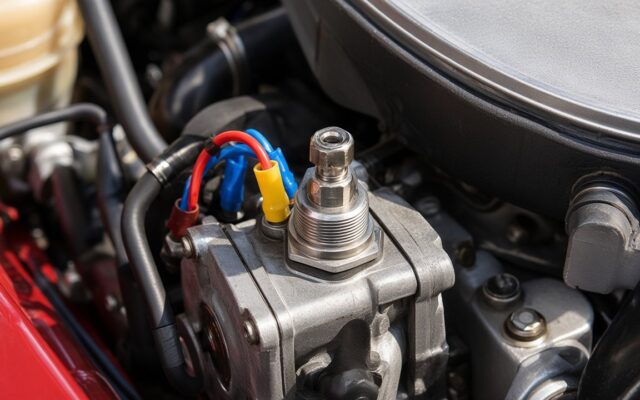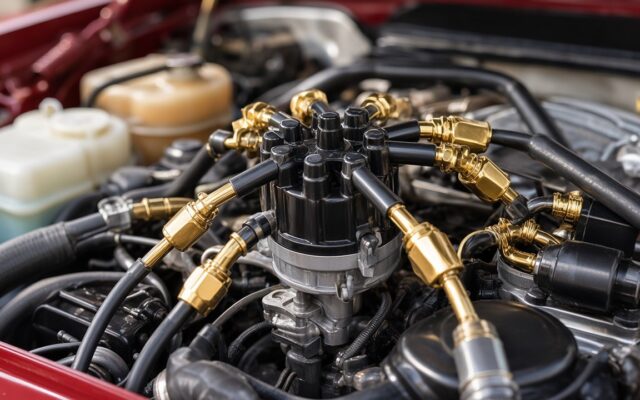
The US 560SL (1986–1989) does not run the same fuel injection as a 450SL or a 380SL. It uses Bosch KE-Jetronic, often called CIS-E, and it rewards owners who understand what the electronics add. This guide covers what the system is, how it differs from plain K-Jetronic, what each part does, the readings to expect, and the order I work through faults. If you have an earlier car, start with my K-Jetronic guide instead.
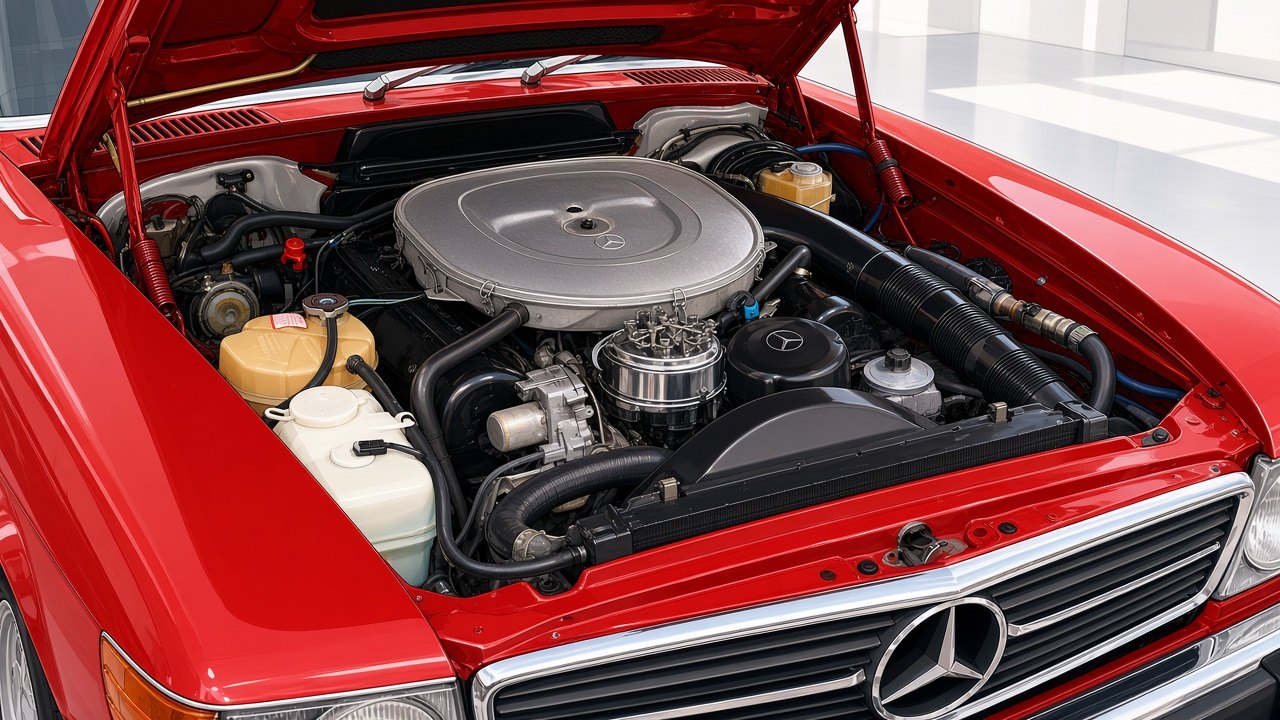
What KE-Jetronic is and which R107s have it
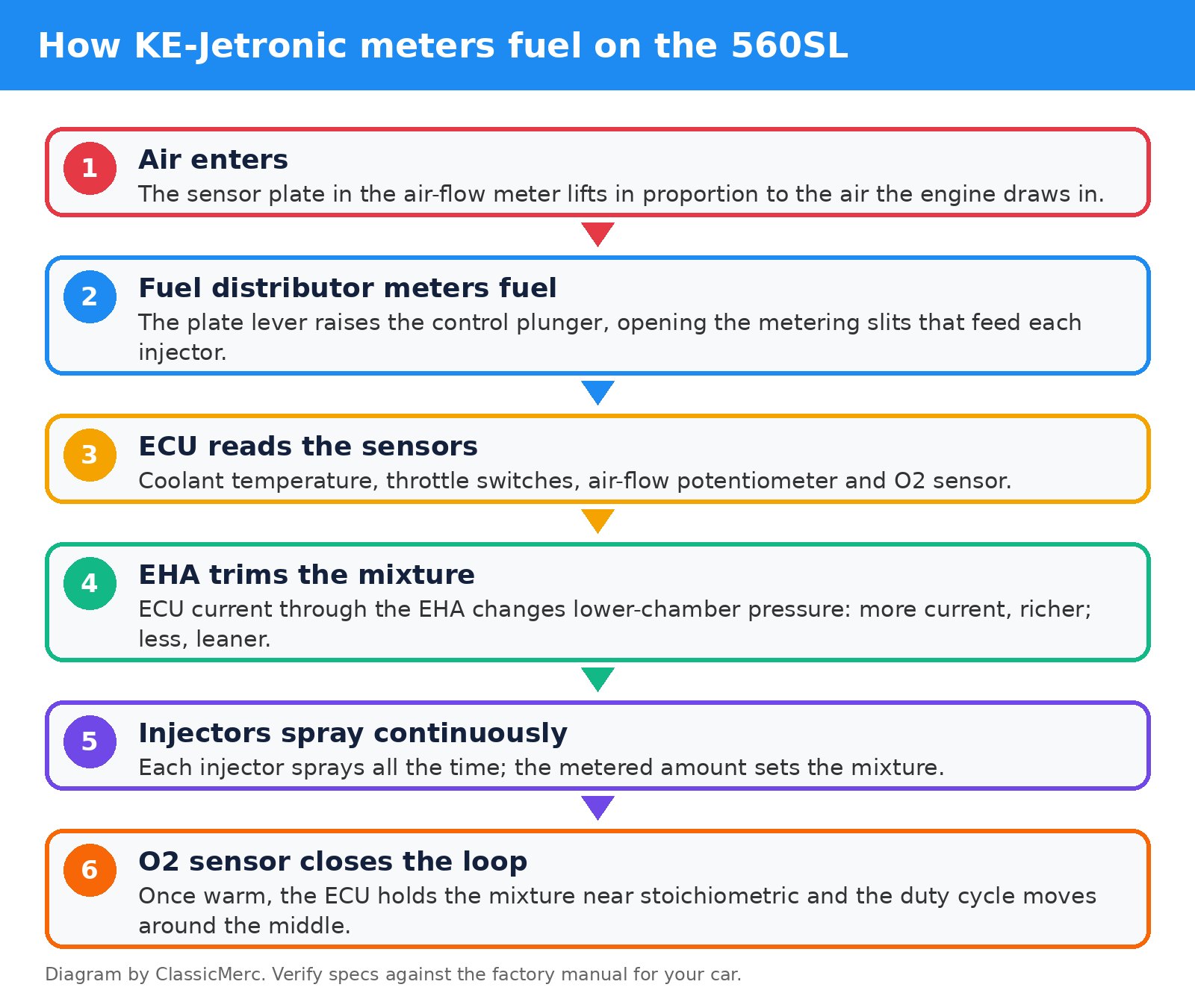
KE-Jetronic is continuous injection (CIS) with an electronic control layer. Fuel still sprays all the time from mechanical injectors, and the amount is still metered by a sensor plate that the incoming air lifts. The difference is that an electronic control unit trims the mixture continuously through an actuator on the side of the fuel distributor.
On the R107 you find it on:
- US-market 560SL, 1986–1989
- Late European cars: 300SL, 420SL and 500SL from about 1985/86 onward
Earlier US cars use K-Jetronic (450SL from 1976) or K-Jetronic with Lambda control (380SL). The very early 350SL/450SL used electronic D-Jetronic, which is a completely different system; see my D-Jetronic post.
How KE differs from K-Jetronic
| Function | K-Jetronic (450SL, 380SL) | KE-Jetronic (560SL) |
|---|---|---|
| Warm-up enrichment | Warm-up regulator changes control pressure | ECU drives the EHA on the fuel distributor |
| Mixture trim | Fixed (450SL) or frequency valve with O2 sensor (380SL) | EHA current from ECU, O2 sensor feedback |
| System pressure | Pressure-relief valve in the distributor | Separate diaphragm pressure regulator |
| Cold start | Cold start valve and thermo-time switch | Same, plus ECU enrichment |
| Idle speed | Auxiliary air valve or idle control valve | Idle control valve driven by its own unit |
In practice, the mechanical half fails the same way on both systems (pumps, accumulator, injectors, vacuum leaks). The electronic half adds a few sensors and a connector or two to check.
What the EHA, ECU, airflow potentiometer and O2 sensor do
- EHA (electro-hydraulic actuator): a small valve bolted to the side of the fuel distributor. The ECU sends it a current, and it changes the pressure difference in the distributor’s lower chambers, which makes the mixture richer or leaner. More detail in my EHA post.
- ECU (fuel injection control unit): reads coolant temperature, throttle position switches, airflow sensor plate position and the O2 sensor, then sets EHA current.
- Airflow potentiometer: mounted on the sensor plate housing. It tells the ECU how fast the plate is moving, which is how the system gives acceleration enrichment.
- O2 sensor: reads exhaust oxygen once warm so the ECU can hold the mixture close to stoichiometric. See my O2 sensor post.
- Coolant temperature sensor: the ECU uses it for warm-up enrichment. A bad one makes a warm car run rich or a cold car run lean.
Fuel pressures to expect
Pressures vary by model year and are listed in the factory manual, so treat these as ballpark figures and confirm against the book before you condemn a part:
- System pressure: roughly 5.3–5.5 bar (about 77–80 psi), set by the diaphragm regulator
- Lower chamber pressure: about 0.4 bar below system pressure at the EHA’s basic current, which is why the EHA has to be set before mixture is adjusted
- Rest (hold) pressure: should stay well above zero for many minutes after shutdown; a fast drop points at the accumulator, check valve in the pump, regulator, or a leaking injector or cold start valve
My fuel pressure test guide shows how to plumb a gauge in safely.
Common faults, in order of likelihood
- Vacuum leaks at intake boots, the air cleaner to sensor-plate boot and small hoses. KE corrects a little for these, and then runs out of range.
- Fuel delivery: weak pumps, clogged filter, tired accumulator. See fuel pump and fuel filter.
- Ignition faults that look like fuel faults: plugs, wires, cap and rotor.
- Coolant temperature sensor giving the wrong reading.
- EHA sticking or out of basic adjustment.
- O2 sensor lazy or dead, so the duty cycle never moves.
- Connectors and grounds: corroded pins at the ECU, EHA and airflow potentiometer.
- Overload protection relay on the 560SL, which feeds the ECU; see my OVP relay post.
- Injectors with poor spray patterns.
Tools needed
- A CIS fuel pressure gauge kit with the right banjo adapters
- A digital multimeter that reads milliamps and, ideally, duty cycle
- A vacuum gauge and a smoke tester, or at least a spray bottle of soapy water
- The factory manual or a reliable printout of the specs for your year
A basic CIS fuel pressure test kit and a multimeter with duty cycle cover most of the diagnosis.
When to call a CIS specialist
Call one when the basics check out (no vacuum leaks, good pressures, good ignition) and the car still runs badly, when you need a fuel distributor rebuilt, or when someone before you has turned every adjustment screw on the car. KE problems are usually simple, but an engine that has had its EHA, mixture screw and idle all moved at random needs a methodical baseline. A specialist with the right test box will set it in an hour.
Related reading
- K-Jetronic on the R107
- Lambda duty cycle test
- Mercedes 560SL guide
As an Amazon Associate I earn from qualifying purchases.