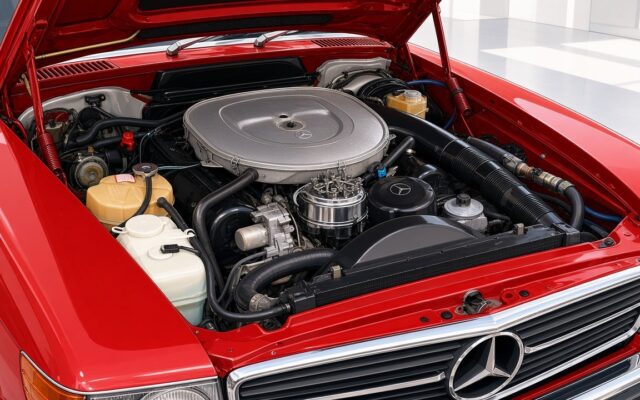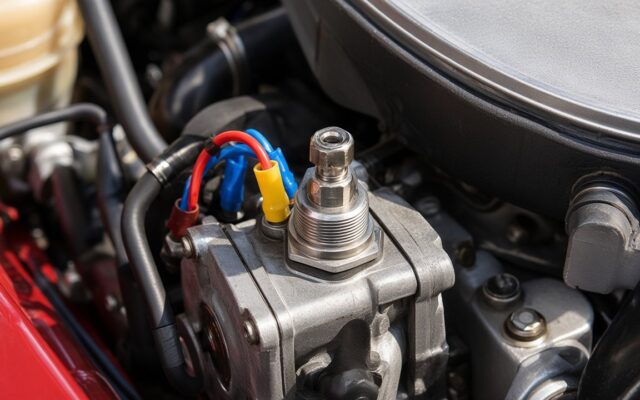
The EHA valve is the small electrically controlled block on the side of a 560SL’s fuel distributor. When a 560SL runs rich, lean, or hunts at idle, it is often blamed first. Sometimes it is guilty. Here is how to tell, test it, and adjust it properly.
What the EHA valve does
EHA stands for electro-hydraulic actuator. It is the part of the KE-Jetronic system that lets the control unit change the mixture. The ECU sends a small current through the EHA coil. That moves a plate inside, changing the pressure in the lower chambers of the fuel distributor. More current means more fuel; less current means less fuel. It does the job that the warm-up regulator did on older K-Jetronic cars, plus acceleration enrichment and closed-loop trim with the O2 sensor.
Symptoms of a bad EHA
- Rich running, black plugs or fuel smell, especially when warm
- Lean stumble or hesitation that clears as the engine warms
- Idle hunting that does not change when you fix vacuum leaks
- Duty cycle readings stuck at one value, or wildly off target
- Fuel weeping from the EHA’s seals or mounting face
The same symptoms come from vacuum leaks, a bad coolant temperature sensor, and a lazy O2 sensor, so test before you buy.
How to test it
- Coil resistance: unplug the EHA and measure across its two pins. The figure usually quoted is about 20 ohms. Open circuit or near zero means the coil has failed.
- Current: with a meter in series (milliamp range) using a breakout lead, check EHA current against the factory chart for cold start, warm idle and full throttle. Current should change as the engine warms and should rise briefly when you snap the throttle.
- Duty cycle: a warm engine with a healthy EHA and O2 sensor should show a duty cycle that moves around the middle of its range. See my duty cycle guide.
- Leaks: look for fuel at the EHA’s two O-rings and screws.
If resistance and current are right and the readings move, the EHA is probably fine and the fault is elsewhere.
Can it be adjusted, and how
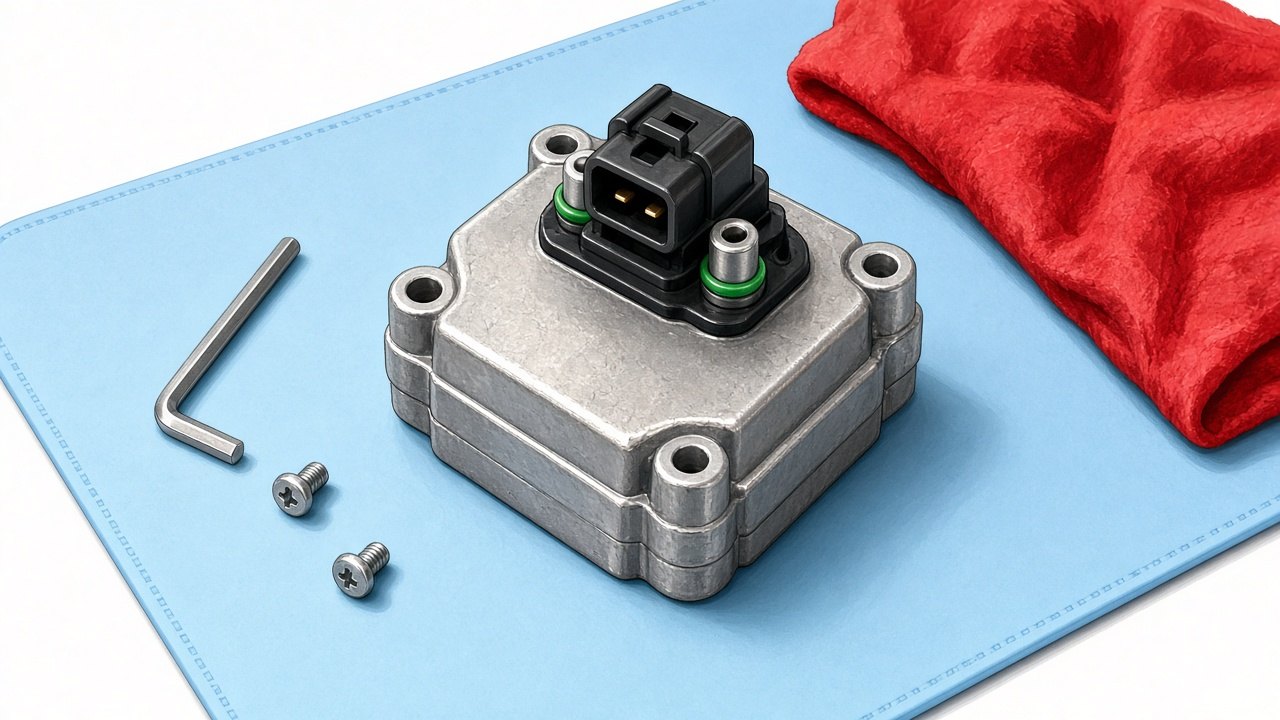
Yes. The EHA has a small adjustment screw under a cap, reached with a 2 mm hex key after the valve is removed from the distributor. Turning it changes the basic pressure difference.
- Clockwise generally enrichens; counter-clockwise leans.
- Move it in very small steps, about one-eighth of a turn, and recheck.
- It is a basic setting, not a mixture screw. If the basic setting is wrong, the mixture screw on the distributor cannot be set correctly.
Cover the valve with a rag when you remove it: it is under fuel pressure. Use new seals when you refit it. Never adjust it to cover a vacuum leak; the car will run worse as soon as the leak is fixed.
Rebuild vs replace
There are specialists who clean and recalibrate EHAs, and there are new and remanufactured units. Cleaning is worthwhile when the coil tests good but the valve sticks after years of varnished fuel. Replacement makes sense when the coil is open or the body leaks. Either way, set the basic adjustment afterward with proper test equipment.
Cost
Expect a rebuild or recalibration service in the low hundreds of dollars and a new unit to cost noticeably more; prices move, so get current quotes. The bigger cost is chasing the wrong part. Pay for a pressure and current test first if you do not own the gauges.
Related reading
- KE-Jetronic on the 560SL
- R107 fuel pressure test
- High or rough idle