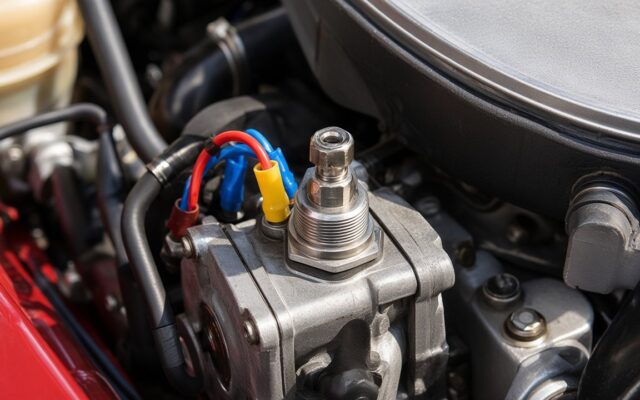
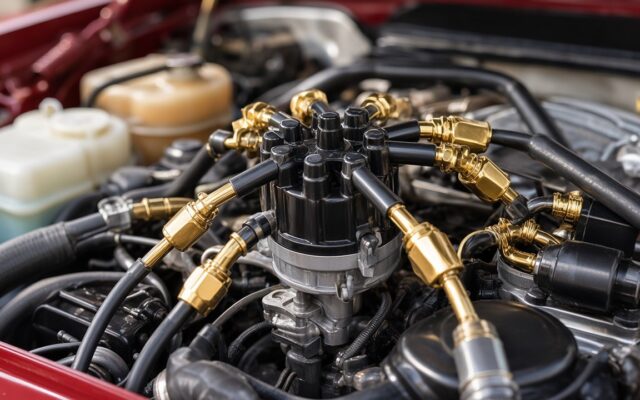
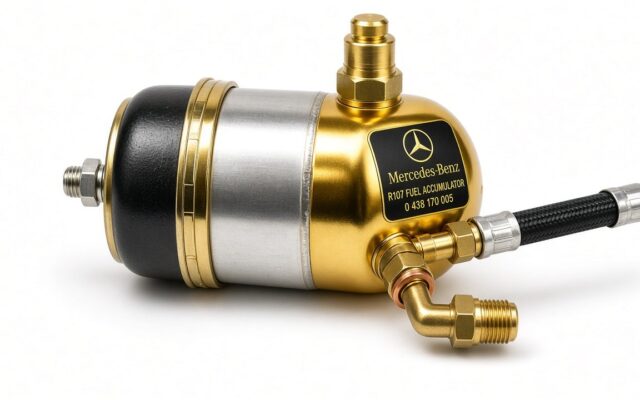
Fuel choice on an R107 is octane for the engine’s needs and honesty about ethanol’s effect on aged rubber and CIS components. Storage habits matter as much as the pump sticker.
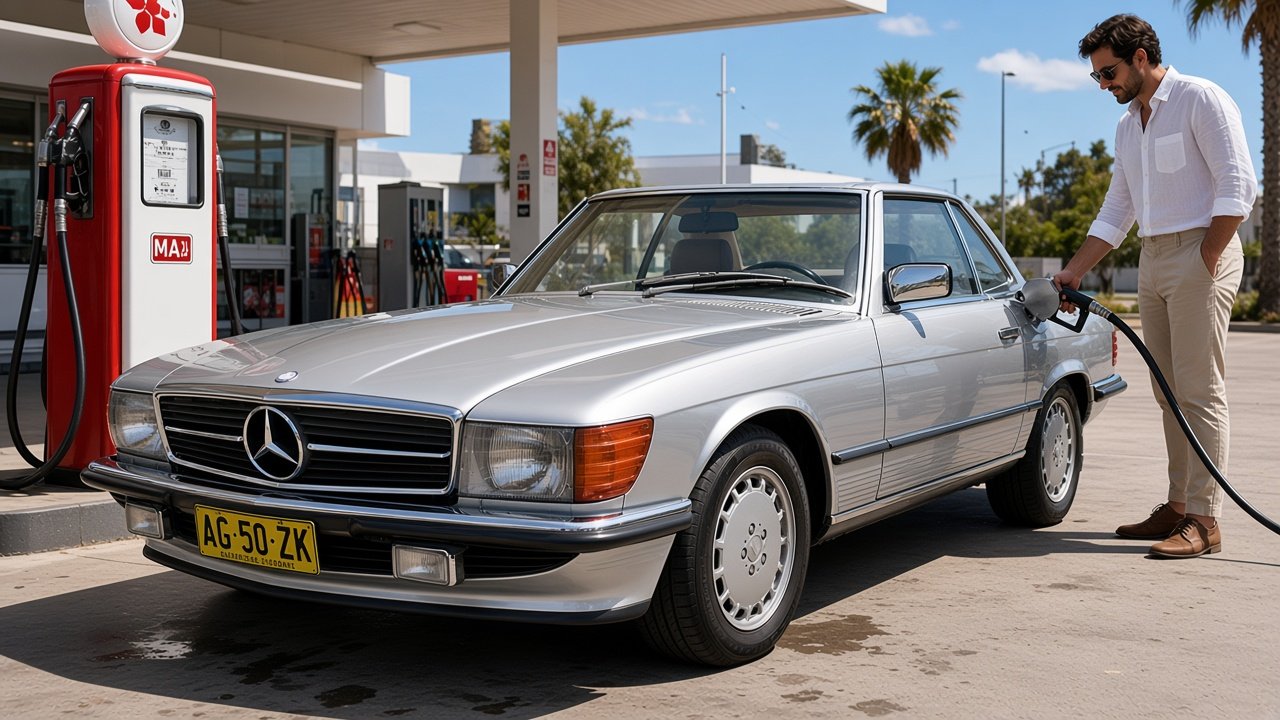
Related: K-Jetronic, storage.
Octane by model
Use the octane guidance appropriate to your engine and any knock you hear under load. Higher octane is not magic horsepower on an engine that does not need it; too-low octane under load is how you learn about detonation the hard way. Confirm against your manual or filler sticker.
Ethanol E10 effects
E10 is common and can dry or swell older rubber, aggravate varnish in sitting cars, and complicate long storage. Keep fuel fresh; inspect hoses and related plumbing; do not assume 1980s rubber loves modern pump blends.
Storage stabilizer
If the car will sit, a fuel stabilizer used as directed plus a sane fill strategy beats a half tank of winter-old fuel in spring. Fix leaks before storage so you are not marinating the garage.
Common mistakes
Skipping labeling before disconnects, trusting verbal history without invoices, forcing stuck fasteners until they snap, and treating a different-year forum photo as a parts catalog.
When to stop DIY
Stop when the lift, hoist, or specialty tool you need is missing — or when the first approach did not change the symptom. Paying for diagnosis once beats buying the wrong assembly twice.
Practical takeaway
Fresh correct-octane fuel and healthy hoses beat folklore additives as a lifestyle.
Cars that sit are easier on batteries with a Battery Tender Plus 12V maintainer — use the correct mode for your battery type.
As an Amazon Associate I earn from qualifying purchases.
Shop notes and paperwork
Keep invoices, part numbers, and dated photos before and after work. Future you — and any buyer — will ask what was actually done.
Safety
Use rated stands and hoists, relieve fuel/coolant pressure before opening systems, and disconnect the battery when the procedure calls for it. If a step needs a tool you do not own, rent it or hire it.
Verify against the factory manual for your engine and chassis. No invented personal car details here — use your plates, invoices, and measured symptoms.
Owner checklist before you start
- Confirm the exact chassis/engine so parts and torque specs match
- Stage tools, containers, and labels before the first bolt turns
- Plan a cold and hot verification after the work, not only a driveway idle
- Budget a contingency for seized fasteners and one missing specialty clip
If this topic intersects fuel, rust, or safety systems, fix leak and safety paths before cosmetic items. That order saves money twice.