As an Amazon Associate I earn from qualifying purchases. See the Affiliate Disclosure.
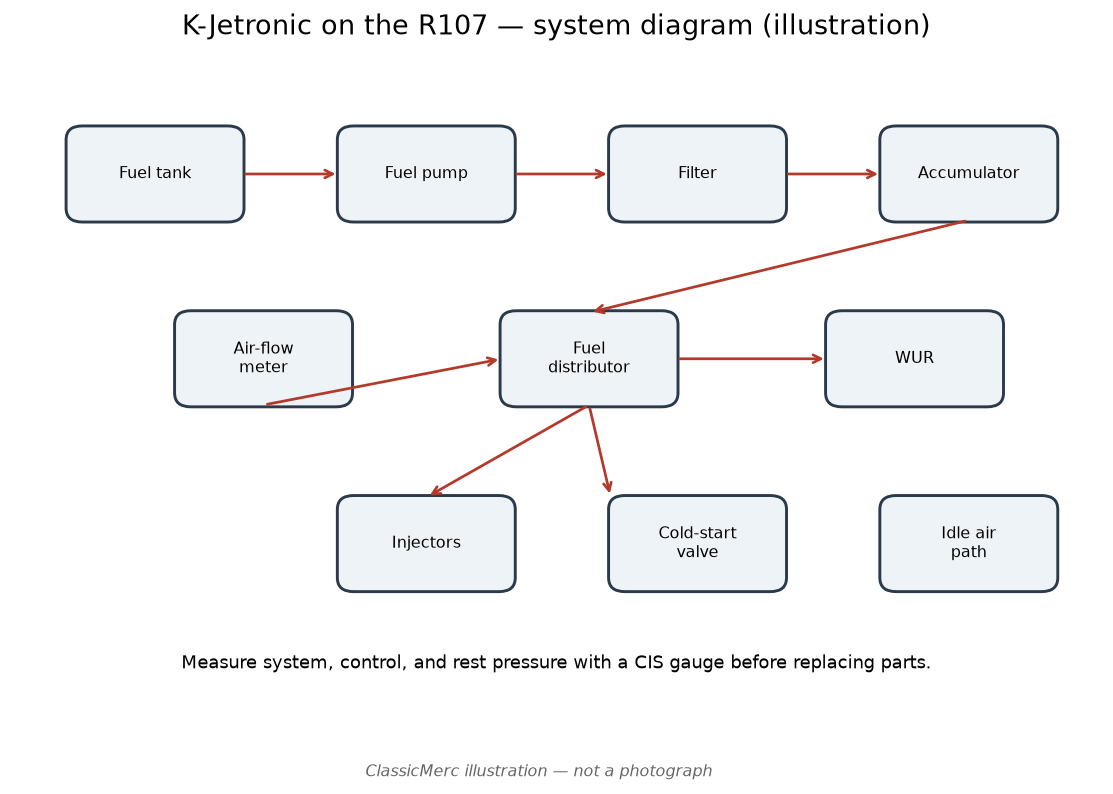
Most R107 V8s use Bosch continuous injection — K-Jetronic on earlier cars, KE-Jetronic on later ones like the US 560SL. When people say the car is “carbureted,” they are wrong; when they throw parts at a hot-start problem without a pressure gauge, they are also wrong. This pillar explains the system pieces, the pressures that matter, and how I diagnose faults.
Symptom guides: hot start, fuel pump, idle.
The big idea
K-Jetronic meters fuel continuously based on airflow. Air lifts a sensor plate in the air-flow meter; that movement controls a plunger in the fuel distributor, which sends fuel to the injectors. There is no pulsed injector computer like a modern EFI system (KE adds electronic control on top of the basic hydraulic idea).
Parts you need to know
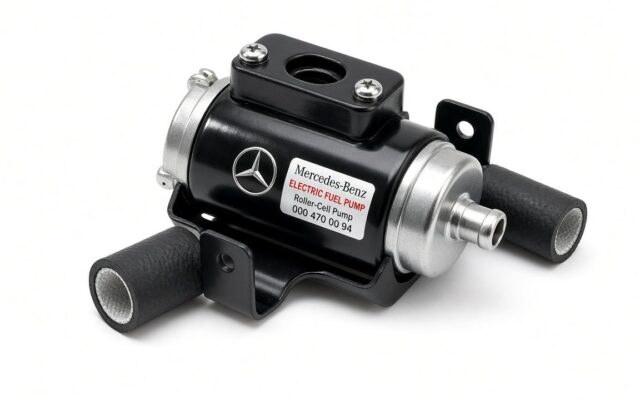
- Fuel pump(s): push fuel from the tank; some late cars use dual pumps
- Fuel accumulator: holds residual pressure after shutdown for hot starts
- Fuel filter: cheap insurance; clogged filters mimic pump failure
- Fuel distributor: heart of metering; o-rings and wear matter
- Warm-up regulator (WUR): controls control pressure during warm-up
- Cold-start valve + thermo-time switch: extra fuel when cold
- Injectors: continuously spray; leaks upset idle and hot starts
- Idle control: idle air / idle control valve arrangements by year
Pressures (system, control, rest)
Shop manuals list specifications by engine. Conceptually you care about:
- System (line) pressure: what the pump/regulator side supplies
- Control pressure: what the WUR sets — cold vs warm values differ
- Rest pressure: what remains after shutdown — if it bleeds down fast, hot starts suffer
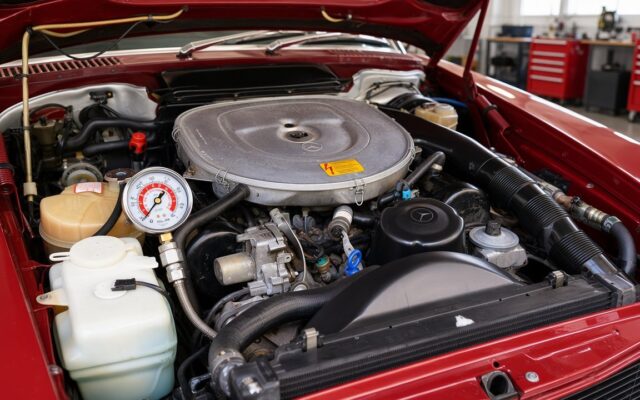
Buy or borrow a proper kit such as a CIS / K-Jetronic fuel pressure tester — guessing is expensive. Guessing is expensive.
Gauge test outline
- Safe fuel-system practices — no sparks, relieve pressure correctly
- Measure system pressure at the specified tee point
- Measure control pressure cold and warm
- Shut down and watch rest pressure over several minutes
- Compare to the chart for your engine code — not a random Facebook number
Common faults
- Bad accumulator or check valve → hard hot starts
- Tired WUR → cold driveability issues or incorrect control pressure
- Leaky cold-start valve → rich running / hard hot start
- Dirty sensor plate / air leaks → odd mixtures and idle
- Weak pump or clogged filter → low system pressure
- Fuel distributor o-ring leaks → smell, soft performance
CO adjustment
Mixture screws exist for setup after repairs — they are not a substitute for fixing a leaking injector. Set CO with a meter to the spec for your market and catalyst setup. Emissions-legal areas may restrict fiddling; know your local rules.
K-Jet vs KE-Jet vs older D-Jet
Early Mercedes used D-Jetronic on some engines before the R107’s main US V8 life. R107 owners mostly meet K and KE. KE adds an electro-hydraulic actuator (EHA) and electronic control for finer mixture — idle and fault diagnosis differ. Do not buy K-only parts for a KE car.
My diagnostic order
- Confirm spark and basic compression if it is a no-start
- Listen for pump prime; check relay/fuse/OVP
- Fuel filter age
- Pressure tests before replacing the distributor
- Smoke-test air side for vacuum/air leaks