As an Amazon Associate I earn from qualifying purchases. See the Affiliate Disclosure.

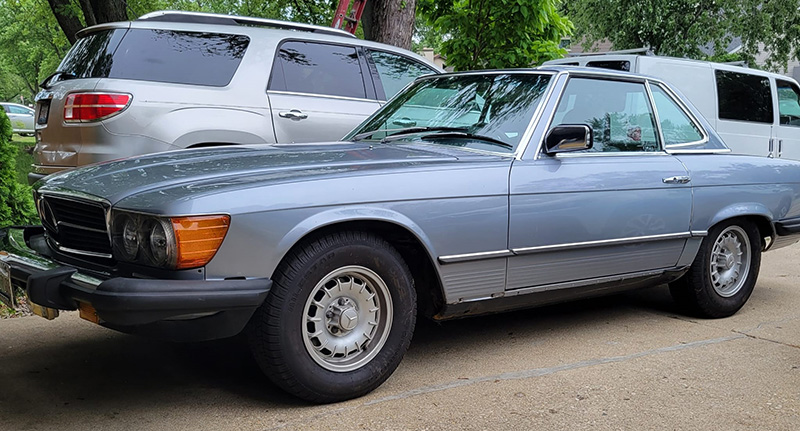
I do not daily-drive my R107 through Chicago salt season. Road salt and short freezing trips are a fast way to feed rust and load the interior with moisture. This is the storage checklist I use when the car goes down for winter.
When I put it away
After the last clean fall drive — once overnight lows and road brine show up regularly — the car goes into storage mode. If you must drive in winter, wash the underbody often and accept the rust risk; that is a different article.
Fuel
I store with a mostly full tank to limit condensation in the tank. If the car will sit for months, I use a fuel stabilizer suited to ethanol-blended pump gas and run the engine long enough to pull treated fuel through the lines and injection. Stale fuel plus old rubber is how winter storage becomes a spring no-start.
Oil and moisture
A fresh oil change before storage is ideal if you are due anyway — you park with clean oil instead of acidic used oil. I do not want a tank of condensation sitting in a crankcase all winter after a series of two-mile trips.
Battery
The battery lives on a quality tender / maintainer such as a Battery Tender Plus 12V maintainer, or it comes out to a tender on a workbench if the car is in a very cold unpowered space. R107 batteries sit in the trunk; check the tray for rust while you are there. Corroded trays are a common quiet failure.
Tires
Inflate to the upper end of the door-sticker range for storage. If the car sits for many months, rolling it a quarter turn periodically helps; dedicated storage stands are even better if you have them. Parking brake: I prefer chocks and leave the parking brake off so shoes are not stuck on in spring — especially in damp garages.
Mice and pests
Chicago garages are mouse country. I block obvious entry as best I can, keep poison/traps away from wiring the mouse can drag into the cabin, and never leave birdseed or pet food nearby. Nesting in the blower area is a special kind of spring horror.
Cover and moisture
A breathable indoor cover beats a plastic tarp that traps condensation. If the garage is damp, a small dehumidifier in the space helps more than a fancy cover. Soft-top cars: make sure the top is dry before covering.
Should you start it during storage?
Short starts that never fully warm the car make moisture. I prefer not to. If you do start it, warm it fully and consider a short drive — which means salt exposure. For true storage, leave it asleep on the tender.
Spring wake-up
- Inspect for nests and chewed wires
- Check fluids and tire pressures
- Look for new leaks under the car
- Brake performance carefully on the first drive
- Hot and cold start behavior before a highway trip
Ownership context: owning an R107 in Chicago.