As an Amazon Associate I earn from qualifying purchases.
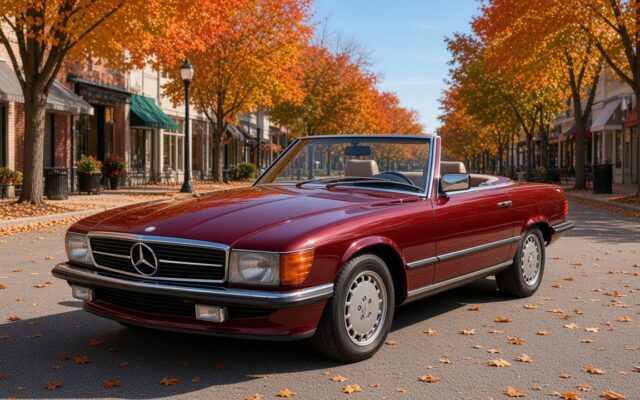
An R107 in good health is a superb long-distance car: comfortable, stable and relaxed at highway speeds. The trick is to find small problems at home rather than on the side of the highway. This is the checklist I would use before any long trip.
Two weeks before
- Service: change the engine oil and filter if they are near due. Check the transmission fluid, the differential oil, the power steering fluid and the brake fluid. See transmission fluid and differential.
- Cooling: check the coolant level and strength, the hoses, the radiator cap, the expansion tank, the fan clutch and the auxiliary fan. Overheating is the most common trip-ending fault. See coolant level.
- Belts: check every belt for cracks and tension. See belts.
- Brakes: pads, discs, hoses and a firm pedal. See brakes.
- Tires: check tread, age (the date code on the sidewall) and pressure, including the spare. Old tires are dangerous even with good tread.
- Electrical: battery test, charging voltage, all lights, wipers and horn.
- Test drive: at least an hour, including highway speed, to reveal issues while you still have time.
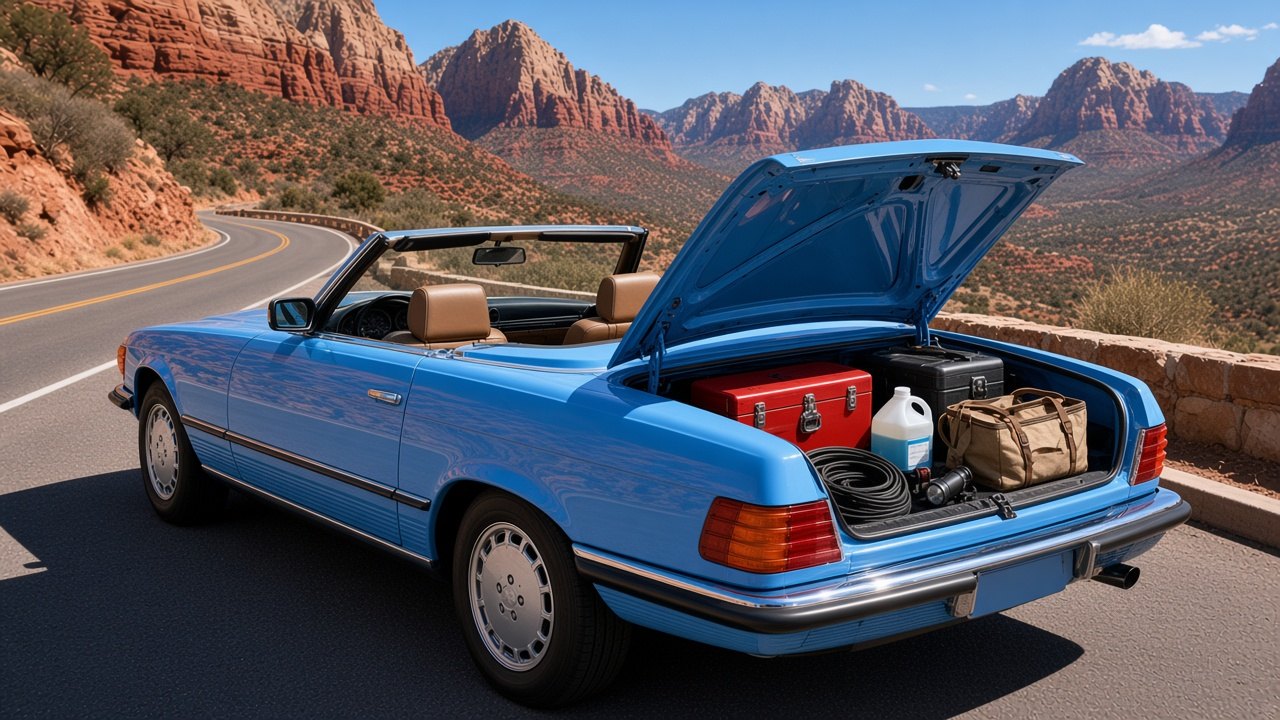
Spares kit
- Fan and accessory belts
- Fuses of each rating (the ceramic type)
- Fuel pump relay and overvoltage relay on fuel-injected cars; see OVP relay
- A few hose clamps and a short length of heater hose
- A quart or liter of engine oil and a gallon of premixed coolant
- Bulbs for headlights, brake lights and turn signals
- Electrical tape, zip ties and a little wire
Tools
- The factory tool kit, the jack and the lug wrench (check they are in the trunk)
- A basic socket and wrench set in metric sizes
- Screwdrivers, pliers and a multimeter
- A flashlight or headlamp
- Gloves, rags and a tire pressure gauge
- Jumper cables or a jump pack
Cooling on the road
In hot weather, watch the temperature gauge. If it climbs, turn off the A/C, turn the heater to full hot with the blower on high, and stop safely if it keeps rising. Never open a hot radiator cap.
Tires on the road
Check pressures every morning with the tires cold. Look at the tires at every fuel stop.
Roadside plan
- Roadside assistance that covers classic cars and flatbed towing; many classic insurance policies include it.
- Phone numbers of R107 specialists along your route.
- A copy of your registration and insurance.
- The location of your spare key, ideally with a passenger.
Quick answers
- Can an R107 handle a long highway trip? Yes, if well maintained.
- What fails most often on trips? Cooling parts, belts, fuel pump relays and tires.
- Should I take the hardtop or soft top? It depends on the weather; the soft top gives the option of open driving.
- Is premium fuel needed? Use the fuel octane recommended in your owner’s manual.