
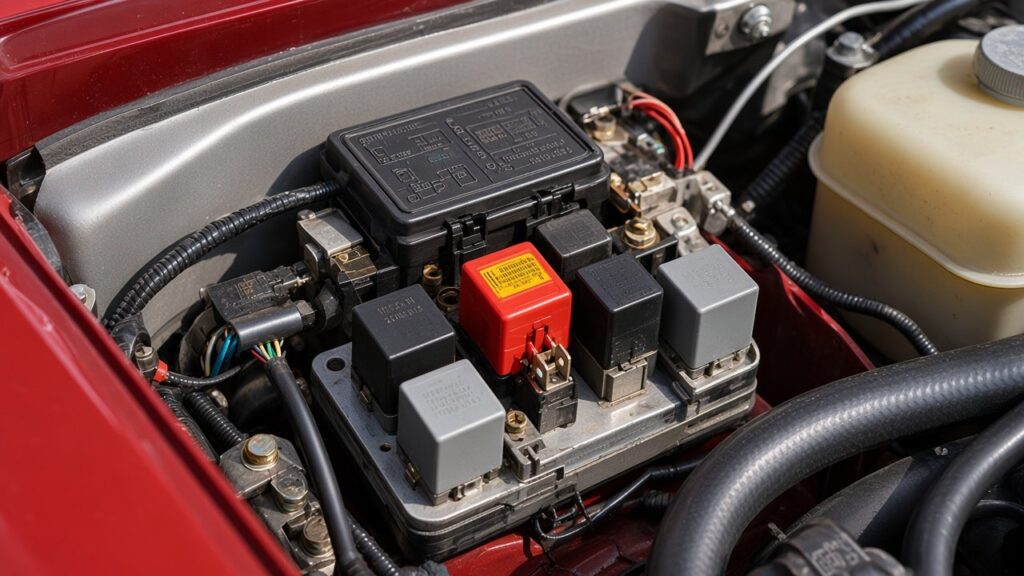
The Overload Protection (OVP) relay is a small cube that creates large mysteries: stalls, no-starts, dead idle control, ABS lamps. Check it before you buy expensive control units.
As an Amazon Associate I earn from qualifying purchases. See the Affiliate Disclosure.
Related: ABS light, won’t start, idle problems.
What the OVP does
It protects and feeds critical electronic circuits. When the relay or its fuse fails — sometimes intermittently with heat — systems drop out in combinations that feel random.
Location by year (mindset)
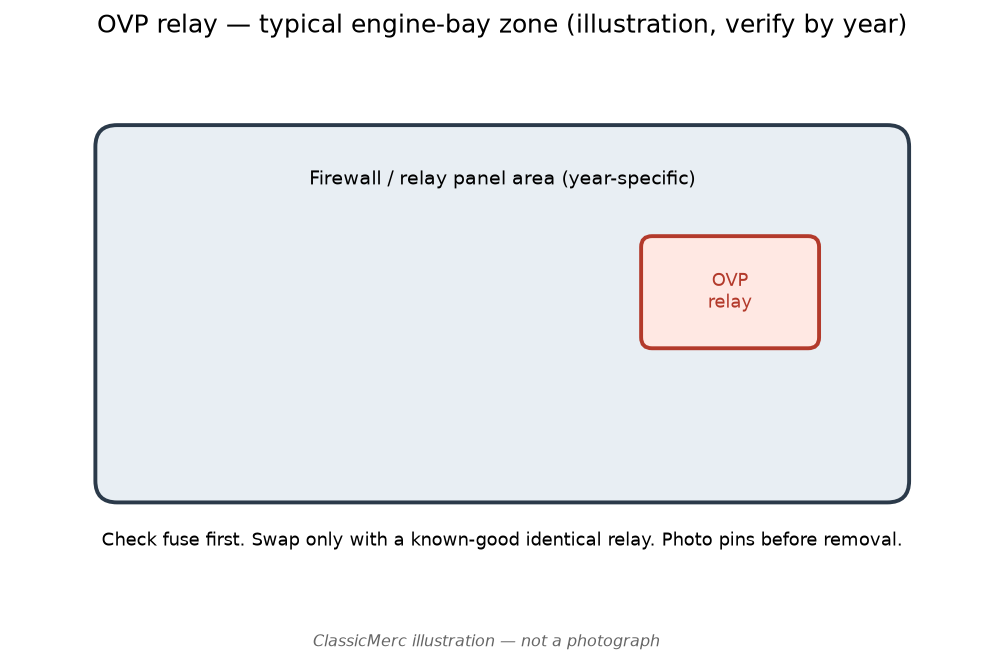
Usually on a relay panel along the firewall / engine-bay bulkhead. Exact pocket changes across early and late cars. Use a year-correct diagram; photograph connectors before unplugging. Do not yank every relay hoping for magic.
Symptoms
- Intermittent stall or no-start after heat soak
- Idle control dead / high idle with other electrics odd
- ABS light plus other module weirdness
- Problems that tap the relay back to life (temporary)
Testing
- Inspect the related fuse (commonly cited as 10A — verify for your year)
- Check for melted plastic, green corrosion on pins
- Swap with a known-good identical relay when practical
- Confirm power and ground with a digital multimeter
Replacement
Buy a quality relay. Cheap unbranded cubes fail early. After replacement, confirm the original symptoms are gone on a hot drive, not only a cold driveway start.
Details that finish this topic
What it does
On an R107 this means verifying the condition on your year/engine before ordering parts. When in doubt, match the data card and engine number, then confirm with a specialist who works on 107s regularly.
location by year
Exact locations vary by year and market. Use a diagram for your chassis, photograph connectors before removal, and do not rely on a single forum photo from a different model year.
symptoms (stalls, no start, idle issues, ABS light)
Write down when it happens — cold, hot, damp weather, after sitting — because R107 faults are often condition-specific. Intermittent heat-soak problems deserve timed tests, not driveway guesses.
testing
Work methodically: reproduce the symptom, check power/fuses/relays, measure before replacing, then retest the same conditions (cold vs hot, loaded vs idle) after the repair.