As an Amazon Associate I earn from qualifying purchases.
Almost every R107 leaks some oil. The question is where it comes from and whether it matters. A methodical trace saves you from replacing gaskets that were never leaking.
Most common leak points
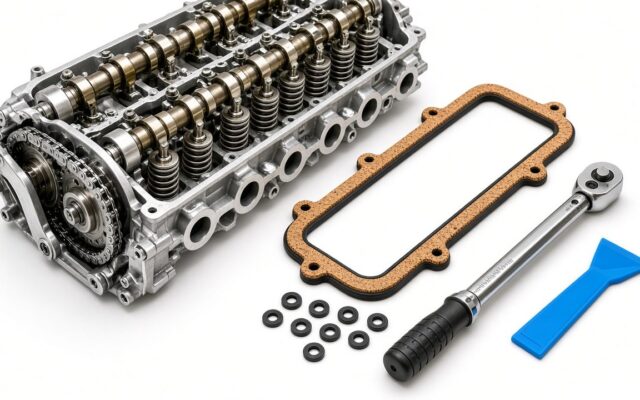
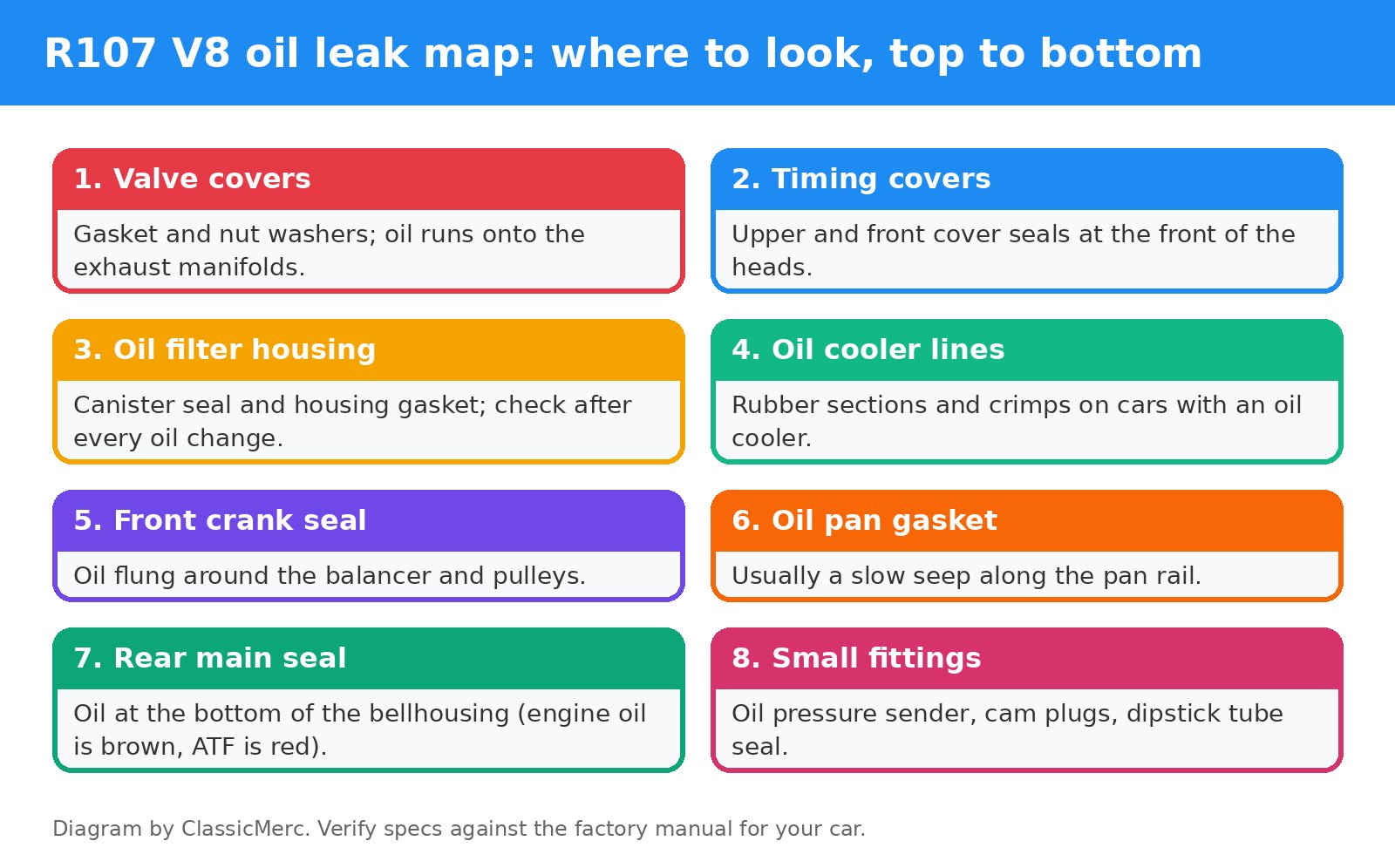
- Valve cover gaskets and their nut washers: the most frequent, and oil runs down onto the exhaust. See valve cover gasket.
- Timing cover and upper cover seals at the front of the engine.
- Oil filter housing and canister seal: often disturbed at every oil change.
- Oil cooler lines on cars that have them: rubber sections age and weep at crimps.
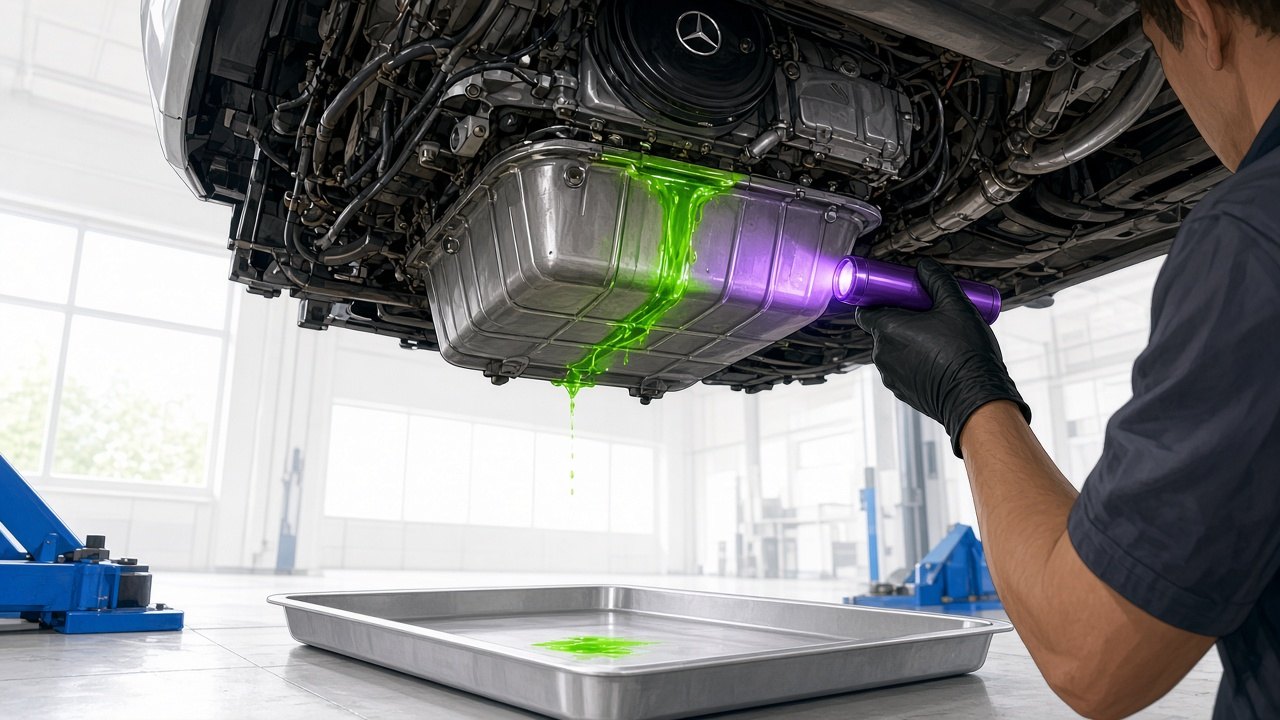
- Oil pan gasket: usually seeps rather than drips.
- Front crankshaft seal: oil spun around the balancer area.
- Rear main seal: oil at the bottom of the bellhousing. Do not confuse it with transmission fluid, which is red.
- Oil pressure sender and cam plugs: small, but they wet a large area.
How to trace a leak
- Degrease the engine and underside thoroughly, then let it dry.
- Drive 20–30 minutes.
- Look from the top down: oil runs downward and backward with airflow, so the highest wet point is usually the source.
- A UV dye in the oil and a UV flashlight make faint leaks obvious.
- Check the color: engine oil is brown to black, transmission and power steering fluid red, brake fluid clear to yellow and slippery, coolant green or blue.
Which leaks are urgent
- Any oil on the exhaust: fire and smoke risk. Fix soon.
- Oil cooler line leak: these can let go suddenly. Replace the lines.
- Rapid drip from the filter housing: check the canister seal immediately.
- Front or rear main seal with oil on the belts or clutch area: fix before it contaminates other parts.
What is normal
A light film on the oil pan or a damp timing cover on a 40-year-old engine is common. If the level barely changes between oil changes and nothing drips onto hot parts or the garage floor, monitor it rather than tear the engine apart.
Quick answers
- Will a high-mileage oil stop leaks? Seal-conditioner oils can slow seeps from hardened seals, but they do not fix gaskets.
- Is the rear main seal a big job? Yes. It usually means removing the transmission, so do it when other work is planned.
- Why does it leak more after sitting? Seals shrink and harden when cold and unused, and oil drains to the bottom.
Related reading
- Oil change and oil type
- Smoking on startup
- Does oil on the garage floor mean a big repair? Not necessarily. Many drips are filter housing seals, cooler lines or valve cover washers, which are small jobs. Trace it before pricing a rear main seal.