As an Amazon Associate I earn from qualifying purchases.
The oil pressure gauge on the R107 worries a lot of new owners. It reads high, drops at idle, and seems to move with every change in temperature. Most of that is normal.
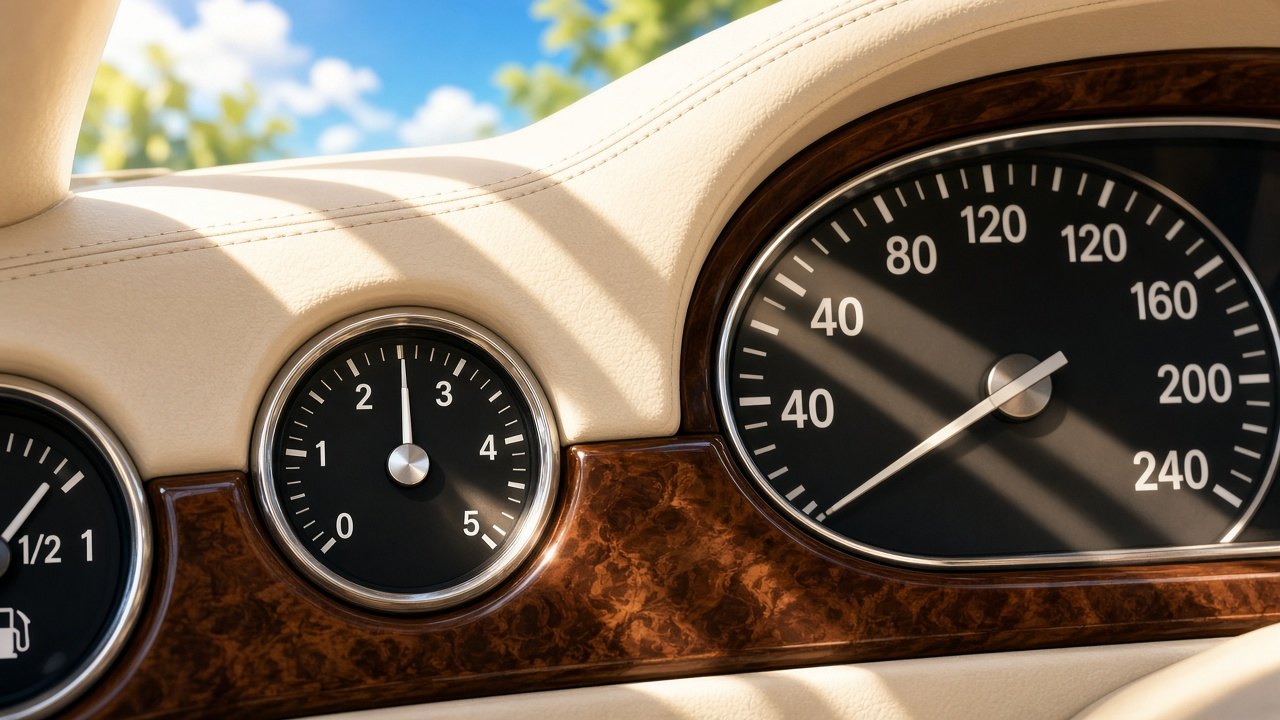
What the gauge measures
The gauge on the left side of the instrument cluster shows oil pressure in bar, typically on a 0–3 scale. It is not an oil level gauge. The pressure depends on engine speed, oil temperature and viscosity, and the condition of the bearings and pump.
Normal readings
- Cold start: the needle usually goes to 3 bar (the top) and stays there until the oil warms.
- Warm idle: it drops, often to around 1 bar or a little below, especially on a hot day in traffic.
- Warm cruise: it rises back to 2–3 bar as soon as the revs rise.
The number that matters is a warm idle reading that is stable and not near zero, and that it rises quickly with rpm. Check your manual for minimum figures for your engine.
Low pressure causes
- Low oil level: check the dipstick first
- Thin or wrong-grade oil, or oil diluted by fuel from a rich-running engine
- A faulty sender or gauge (common)
- Worn bearings or oil pump on a high-mileage engine
- A blocked pickup or filter bypass problem
If the gauge drops to zero while driving, stop the engine immediately and check the level.
High reading causes
- Cold, thick oil (normal)
- A heavier grade than specified
- A faulty sender reading high
- Rarely, a stuck pressure relief valve
Sender testing
The sender screws into the engine block near the oil filter housing. Testing it means fitting a mechanical gauge in its place with an adapter and comparing readings. If the mechanical gauge is fine and the dash gauge is not, replace the sender. A mechanical gauge test costs little and is the only way to be sure.
Quick answers
- Should I worry about 0.5 bar at idle in summer? If it rises immediately with revs and the engine is quiet, many M116/M117 engines show low warm idle readings. Confirm with a mechanical gauge before spending money.
- Does a thicker oil help? It raises the reading but can slow oil flow on cold starts. Use a grade listed in oil type and capacity.
- Can a timing chain problem show on the gauge? No. The gauge tracks oil pressure only.
- Why does the needle stay at 3 bar on the highway? That is the top of the scale. At cruise rpm, pressure on a healthy engine often reaches or exceeds it.
- Is a flickering needle a problem? A needle that jumps around at steady rpm usually points to a sender or connector fault rather than the engine. Clean the connection and test with a mechanical gauge.