

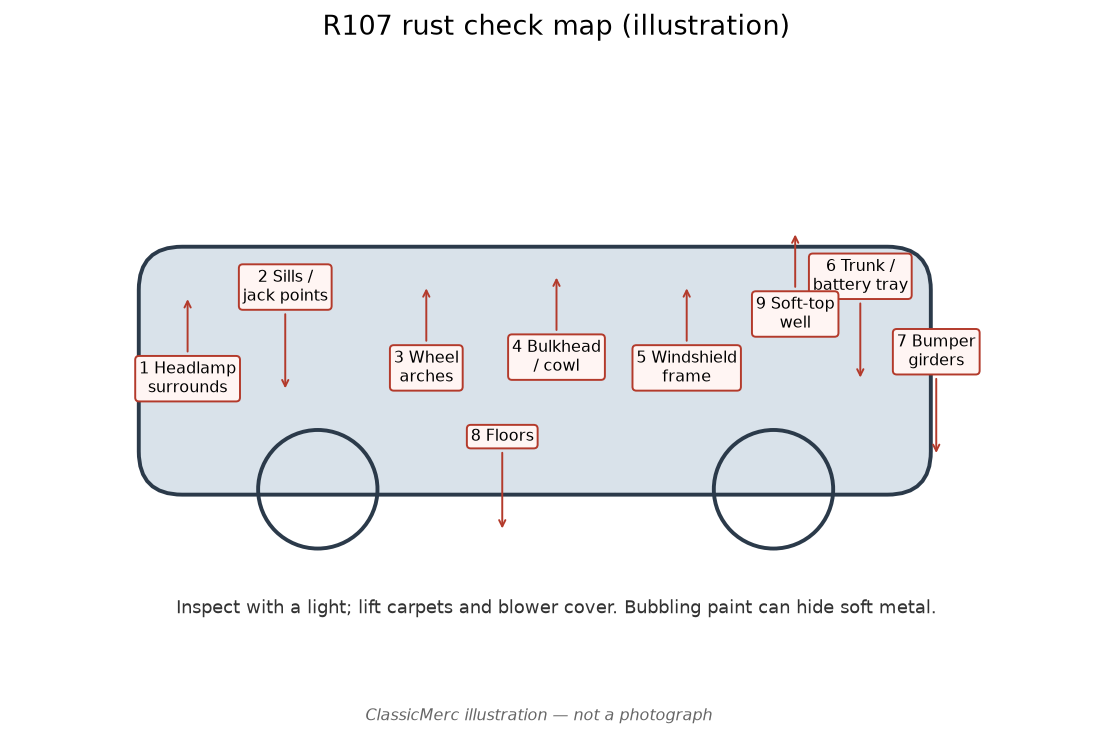
Rust decides more R107 deals than horsepower figures. Paint can hide it. Undercoating can hide it. This is the checklist I use, spot by spot, with notes on how to look and how serious each area usually is.
Related: bulkhead repair, buying guide.
1. Headlamp surrounds and front fenders
Bubbles at the lamp corners and along the fender tops are common. Probe gently — blistered paint over soft metal means work. Not always structural, but a tell for how the car lived.
2. Sills and jacking points
Outer sills, inner sills, and the jack receivers take salt and lift abuse. If a jack starts to sink, stop and inspect. Sill replacement done right is welding money; done wrong is a future alignment and safety problem.
3. Wheel arches
Front and rear arches trap mud. Look behind the plastic liners if present, and feel the lip from the tire side. Surface scale is one job; holes into the inner structure are another.
4. Bulkhead / cowl (the important one)
Leaves block the cowl drains. Water sits against the bulkhead. Lift the blower/heater cover and look with a bright light. Brown scale, pinholes, or repairs already plated over need a specialist opinion. Wet footwell carpets are a clue, not the full diagnosis.
5. Windshield frame
Leaks here soak carpets and feed rust into the scuttle. Look for cracked sealant, rust at the corners, and misting between glass layers on older windshields.
6. Trunk floor and battery tray
Batteries live in the trunk on these cars. Trays rust, cables corrode, and floors thin under spare-tire wells. Pull the spare and carpet when shopping.
7. Bumper girders (US big-bumper cars)
Aluminum bumpers hide steel mounts and girders that rust quietly. Push and look behind if you can. A pretty bumper does not mean pretty metal behind it.
8. Soft-top well and rear valance
Water and debris collect where the top folds. Soft, flaking valance metal is common on neglected cars.
9. Floors and seat mounts
Lift carpets (with seller permission). Soft floors near sills and under seats end many “cheap driver” fantasies.
How to check without destroying a sale
- Ask permission before pulling covers and carpets
- Bring a flashlight and a plastic probe — not a screwdriver through paint as your first move
- Photograph everything for your PPI mechanic
- Refuse “no lift” sales on expensive cars
Repair cost mindset
Small arch work can be reasonable. Proper sill and bulkhead metal is restoration-shop territory. Get a body specialist’s estimate before you fall in love with the interior color. Prevention: clear drains every season, fix soft-top leaks, and wash salt off if you ever drive in winter.
Galvanizing note
Later cars (560 era especially) benefited from better corrosion protection. That helps; it does not make a neglected drain immortal. Inspect late cars too.


