The oxygen (O2 or lambda) sensor is what lets a 380SL or 560SL correct its own mixture. When it gets lazy with age, the car can run rich, fail emissions or feel flat, even if everything else is right.
Which R107s have an O2 sensor
US cars with Lambda control have one, which includes the 380SL and 560SL, and some late 450SLs depending on market and year. European cars without catalytic converters may not have one.
Where it is
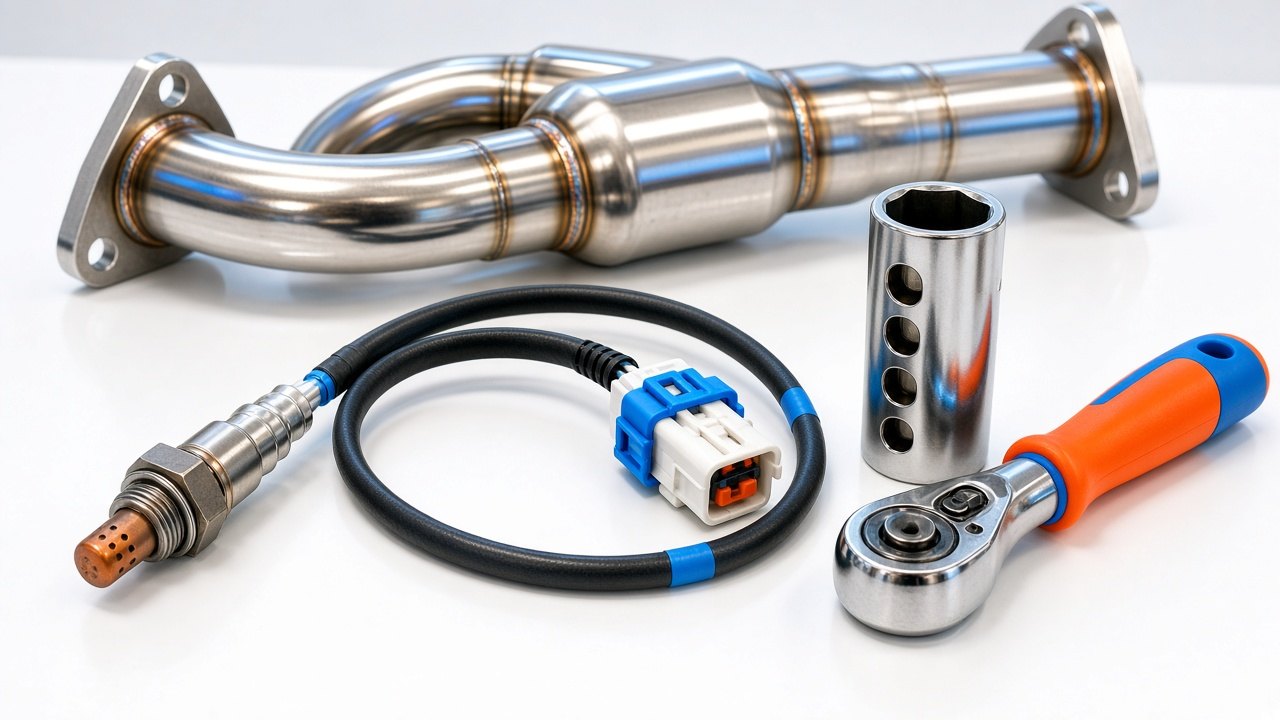
It screws into the exhaust, ahead of the catalytic converter, where the pipes from both banks join. Follow the wire from the sensor up to its connector, which is usually clipped high in the engine bay or on the transmission tunnel to keep it away from heat.
Signs of failure
- Duty cycle that never moves (see duty cycle test)
- Rich running, sooty tailpipe, poor fuel economy
- Failed emissions test for high CO or HC
- Hesitation or surging at steady cruise
How to test it
Warm the engine. Back-probe the signal wire with a digital meter set to volts. A healthy sensor switches quickly between about 0.1–0.2 V (lean) and 0.8–0.9 V (rich), several times a second at 2,500 rpm. A sensor that sits at one voltage or switches slowly is worn. You can also briefly richen the mixture by spraying a little propane near the intake or pulling a vacuum line to lean it, and watch the reading respond.
Which sensor to buy
Buy a Bosch or equivalent sensor matched to your model and year, with the right number of wires. Universal sensors work if you splice them correctly with weatherproof connectors, but the direct-fit version saves time. Apply anti-seize only to the threads, never the tip; most new sensors come with it already applied.
Replacement steps
- Let the exhaust cool.
- Disconnect the sensor connector.
- Use an O2 sensor socket or a box wrench; penetrating oil helps.
- Fit the new sensor and torque it to spec.
- Route the wire away from the exhaust and secure it.
- Recheck duty cycle.
Service interval light
Some US cars of this era have an “O2 sensor” reminder light in the cluster triggered by mileage. If your car has one and it comes on, it is a reminder, not a fault code. Check your owner’s manual or the manual for your year on how to reset the counter.
An O2 sensor socket makes this a short job.
Quick answers
- How long does an O2 sensor last? Old unheated sensors were treated as wear items on a mileage interval. If yours is of unknown age and the duty cycle is lazy, replacing it is reasonable.
- Can a bad O2 sensor cause a no-start? No. The system ignores it when cold. A no-start points elsewhere; see won’t start.
- Can exhaust leaks fool the sensor? Yes. A leak ahead of the sensor pulls in outside air and makes it read lean, so the system richens the mixture. Fix leaks first; see exhaust.
As an Amazon Associate I earn from qualifying purchases.