As an Amazon Associate I earn from qualifying purchases.
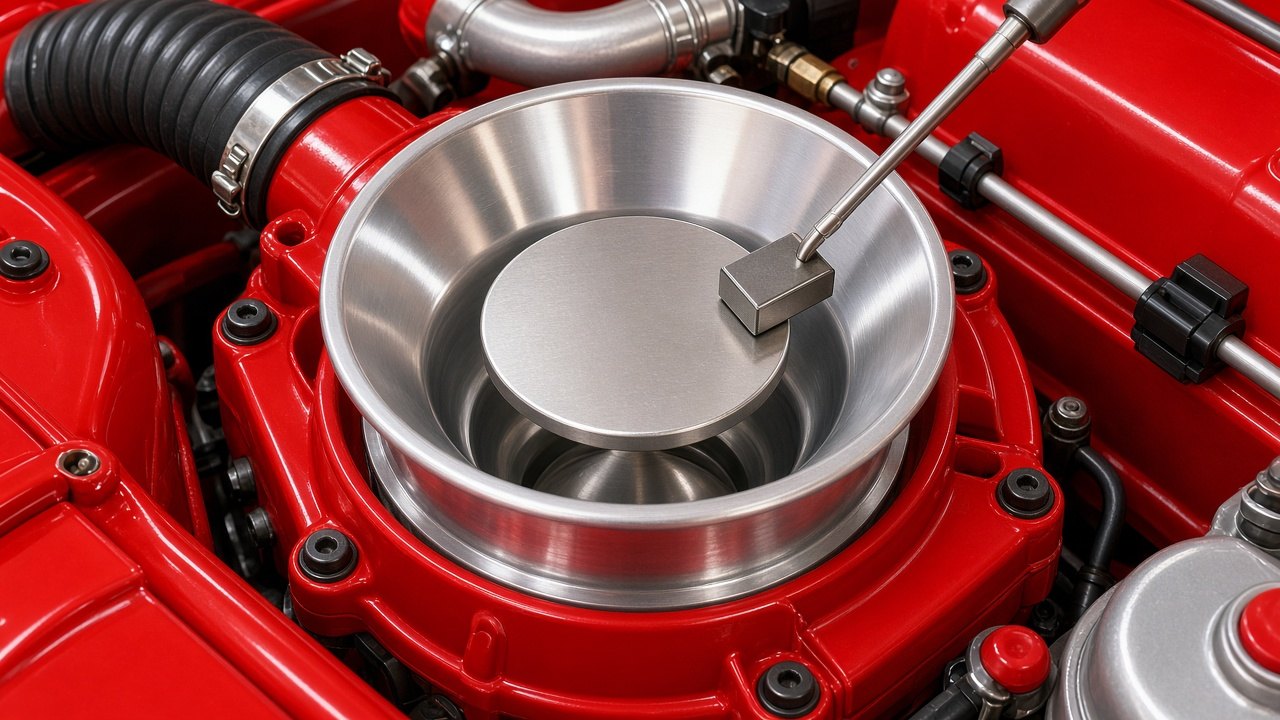
The air-flow sensor plate is the heart of K-Jetronic metering. It is a round plate that rises as the engine draws in air, lifting a lever that raises the fuel distributor’s control plunger. If it is off-center, sticky or set at the wrong height, idle, starting and throttle response all suffer.
What the sensor plate does
Air going to the engine passes through a cone (venturi) in the air-flow meter. The plate sits in the narrowest part of the cone. More air lifts the plate higher, and the lever lifts the plunger to send more fuel to the injectors. On the 560SL’s KE-Jetronic, a potentiometer also reads the plate position for the ECU.
Signs it is off-center or sticky
- Hard starting, hot or cold
- Hesitation on light throttle
- Idle that changes after you tap the air cleaner
- The plate drags on the cone walls when you lift it
How to check centering
- Remove the air cleaner housing so you can see the plate.
- With the engine off and pumps off, lift the plate gently with a magnet or a small pick at the edge.
- It should move freely through its whole range with even resistance, and fall back smoothly.
- Look around the edge: the gap to the cone should be even all the way round.
If it rubs, loosen the center bolt slightly, center the plate, and retighten carefully. Do not force it.
Rest height and how to set it
At rest, the top of the plate should sit at the narrowest point of the cone, or very slightly below it, within the tolerance in the factory manual. It is held there by a small spring clip under the plate. If the plate rests too high, the car may run on, idle rich, or the engine may not start well hot; too low, it may be hard to start cold.
To adjust, the clip is bent very slightly with the plate removed or with a fine tool. Small changes have a big effect. Always check the mixture afterward.
Mistakes to avoid
- Lifting the plate with pumps running and the ignition on in a closed garage: fuel sprays into the intake.
- Bending the lever arm instead of the clip.
- Adjusting the mixture screw to compensate for a sticking plate.
- Ignoring vacuum leaks: the plate measures air passing through it, so any air that bypasses it causes lean running. See vacuum leaks.
Quick answers
- Why does it feel stiff with the pumps running? Control pressure pushes down on the plunger, so it should feel firmer with pressure on.
- Does the plate wear? Rarely; the cone can be scored by a dirty plate or debris from a broken air filter.