As an Amazon Associate I earn from qualifying purchases.
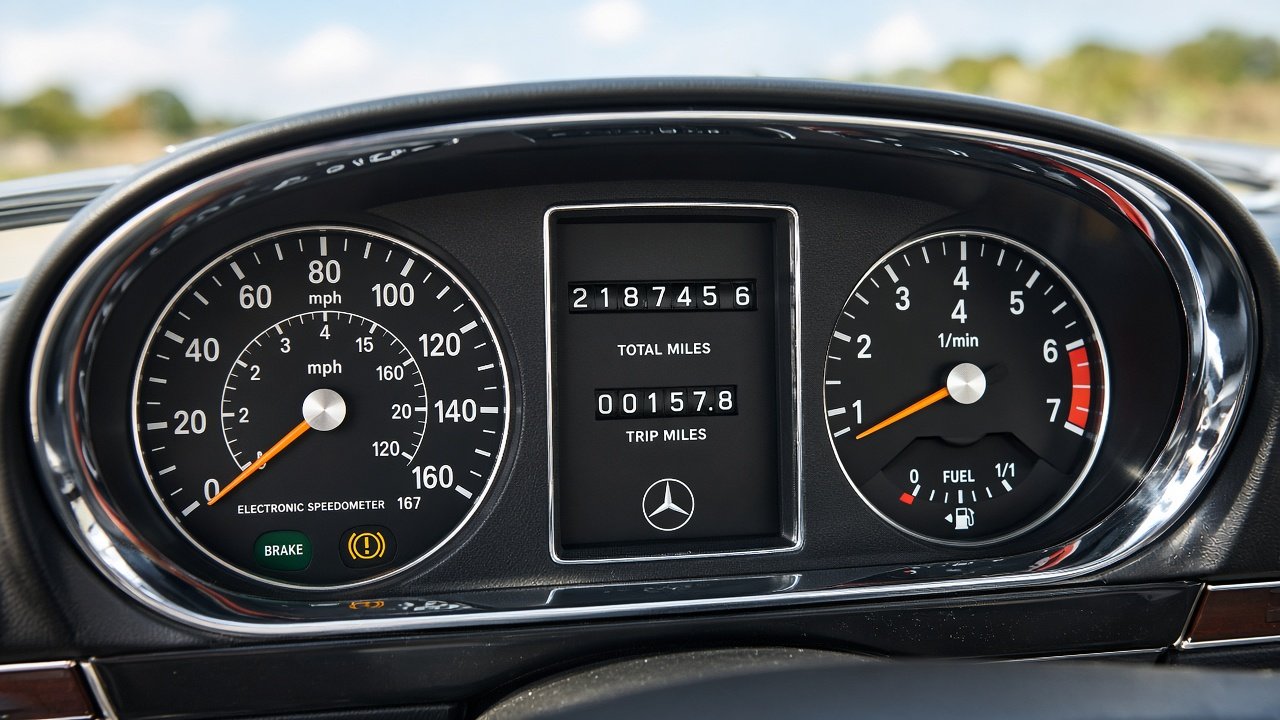
There is no magic mileage number that makes an R107 “too far gone.” Condition, maintenance, and rust beat the odometer. High miles with invoices often beat low miles with stories.
Related: buying guide, reliability.
Why mileage alone misleads
These cars can run high miles when oil, cooling, and fueling are respected. A 60k-mile car that sat outdoors with a rotten bulkhead is worse than a 180k-mile car with stamped service books. Miles are a clue; metal and maintenance are the answer.
What I inspect harder on high-mile cars
- Compression / leak-down if price assumes a strong engine
- Timing chain history where relevant
- Transmission shift quality warm
- Rust (miles do not prevent water damage)
- Soft-top age and hardtop seals
What I inspect harder on “low mile” cars
- Evidence of long sits (brakes, fuel varnish, dry seals)
- Odometer plausibility vs wear on pedals, wheel, and seats
- Storage conditions
A practical rule
Pay for condition and documentation. Use mileage to set expectations for consumables (guides, seals, bushings), not as an automatic veto. If a seller uses low miles to block a PPI, walk.
Title and rollback awareness
Unusual jumps in service records, fresh clusters without paperwork, or wear that disagrees with the dial deserve scrutiny. I am not accusing every seller — I am telling you to look.
Topic checklist
- Mileage vs maintenance history
- M117 life expectancy
- signs of a tired engine
- low-mile ‘sitting’ cars and their problems
If any line is still unclear on your chassis, verify against the factory manual for your engine code or ask an R107-literate shop before you buy parts.
Mileage bands as conversation starters — not verdicts
- Under ~80k: verify sit damage and odometer plausibility
- Mid miles: expect consumables; demand records
- High miles: demand mechanical evidence and rust honesty; reward documentation with a fair price
These bands are rough talk tracks, not laws. A particular engine and owner history can break any band.
Service evidence that matters more than the dial
Oil change stamps, cooling work, injection service, and brake jobs tell you whether miles were kind. A glovebox full of receipts beats a low number with empty folders.
Modified odometers and cluster swaps
Clusters get replaced. Ask why. Look for inspection stickers, old MOT/service printouts, or dated photos that disagree with the dial. When unsure, price accordingly or walk.
Driving plans vs mileage
If you will tour long distances, prioritize recent cooling, fuel, and tire age over a low mile flex. If the car will sit, storage and a maintainer matter as much as the odometer.
Bottom line: buy the car with the best metal and paperwork for the money. Let mileage inform the inspection list, not the yes/no alone.
Is a low-mileage R107 worth the premium?
The mirror image of the high-mileage question comes up just as often: should you pay more for a car showing very low miles? My answer is “sometimes, but only for the right reasons.”
- Low miles must be documented. Collector-grade value depends on a continuous paper trail: service records, inspection or registration mileage entries, and ownership history. A low number with no history is just a number. Instrument cluster swaps were common, so verify against the paperwork.
- Low use brings its own problems. Cars that sat often need hoses, fuel lines, the fuel pump and accumulator, brake hydraulics, tires (check the date codes), and seals. Budget for “recommissioning” even on a 20,000-mile car.
- Originality is the real premium. Untouched paint, original interior and factory finishes command money because they can’t be recreated. If a low-mile car has been repainted and re-trimmed anyway, you’re paying for a number rather than for originality.
- Match the car to your plans. If you’ll drive it 5,000 miles a year, the low-mile premium disappears as you use it. A well-documented driver-grade car is usually the better buy for a driving owner.
Before you pay a premium, get a pre-purchase inspection that specifically looks for signs of long storage, and check recent sale results for comparable mileage and condition.