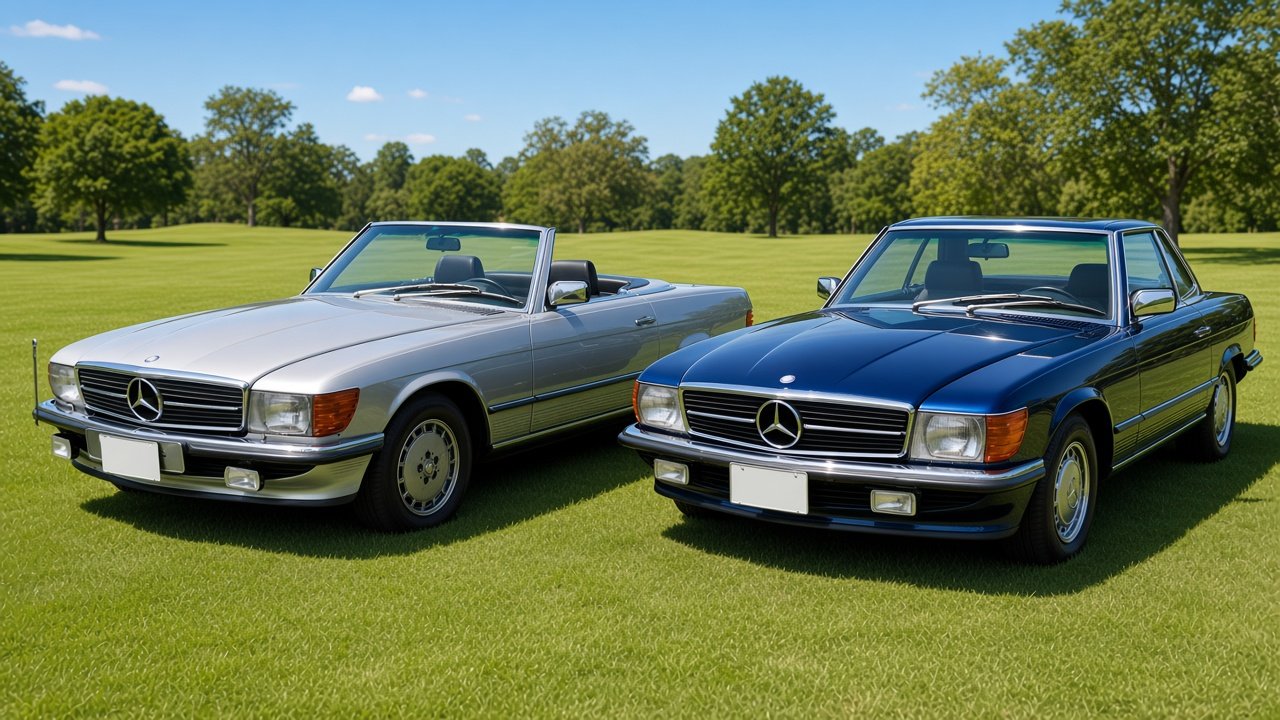
Euro-spec and US-spec R107s differ in engines, emissions equipment, bumpers, lights, and sometimes performance character. Neither is universally better; they are different cars that share a silhouette.
Related: models by year, VIN / data card.
What usually differs
- Engines and power: market-specific outputs and equipment
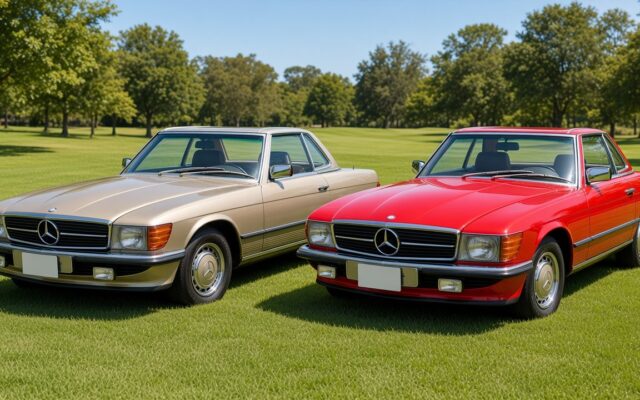
- Bumpers and lighting: US 5-mph bumper era looks different; lighting regs change lenses
- Emissions and fueling details: catalytic equipment, injection nuances
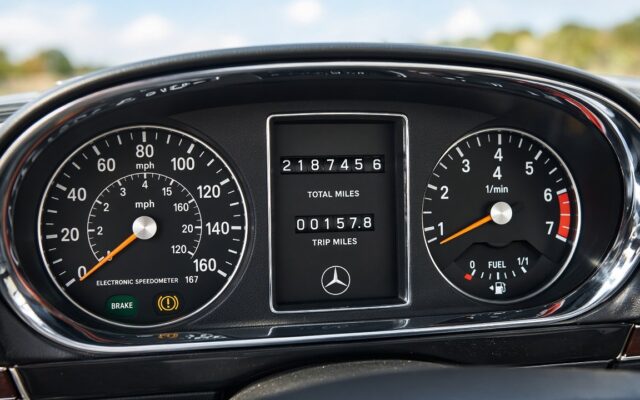
- Speedometer and labels: units and language clues
Import and ownership practicalities
Buying a Euro car in the US (or vice versa) involves compliance history, parts nuances, and insurance questions. Verify the car’s legal status and title path. Do not assume every Euro bumper swap is a paperwork-free afternoon.
Driving character
Some Euro examples feel stronger on paper and on the road; US cars may bring features and corrosion protections by later years. Test the actual car. Spec sheets do not capture a tired fuel system.
Parts
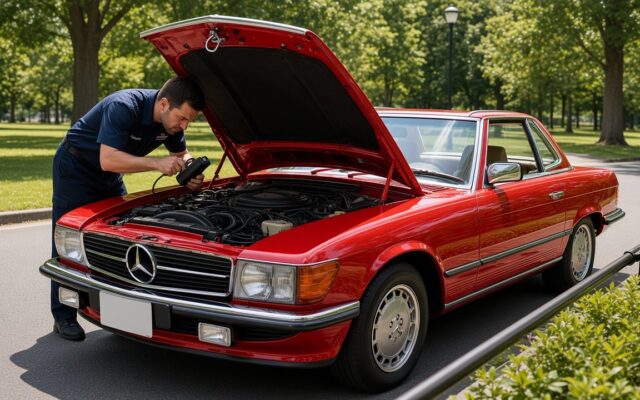
Many mechanical parts overlap; trim and emissions pieces can diverge. Order by VIN and engine number. Forum photos from another market are hints, not catalogs.
Which should you buy?
Buy the cleanest, best-documented car that fits your local legal reality and budget. Chasing a Euro badge while ignoring rust is how people overpay for a project.
Topic checklist
- Bumpers, headlights, power, emissions, catalysts
- grey-market imports & DOT/EPA papers
- how to tell from the VIN
- value differences
If any line is still unclear on your chassis, verify against the factory manual for your engine code or ask an R107-literate shop before you buy parts.
Bumpers, lights, and the look
US cars of certain years carry larger bumpers; Euro cars often look tighter at the nose and tail. Lighting lenses and side markers differ. Neither look is “more authentic” in a moral sense — authenticity is what the car was for its market.
Performance expectations
Some Euro engines are rated higher. Delivery depends on tune, fuel, and condition. A tired Euro car is still tired. Dyno stickers in ads are marketing until verified.
Compliance and title path
If the car crossed borders, keep the paperwork forever. Insurance and registration offices may ask. Grey-market myths belong in the 1980s; today you need clean legal status more than forum lore.
Parts ordering tip
Give vendors the VIN and engine number. Say US or Euro when the catalog asks. Blind “R107” orders create returns and downtime.
Buying decision
Choose the clean car you can legally own and service locally. Spec hunting without rust discipline is how people fund shipping for a project they will not finish.
If you are cross-shopping US and Euro examples in the same condition band, drive both. The right choice is usually the healthier car with cleaner paperwork — not the one with the more exotic story.