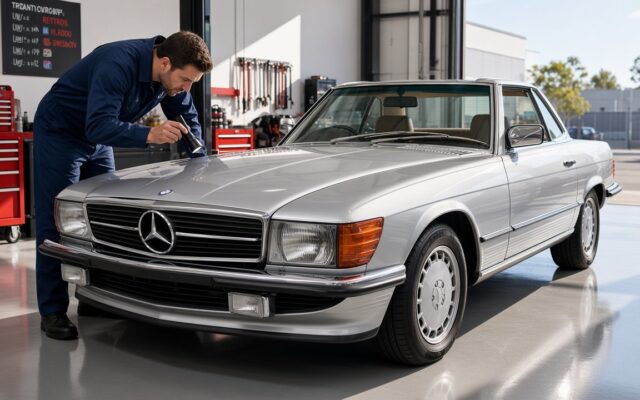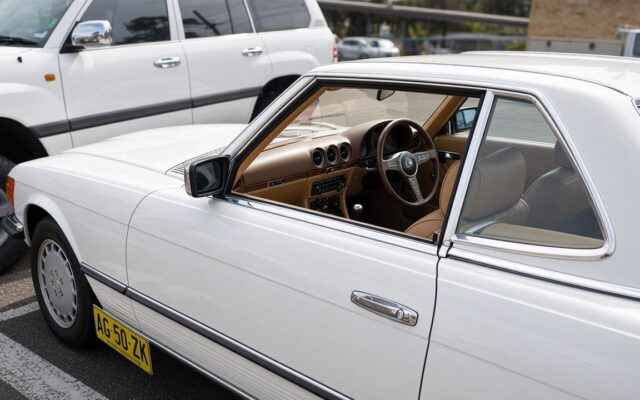
“Is an R107 safe?” needs era context. These cars have real structure and belts; later examples add airbags and ABS. They are not modern crash twins — drive and equip them honestly.
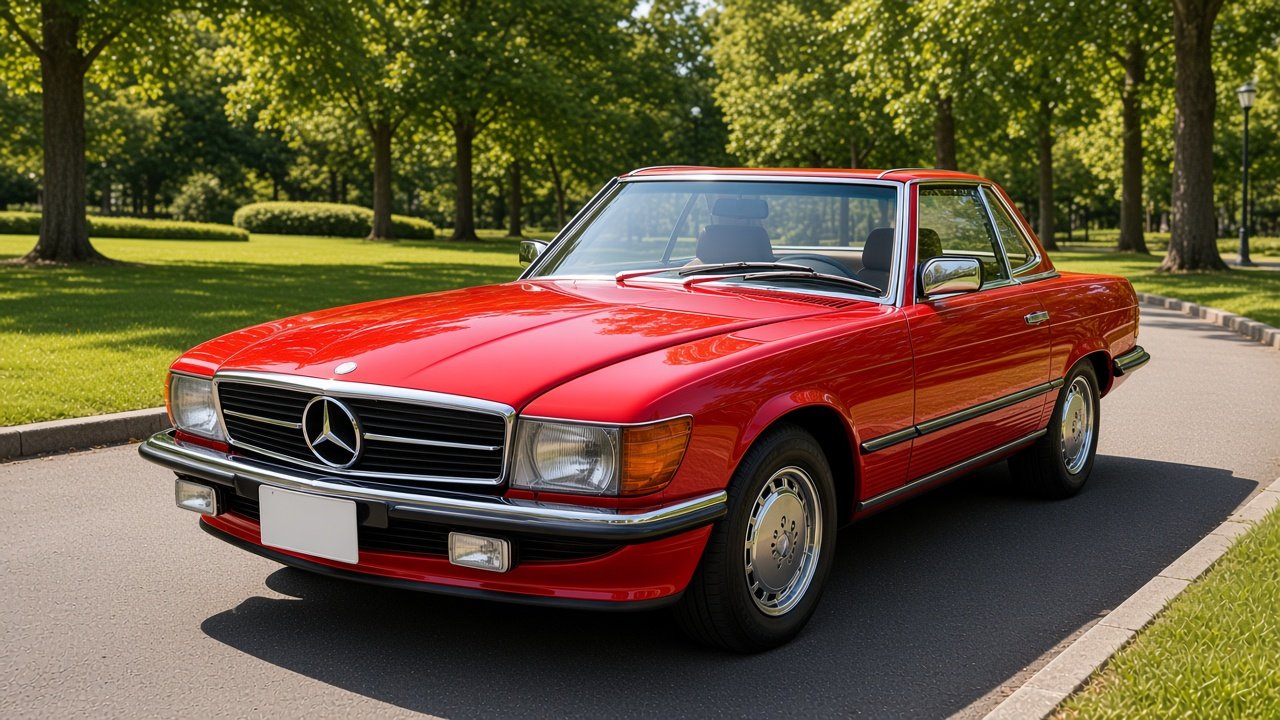
Related: buying guide, insurance.
Crash structure and belts
Period safety design matters. Wear belts. Structural rust undermines whatever design intent existed — rusty rockers are a safety issue, not only a value issue.
1986+ airbag and ABS
Later US cars may include driver airbag and ABS depending on year/equipment. Confirm what your car actually has; do not assume every late bumper means every feature.
What to upgrade
Excellent tires, working belts, honest brakes/steering, and period-sensible improvements that do not create airbag conflicts. Fantasy roll cages belong on purpose-built cars. Drive defensively.
Common mistakes
Skipping labeling before disconnects, trusting verbal history without invoices, forcing stuck fasteners until they snap, and treating a different-year forum photo as a parts catalog.
When to stop DIY
Stop when the lift, hoist, or specialty tool you need is missing — or when the first approach did not change the symptom. Paying for diagnosis once beats buying the wrong assembly twice.
Practical takeaway
Safety is maintenance and manners as much as badges.
Shop notes and paperwork
Keep invoices, part numbers, and dated photos before and after work. Future you — and any buyer — will ask what was actually done.
Safety
Use rated stands and hoists, relieve fuel/coolant pressure before opening systems, and disconnect the battery when the procedure calls for it. If a step needs a tool you do not own, rent it or hire it.
Verify against the factory manual for your engine and chassis. No invented personal car details here — use your plates, invoices, and measured symptoms.
Owner checklist before you start
- Confirm the exact chassis/engine so parts and torque specs match
- Stage tools, containers, and labels before the first bolt turns
- Plan a cold and hot verification after the work, not only a driveway idle
- Budget a contingency for seized fasteners and one missing specialty clip
If this topic intersects fuel, rust, or safety systems, fix leak and safety paths before cosmetic items. That order saves money twice.