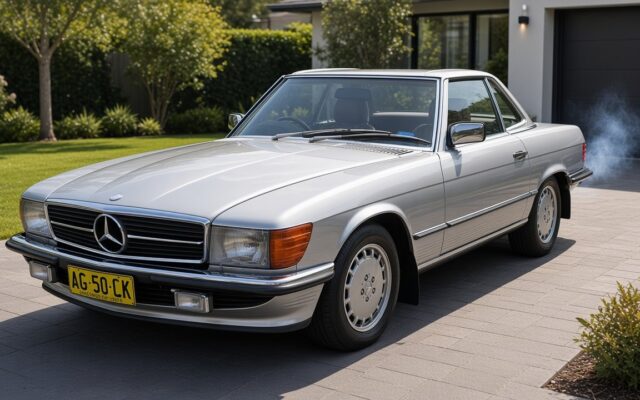
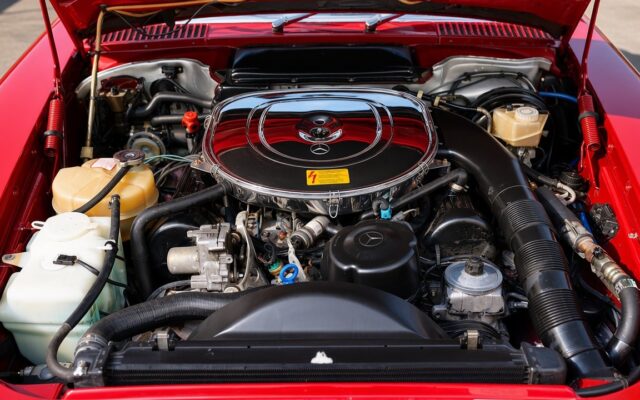
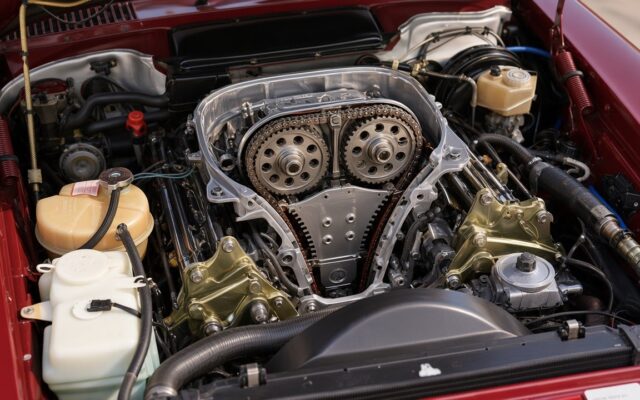
Engine swap talk on R107s ranges from within-family upgrades to fantasy non-MB transplants. Fitment, wiring, fueling, mounts, emissions legality, and cost decide what is sensible.
Related: engine removal, Euro vs US.
380 to 560 / 5.0-class ideas
Within Mercedes families, people discuss stepping to later larger V8 packages. Fitment is more than bellhousing folklore — mounts, electronics, fuel system, cooling, exhaust, and driveline ratios all change. Budget engineering time, not only an engine purchase.
What usually fits with work
Swaps that stay closer to period Mercedes hardware generally find more parts support. Every adapter-plate fantasy adds a future owner problem.
Costs
Engine, rebuild or core, mounts, harness, fueling/electronics if applicable, cooling, exhaust, labor, and tuning. Cheap engines become expensive cars.
Non-MB swaps
Most owners avoid non-Mercedes transplants because parts, values, and expert support collapse. If you still want one, treat it as a custom project car — not a stock R107 for classic-market resale.
Common mistakes
Skipping labeling before disconnects, trusting verbal history without invoices, forcing stuck fasteners until they snap, and treating a different-year forum photo as a parts catalog.
When to stop DIY
Stop when the lift, hoist, or specialty tool you need is missing — or when the first approach did not change the symptom. Paying for diagnosis once beats buying the wrong assembly twice.
Practical takeaway
Buy a sorted matching car when you want an R107. Swap only with eyes open and a written scope.
Shop notes and paperwork
Keep invoices, part numbers, and dated photos before and after work. Future you — and any buyer — will ask what was actually done.
Safety
Use rated stands and hoists, relieve fuel/coolant pressure before opening systems, and disconnect the battery when the procedure calls for it. If a step needs a tool you do not own, rent it or hire it.
Verify against the factory manual for your engine and chassis. No invented personal car details here — use your plates, invoices, and measured symptoms.
Owner checklist before you start
- Confirm the exact chassis/engine so parts and torque specs match
- Stage tools, containers, and labels before the first bolt turns
- Plan a cold and hot verification after the work, not only a driveway idle
- Budget a contingency for seized fasteners and one missing specialty clip
If this topic intersects fuel, rust, or safety systems, fix leak and safety paths before cosmetic items. That order saves money twice.