As an Amazon Associate I earn from qualifying purchases.
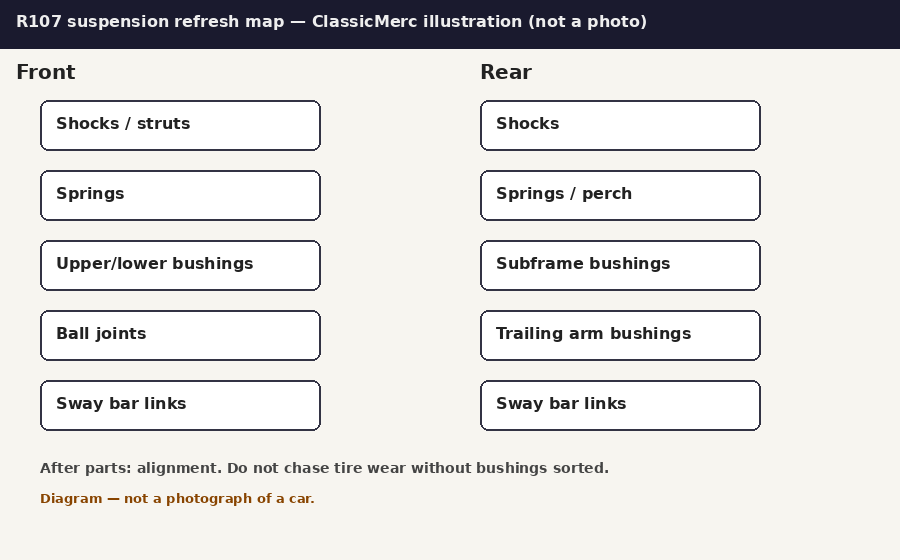
A tired R107 suspension feels vague long before it looks broken. Shocks, bushings, and ball joints age together — refreshing one corner and ignoring the rest is how people stay disappointed.
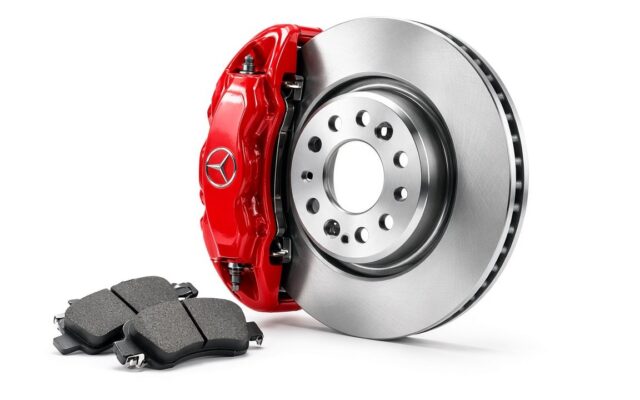
Related: brakes (do them while wheels are off if both are due).
Front: what usually goes first
- Shocks / struts that bounce or weep
- Upper and lower control-arm bushings
- Ball joints with play
- Sway bar bushings and links
Clunks over speed bumps and wandering on the highway are clues. Confirm with a pry bar and a lift — not only a test drive story.
Rear: bushings hide problems
Subframe and trailing-arm bushings let the rear steer itself. Tire wear patterns and a nervous rear over ripples often start here. Springs that sag change geometry; measure ride height against a known-good reference for your year.
Bilstein and other shock options
Bilstein and similar quality dampers are common refresh choices. Pick the valving for how you drive (street comfort vs firmer). Matching left/right and doing the axle as a pair avoids a lopsided feel. Cheap no-name shocks are a false economy on a heavy classic.
Alignment is not optional
After bushings, ball joints, or ride-height changes, get a proper alignment. Fresh parts on old alignment settings wear tires and erase the improvement you paid for.
Order of work that saves money
- Inspect and document play
- Replace worn bushings/joints and shocks in logical axle sets
- Torque to spec with weight on the suspension where required
- Align
- Road-test on the same familiar road
What I do not do
I do not invent a “stance” that ruins geometry, and I do not claim one brand magically fixes rusted chassis points. Metal integrity comes first.
Springs and ride height
Sagged springs change camber and tire wear. Measure fender-to-ground against a known reference for your year and wheel size. Mixing random lowering springs with stock dampers often worsens ride and geometry. If you want a mild refresh, quality stock-rate springs plus good dampers are the boring winning combo for street cars.
Ball joints and safety
Play in ball joints is a safety item, not a comfort preference. Inspect boots for tears that pack dirt. Replace in pairs when wear is present. Cotter pins and torque matter — shortcuts here are how cars lose wheels in stories nobody wants to star in.
Sway bars and bushings
Soft bushings create clunks and lazy body control. Fresh polyurethane or quality rubber bushings (per taste) tighten response. Grease fittings where designed. Do not confuse a broken end-link with a “needs coilover” diagnosis.
DIY vs shop
Shock swaps can be DIY with spring compressors handled carefully — or left to a shop if you lack the tools. Bushing presses and alignments favor a shop. Budget the alignment into the parts total so you actually do it.
Tire wear as a report card
Inner shoulder wear and feathering often point to alignment and bushing health. Read the tires before buying more chrome. A suspension refresh without tires that can hold an alignment is unfinished work.
Related safety items while you are under there
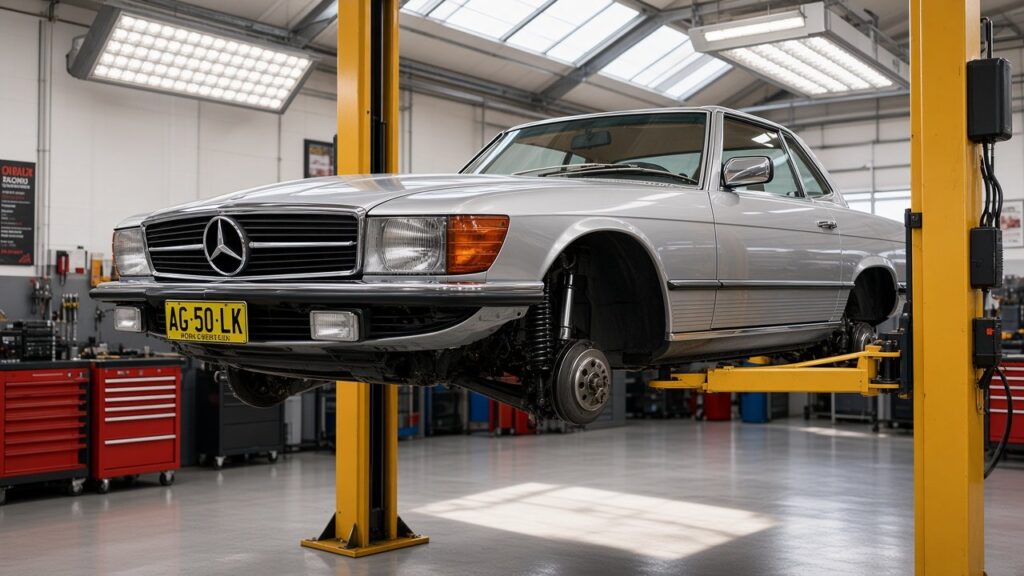
Inspect steering damper and coupling play, brake hoses, and exhaust hangers while the car is in the air. A suspension day is a cheap time to catch adjacent failures.