
As an Amazon Associate I earn from qualifying purchases.
Owner’s manuals for the R107 list intervals that assume a 1980s service network. This is the schedule I actually use on a Chicago-kept car: shorter on fluids that age out, stricter on rubber and fuel-system parts that strand you, and honest about what a specialist should handle.
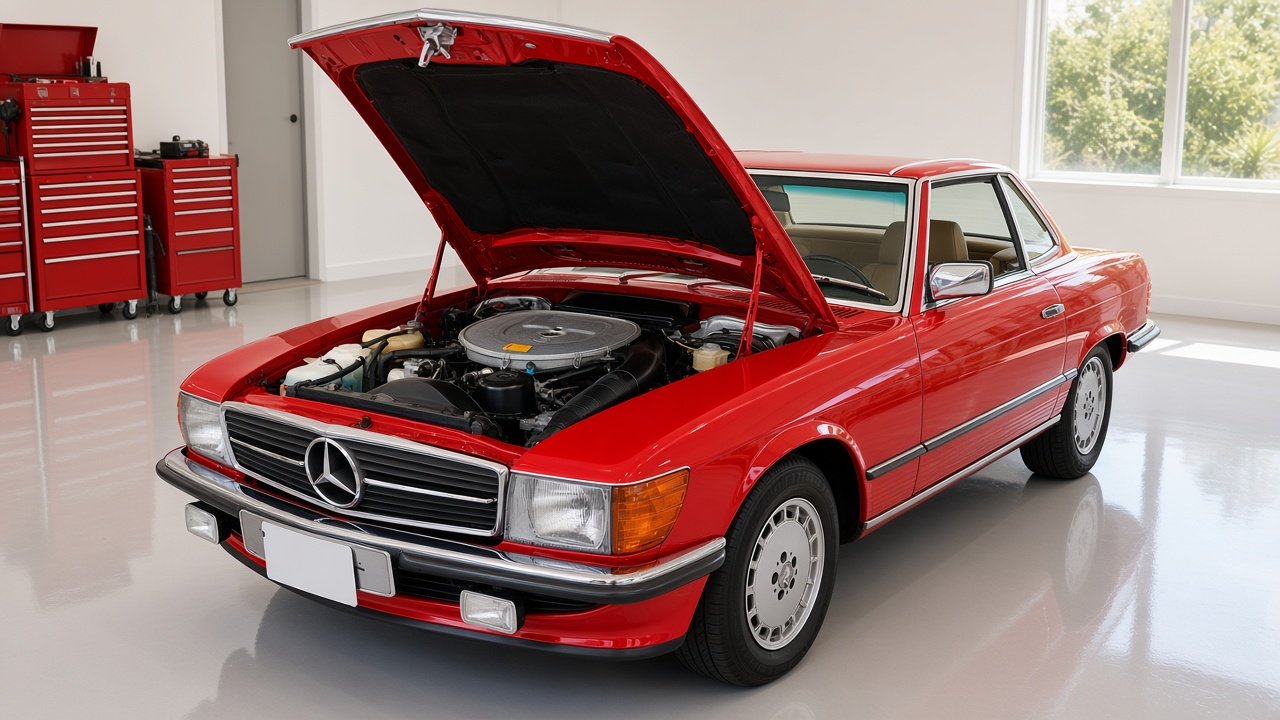
Companion guides: oil change, fluid capacities, ATF, coolant.
Every drive
- Glance at the oil pressure and temperature gauges once the engine is warm
- Listen for new ticks, rattles, or fuel-pump tone
- Note any warning lights that stay on after the bulb check
- Look under the car before you leave a parking spot if you suspect a leak
Monthly (or before a long trip)
- Engine oil level on level ground
- Coolant level in the expansion tank when cold
- ATF level per the correct hot/idle procedure for your gearbox
- Tire pressures (including the spare if you carry one)
- Battery voltage / tender status if the car sits
- Soft-top or hardtop seal condition after storms
Yearly (even at low miles)
Age kills R107s as much as mileage. Once a year I plan:
- Engine oil and filter
- Inspect all belts and critical hoses
- Replace fuel filter if the interval or fuel smell says so
- Brake fluid flush on a conservative schedule (hygroscopic fluid)
- Cabin and cowl drain check — debris here becomes bulkhead rust
- Road test focused on hot restart and idle quality
Mileage-based jobs
- Spark plugs and ignition service: follow engine-specific plug type and gap — see spark plugs
- Air filter: inspect yearly; replace when dirty
- Transmission service: fluid and filter on a schedule that matches how hot and hard you drive
- Differential oil: often neglected; change if history is unknown
- Timing chain (early 380): inspect/listen; do not stretch “maybe later” into a bent-valve event
Rubber and fuel-system reality
Fuel hoses, accumulator diaphragms, and vacuum lines get brittle. If your car sat for years, budget a fuel-system refresh before a road trip, not after the tow truck.
Storage season
Before winter storage in Chicago I run through fuel stabilizer (if needed), battery tender, tire pressures, mouse deterrence, and cover choice — full checklist in winter storage.
DIY vs shop
DIY-friendly: oil, filters, plugs (with care), visual inspections, battery, many vacuum lines.
Shop: fuel distributor work, chain conversion, climate servo deep-dives, welding, alignment after suspension work.
Yearly cost (honest range)
A quiet year of fluids, brakes pads, and minor rubber might land in the low hundreds to around a thousand dollars in parts if you DIY labor. A year that includes injectors, a climate repair, or rust welding is a different budget. Keep a reserve; the car will use it.


