As an Amazon Associate I earn from qualifying purchases.
The radiator is the first line of defense against overheating on an R107, and many original or old replacement radiators are partly blocked by now. A healthy one keeps the M116 and M117 at a stable temperature even in summer traffic.
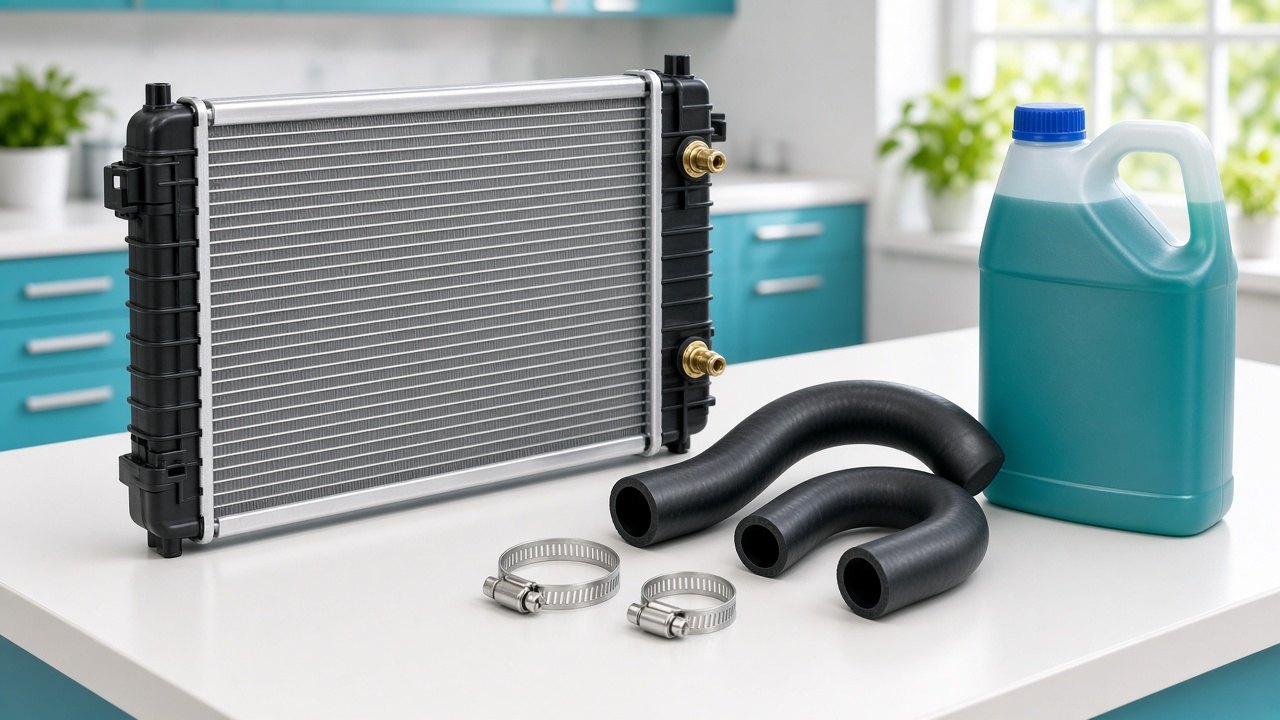
Signs a radiator is failing
- Temperature climbs in traffic but falls at speed
- Cold spots across the core (check with an infrared thermometer after a drive)
- Coolant weeping at the tanks or crimps
- Green or white crust on the fins
- Plastic tanks that have turned brown and brittle
OEM vs aftermarket
Original-equipment-style radiators from known suppliers (Behr and equivalent) fit properly and include the correct transmission cooler. Cheap aftermarket units may have fewer rows or tubes, poor fit, or a weak transmission cooler. On an automatic R107, the radiator also cools the transmission fluid, so the cooler section matters.
Aluminum vs copper-brass
- Copper-brass: original type on early cars, repairable by radiator shops, heavier.
- Plastic tank with aluminum core: standard on many later cars and replacements, efficient, but tanks age.
- All-aluminum performance radiators: good cooling, but check transmission cooler fitment and make sure the coolant is suited to aluminum.
Replacement steps
- Engine cold. Drain coolant from the radiator drain and the block drains if replacing everything.
- Remove the fan shroud and, if needed, the fan.
- Disconnect the upper and lower hoses, the expansion tank hose and the transmission cooler lines (catch the fluid, cap the lines).
- Lift out the radiator.
- Install in reverse with new hoses if they are old, new transmission cooler line seals, and fresh coolant.
- Top up the transmission fluid (transmission fluid).
Bleeding air
Fill slowly with the heater set to full hot. Run the engine with the expansion tank cap off (cold engine only) until the thermostat opens, top up, then fit the cap. Check the level again after the first drive once cool.
Cost
A quality radiator costs a few hundred dollars; shop labor adds a few hours. It is a good investment if your car has ever run hot.
Quick answers
- Should I flush or replace? A flush helps with loose deposits but rarely clears blocked tubes in an old core.
- Do I need a bigger radiator? Not for a stock car with a good radiator, fan clutch and thermostat.
- Copper-brass or aluminum? Copper-brass is original and repairable; quality aluminum cores cool well but are not original-looking.
- Should I replace hoses at the same time? Yes, if they are old; the labor overlaps.
- What coolant should I use? A coolant meeting the Mercedes specification for your car, mixed to the correct strength.
- Can a radiator cause overheating only in traffic? Often that points to the fan clutch or airflow; check those too.