As an Amazon Associate I earn from qualifying purchases.
A brake pedal that slowly sinks under steady pressure is one of the problems you should never ignore on an R107. The cause is usually the master cylinder, a leak or air, and you can narrow it down in a few minutes.
Common causes
- Internal master cylinder leak: fluid bypasses the seals inside, so the pedal sinks without any visible leak.
- External leak: a weeping caliper, hose, line or wheel cylinder lets fluid escape.
- Air in the system: gives a soft, spongy pedal that may improve with pumping.
- Old fluid: brake fluid absorbs moisture, which can boil under hard use and cause a soft pedal.
How to diagnose
- Check the fluid level. A dropping level means an external leak. A steady level with a sinking pedal points to the master cylinder.
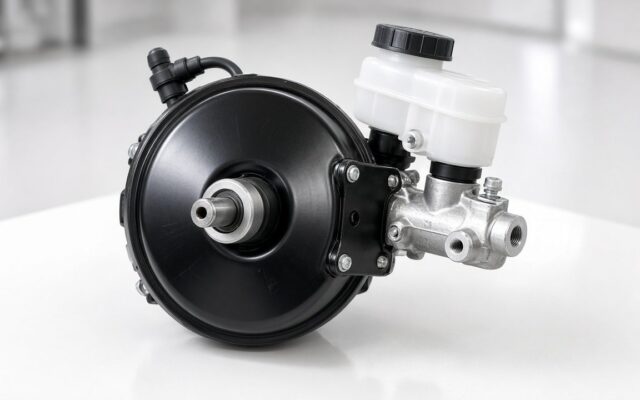
- Look for leaks at each wheel, along the lines and at the master cylinder where it meets the booster. Fluid at the booster joint points to a leaking rear seal in the master cylinder.
- Hold steady pressure with the engine running. If the pedal creeps to the floor slowly, the master cylinder is bypassing internally.
- Pump the pedal. If it rises with pumping, there is air or excessive play in the system, including wheel bearing play; see wheel bearings.
- Clamp the flexible hoses one by one with a proper hose clamp tool to isolate a leaking caliper, if needed.
Master cylinder replacement
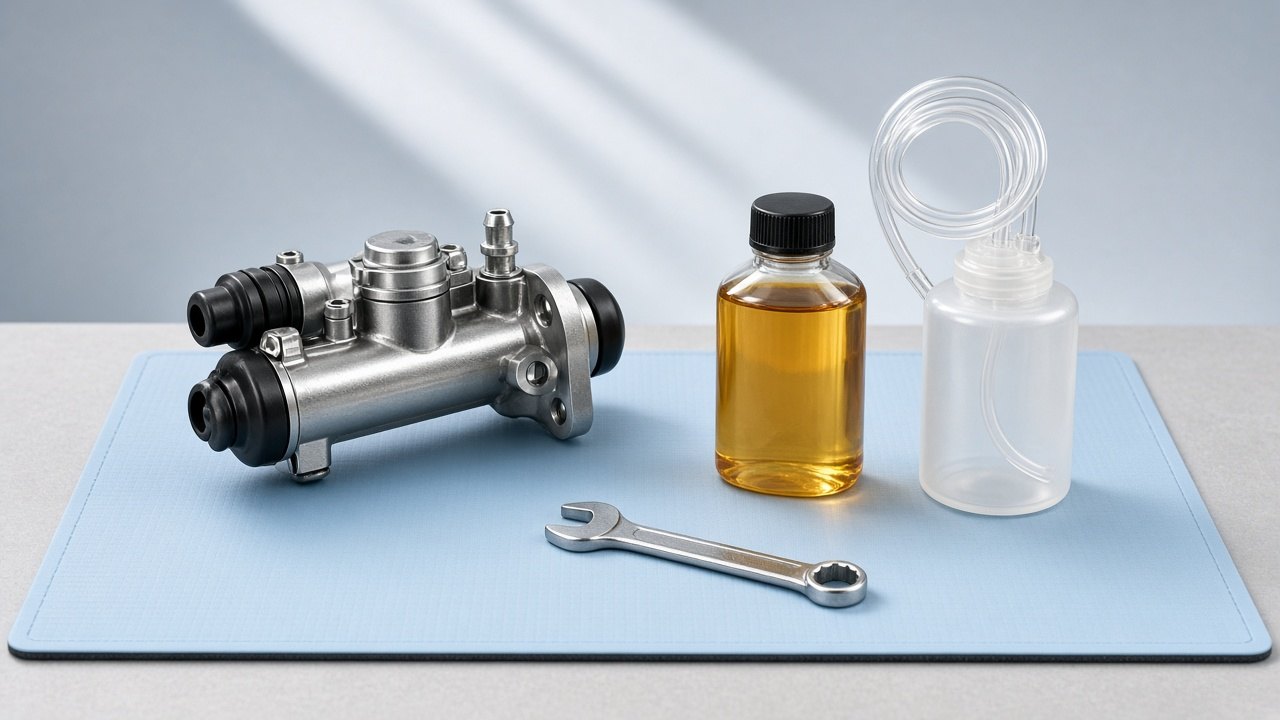
Master cylinders are available new or rebuilt. Bench bleed the new unit before fitting, then bleed the brake system completely. Keep brake fluid off the paint; it removes it quickly.
Bleeding
Bleed starting with the wheel farthest from the master cylinder, usually the right rear, then left rear, right front and left front. Use fresh fluid of the type on the reservoir cap, typically DOT 4. A pressure bleeder makes it a one-person job. See brakes for the full guide.
Booster check
A hard pedal is the booster; a sinking pedal is the hydraulic side. If you are not sure, use the test in brake booster.
When to stop driving
Stop driving if the pedal goes to the floor, or if the brake warning light comes on. A sinking pedal means the system cannot be trusted to stop the car reliably.
Quick answers
- Can old fluid cause a sinking pedal? Old fluid can cause a soft pedal under heat; a slowly sinking pedal is usually a seal leak.
- Do I have to bleed after changing the master cylinder? Yes.
- Can a bad brake light switch cause this? No, it affects only the lights.
- Is the pedal supposed to drop a little when starting the engine? Yes, a slight drop shows the booster works.
Related reading
- Brake booster test
- Brakes