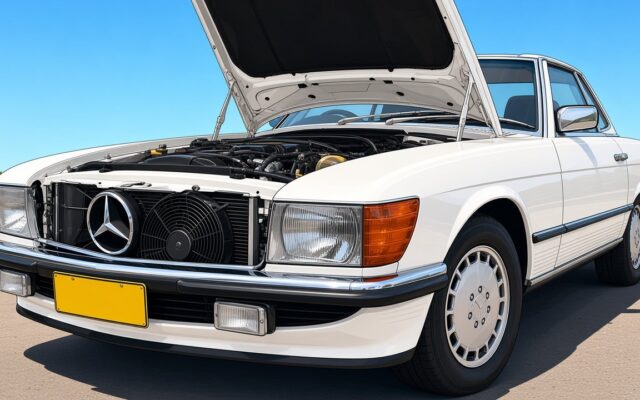
A hard brake pedal, a hiss under the dash or a car that idles badly when you press the brake all point to the vacuum brake booster. Here is how to test it on an R107 without guessing.
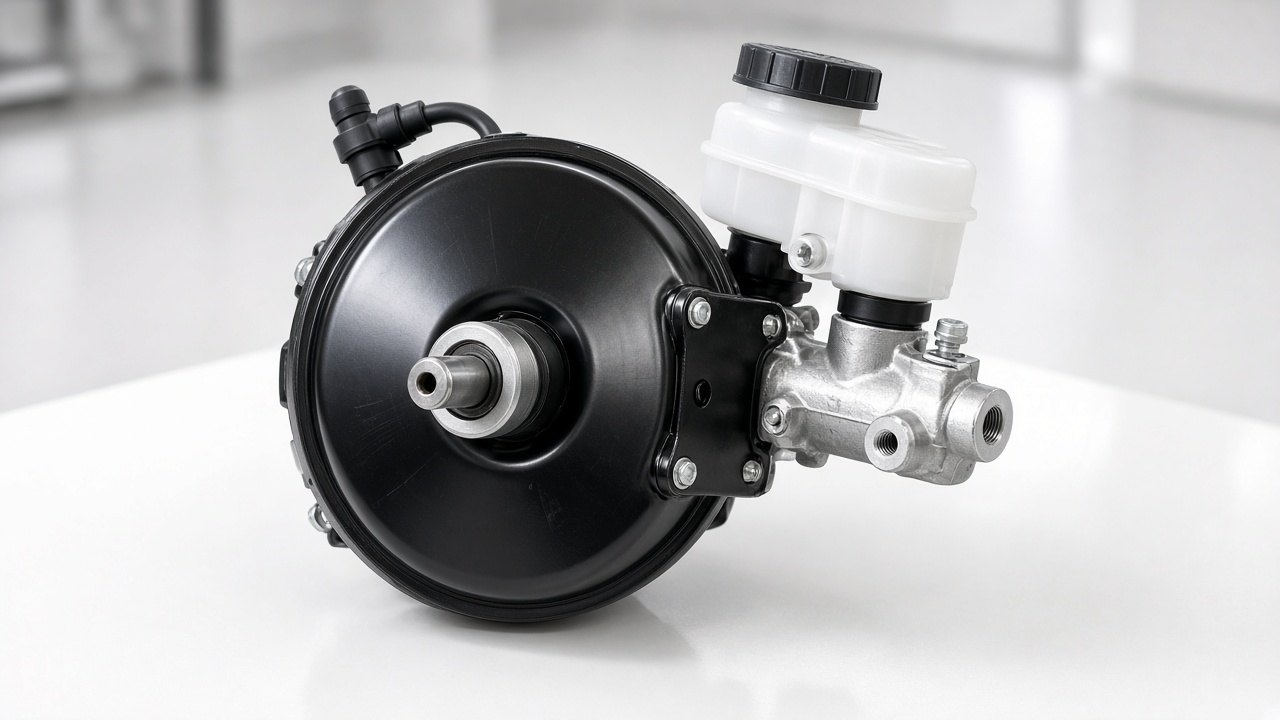
How the booster works
The booster uses engine vacuum to multiply the force of your foot on the master cylinder. A check valve in the vacuum hose holds vacuum in the booster when the engine is off. When everything works, the pedal is light and progressive.
Symptoms of a bad booster
- A hard pedal that needs much more effort than usual
- A hiss from under the dash when you press the pedal
- The idle stumbles or changes when the brake is pressed
- The pedal rises or falls with no change in your foot
The simple test
- With the engine off, pump the brake pedal several times to exhaust any vacuum.
- Hold firm pressure on the pedal.
- Start the engine. The pedal should drop slightly under your foot. That means the booster is working.
- Run the engine for a minute, then switch it off. Wait a minute, then press the pedal. You should get two or three assisted presses before it goes hard. If it goes hard immediately, the check valve or the booster leaks.
Check valve test
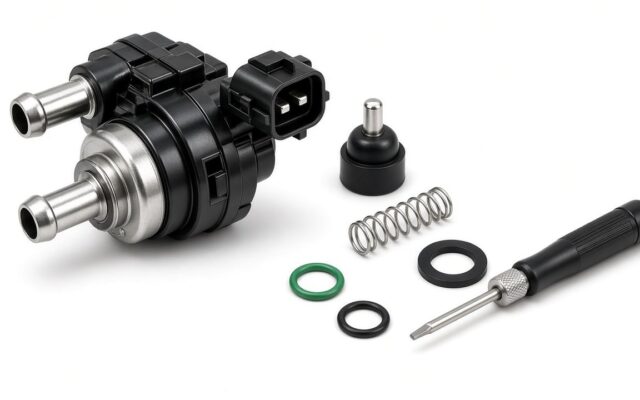
The check valve sits in the vacuum hose to the booster. Remove it and blow through it: air should pass in one direction only. Replace it if it passes both ways or is cracked. It is a cheap part. Inspect the vacuum hose at the same time; old hoses crack and collapse.
Vacuum leaks and the booster
A torn booster diaphragm leaks vacuum into the engine, which can upset the idle and the mixture. If the idle changes when you press the pedal, the booster diaphragm is the likely cause. See vacuum leaks for testing.
Booster or master cylinder?
The booster gives assist; the master cylinder holds pressure. A pedal that slowly sinks under steady pressure points to the master cylinder, as explained in brake pedal sinks. A hard pedal points to the booster or vacuum supply.
Replacement notes
Boosters are available new and rebuilt. Replacement means removing the master cylinder from the booster (often without disconnecting the lines, if you can move it aside carefully) and working under the dash to disconnect the pedal pushrod. Check the pushrod adjustment afterward and bleed the brakes if any line was opened.
Quick answers
- Can I drive with a bad booster? The brakes still work, but need much more effort. Get it fixed.
- Does the booster affect the idle? A leaking diaphragm can.
- Is a rebuilt booster okay? From a reputable rebuilder, yes.
- Do I need to bleed brakes after replacing the booster? Only if the hydraulic system was opened.