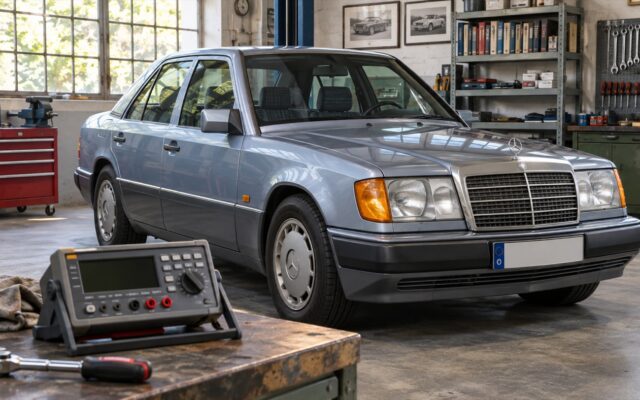
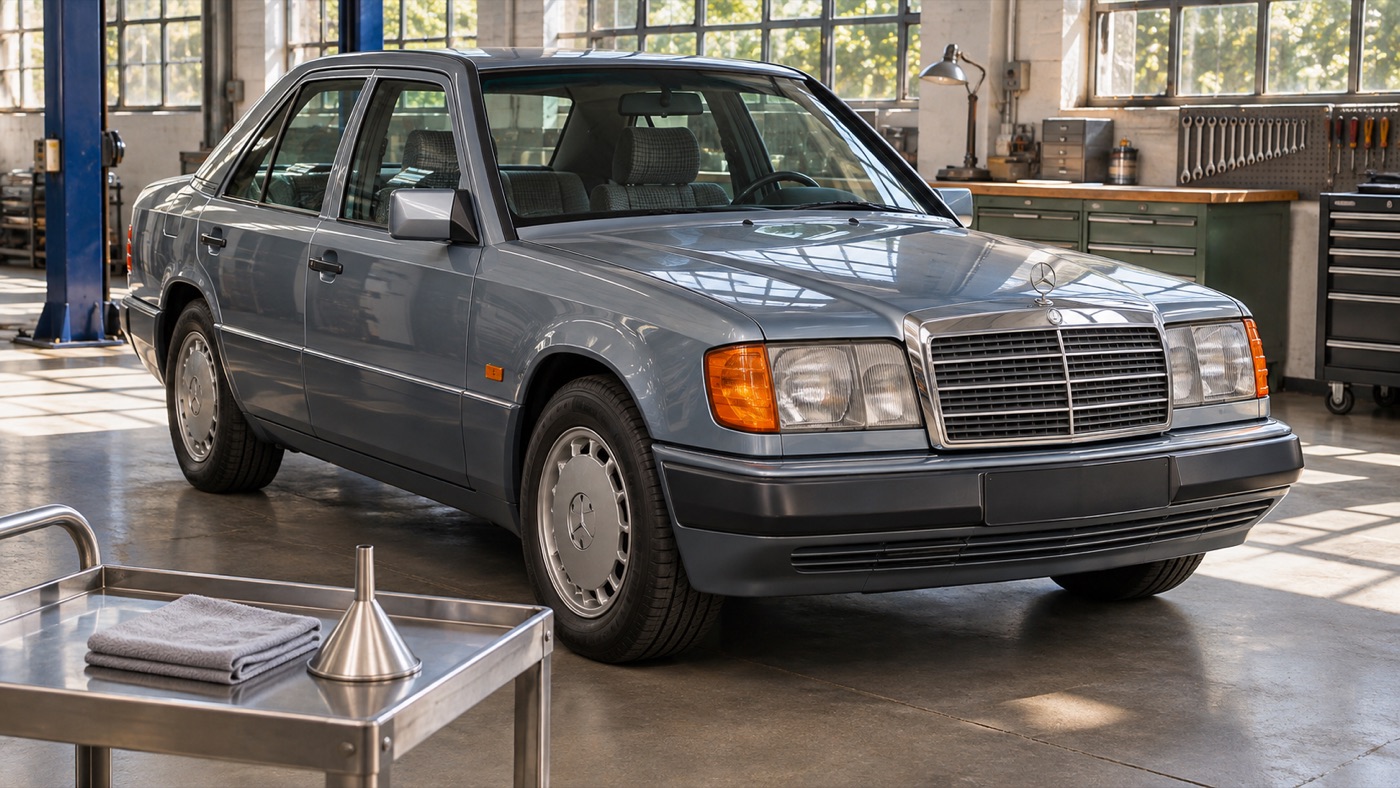
When the oil on your W124’s dipstick is halfway between MIN and MAX, do you reach for the oil bottle? You may not need to. Mercedes-Benz revised its service guidance in November 1995 to address an unexpectedly simple problem: some cars were being overfilled.
This is a guide to checking the level on a dipstick-equipped series 124 with the applicable factory instructions. It is not an oil-change capacity chart; a 230E, 300E and 500E do not necessarily require the same quantity or lubricant.
A small detail from Mercedes history
The 124 series entered production in the 1980s and developed into a family of sedans, wagons, coupes and convertibles. Across the classic Mercedes lineup, engines and equipment varied. But the dipstick is a wonderfully simple instrument: it lets you measure the oil that has collected in the sump.
The November 1995 service information MBNA 00/57A clarified how the reading should be taken. Two small waiting periods matter, and filling the engine up to the top of the dipstick every time is unnecessary.
Why the reading changes
When an engine runs, the oil pump circulates lubricant through the engine. After the engine stops, oil gradually returns to the pan. Checking immediately after shutdown may therefore give an unrepresentative reading. It also matters whether the car is level.
Think of a glass containing a little water. Tilt it, and its surface appears higher on one side than the other. The same principle explains why a sloping driveway is a poor place to check oil.
How Mercedes recommends checking the level
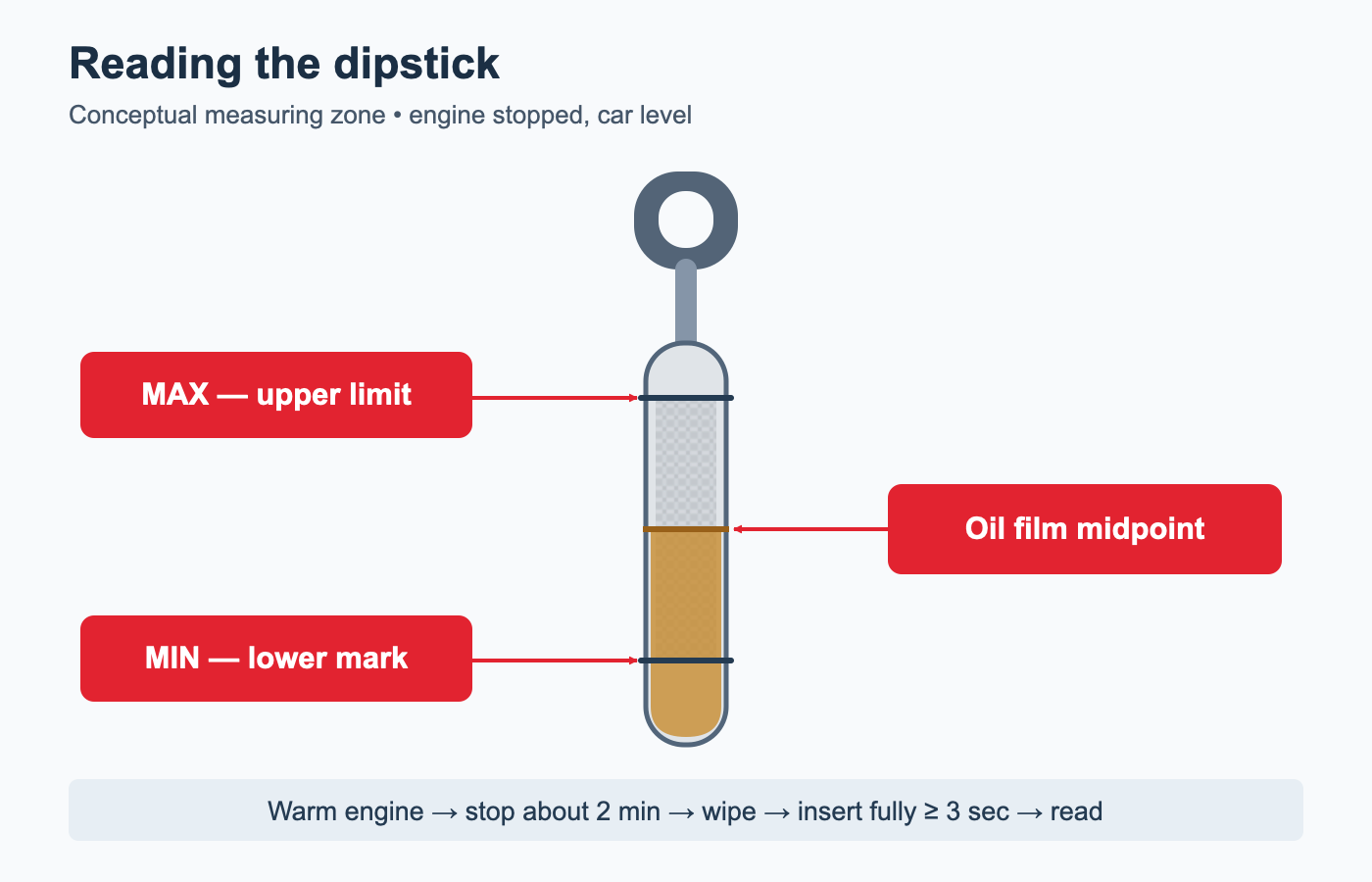
- Park on a level surface and apply the parking brake. Bring the engine to normal operating temperature (the bulletin refers to 80°C/176°F).
- Turn off the engine and wait about two minutes for the oil to drain back into the pan.
- Remove the dipstick and wipe it clean with a lint-free cloth. Keep hands and clothing away from hot components.
- Insert the dipstick completely and leave it seated for at least three seconds.
- Withdraw it and inspect the boundary of the oil film. If the mark is unclear, repeat the measurement before deciding whether to add oil.
The bulletin describes a level near the middle of the marked range as ideal. Do not exceed the upper mark. Check the instructions for your individual engine before using this method, especially if it has a replacement dipstick or different measurement requirements.
Why not keep topping it up to MAX?
The marked range is an allowance, not a target to chase every time you open the hood. Mercedes warned that excess oil can affect engine performance and potentially result in damage. It also cautioned against rounding up the specified refill quantity.
If an accurate reading indicates that oil is needed, use the correct approved lubricant for your engine, add a little at a time and recheck. An oil reading near the middle is not, by itself, a reason to pour in another bottle.
If the reading is unexpectedly above MAX, stop adding oil and check the measurement again under the correct conditions. If overfilling is confirmed, arrange for the excess to be removed according to the appropriate service instructions before continuing to operate the car.
For an actual oil and filter change, read the applicable procedure rather than using the dipstick range as a refill quantity. Our separate oil and filter change guide for engines 102.985, 103 and 104 covers that different job.
What if the measured level keeps falling?
A consistent drop is worth investigating. Record the date, mileage and quantity you add, then compare measurements taken under the same conditions. Examine the ground where the car parks for leaks and ask a technician about possible oil consumption if the loss continues.
Don’t mistake an oil-pressure problem for a simple oil-quantity problem. If oil pressure disappears or falls suddenly while driving, stop the engine as soon as it is safe to do so and seek assistance. Adding oil is not a substitute for diagnosing a pressure fault.
A classic Mercedes deserves regular checks, not unnecessary top-ups. If you are considering buying one, our W124 buying guide explains more things worth examining.
Useful tools for checking and replenishing oil
If you don’t already have the tools needed for this job, here are a few useful options available on Amazon (affiliate links). I may earn a commission from purchases made through these links.
- Lint-free shop cloths — for cleaning the dipstick without leaving loose fibers.
- Automotive oil funnel — to help avoid spills if replenishment is actually necessary.
- Rechargeable LED inspection light — to make the oil film and surrounding area easier to inspect with the engine off.
These are general tool listings. Use the oil specification and refill information for your own engine.
Factory reference
Mercedes-Benz North America service information MBNA 00/57A, November 1995, pages 1–2. This all-model bulletin superseded MBNA 00/57 (October 1994). Figure 1 identifies the upper and lower dipstick marks; the original illustration is copyright-protected and is not reproduced here.