A battery warning light on a classic Mercedes can make you think it is time to buy a battery. Or perhaps an alternator. But replacing either before checking the charging system can leave you with exactly the same problem and a much lighter wallet.
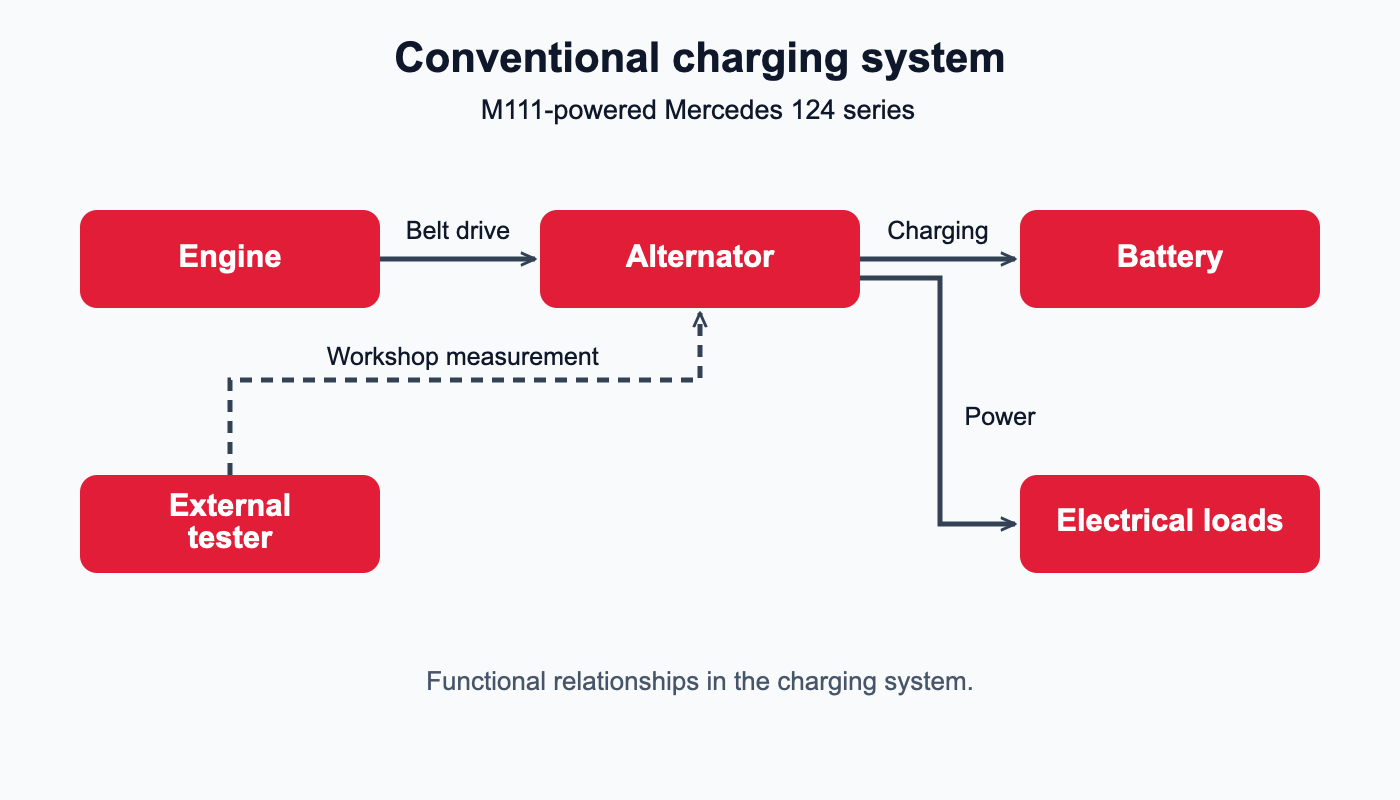
On an M111-powered Mercedes 124 series, the charging system operates conventionally. Its alternator does not communicate with the engine computer in the way many later Mercedes alternators do. A scan tool alone cannot tell you whether it is working.
Which Mercedes does this cover?
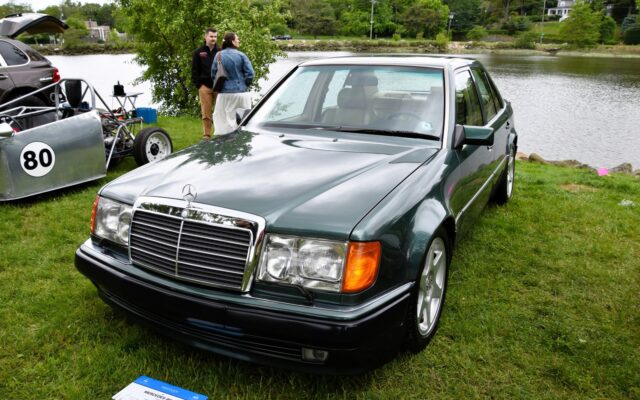
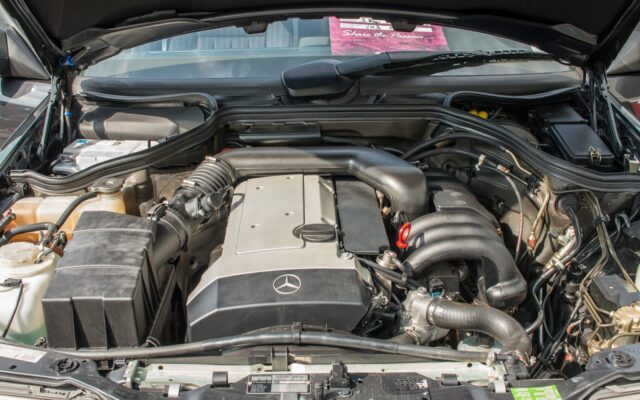
This guide covers the four-cylinder M111 engine in the 124 series, not every W124. Examples include the European 220 E sedan (124.022, M111.960), E 200 coupe (124.040, M111.940) and E 220 coupe (124.042, M111.960). A US-market E 320 uses a different engine. Check the chassis, engine and installed alternator before ordering parts.
What the alternator actually does
Think of the battery as a storage tank for electricity. It supplies energy to start the engine. Once the engine runs, the belt-driven alternator replenishes that reserve and supplies the electrical equipment. Headlights, blower motor and rear window heater all increase the electrical demand. If charging stops, the car gradually runs through the battery’s reserve.
Mercedes introduced the 124 series in 1984, well before many newer electronic charging systems appeared. If you are considering buying one, see our W124 buying guide for other things to check.
Why a charging problem can have different causes
A warning light, slow starting or dim electrical equipment is a reason to investigate, not a diagnosis of the alternator itself.
- A battery can lose capacity even when charging is healthy.
- A damaged or loose drive belt may prevent the alternator from turning as intended.
- Corroded connections or poor grounds can interfere with the flow of electricity.
- The alternator may have internally worn or damaged components.
If the warning remains on while driving, get somewhere safe and arrange assistance. Loss of charging can eventually stop the engine; a damaged belt may affect other systems. Stop safely if you notice overheating or loss of steering assistance.
How Mercedes recommends diagnosing the M111
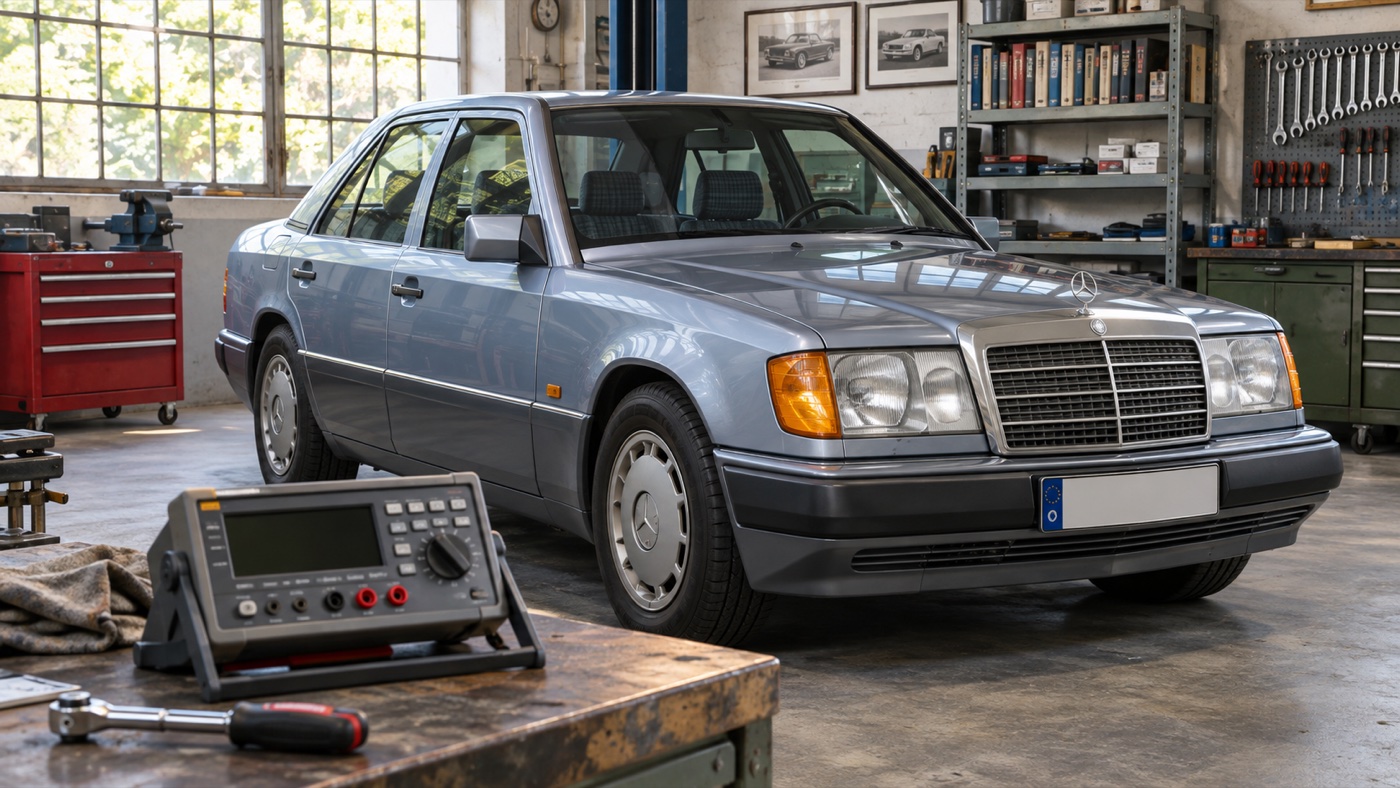
Mercedes-Benz issued workshop bulletin S-B-15.40/73 in December 2014 to explain the distinction between conventional alternators and more modern electronically linked units. The M111 is included in the conventional group. Its charging performance needs to be measured with an independent voltage-and-current tester rather than relying on engine-computer diagnostics.
There is one particularly useful detail in the bulletin: full charging output can be delayed after startup. An immediate reading may therefore be misleading. A technician needs to use the applicable workshop test conditions and specifications rather than one universal voltage figure.
Before buying a replacement
Ask the workshop to check battery condition, drive-belt condition, electrical connections and grounds, then confirm alternator output using the appropriate external tester. If the unit turns out to be faulty, verify the replacement against your vehicle and installed alternator.
Never disconnect a battery terminal with the engine running as a shortcut to diagnose charging. Keep hands and measuring leads away from moving belts and pulleys. A proper charging-system test belongs with a trained technician.
The best result is knowing what actually failed, whether it is the alternator, battery, belt or a connection, before spending money on replacement parts.
Useful tools for checking the charging system
If you don’t already have the tools needed for this job, here are a few useful options available on Amazon (affiliate links). I may earn a commission from purchases made through these links.
- Automotive digital multimeter — for checking battery voltage and electrical connections.
- DC current clamp meter — for measuring charging current without opening the circuit; choose a meter rated for the expected DC current.
- Rechargeable LED inspection light — for examining belt condition and electrical connections with the engine switched off.
These are general tool listings, not a substitute for the factory-specified charging-system test equipment or procedure.
Factory reference
Mercedes-Benz service bulletin S-B-15.40/73 (December 9, 2014), pages 1–3. It explains charging-system diagnosis, not alternator removal or a bench-test procedure. Mercedes-Benz Public Archive: 200 CE with M111 engine.