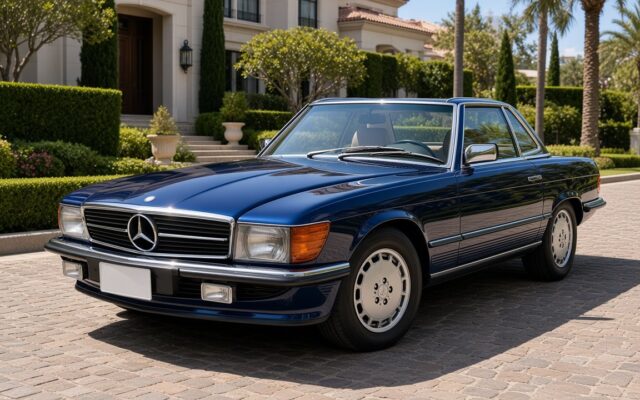
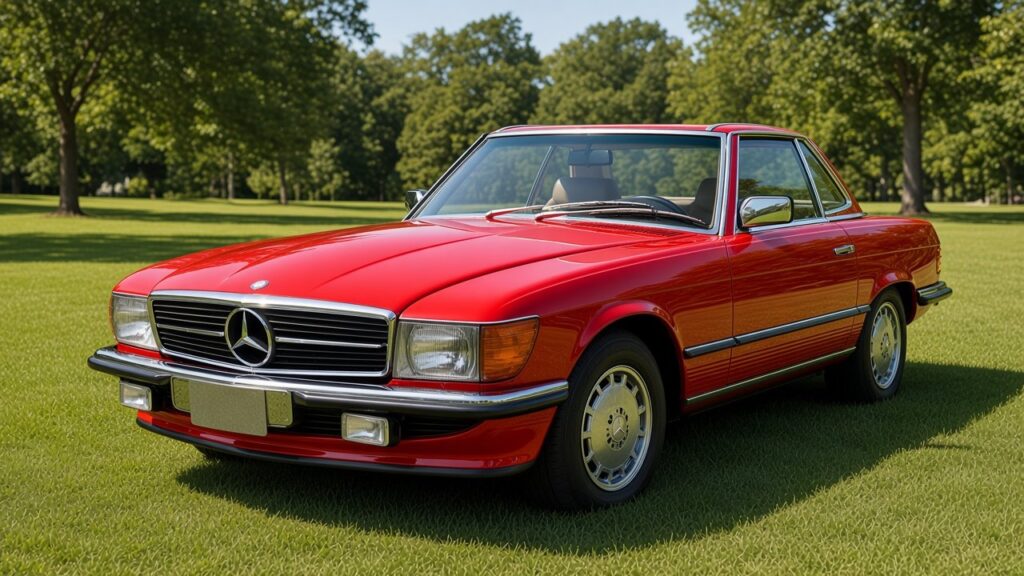
380SL values are where timing-chain honesty shows up in dollars. Two cars with identical paint can be thousands apart because one has invoices and the other has vibes.
As an Amazon Associate I earn from qualifying purchases. See the Affiliate Disclosure.
Chain deep-dive: single vs double row. Model: 380SL guide. Compare: 380 vs 560. Market: 2026 values.
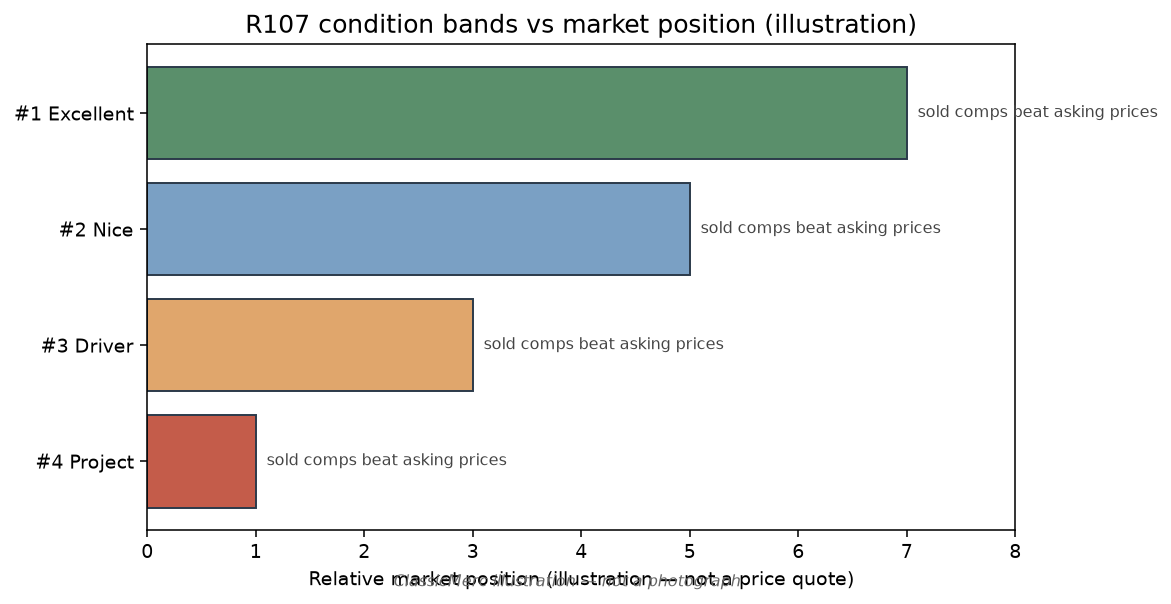
Condition bands
Use the same #4–#1 scale as other R107s. A #2 late 380 with documented double-row chain work can out-earn a prettier early car with an unknown engine — the market is telling you where the risk sits.
How chain status moves price
- Documented double-row or conversion: narrows the discount to comparable 560s; invoices should name chain, rails, gears, tensioner, and shop
- Unknown early single-row: buyers should subtract a major engine job — or walk
- “It runs quiet” without paper: not documentation
1984–85 vs earlier
Later 380s are easier to love on paper because of the chain story. Still do the full rust inspection — chain peace of mind does not patch a bulkhead. Aluminum engines also punish overheating history; ask about cooling work.
Practical comps
Compare sold 380s in the same chain category. Averaging early unknowns with late documented cars invents a fake “380 market average.”
When a “cheap 380” is expensive
Add chain conversion, rust, and soft-top quotes to the asking price before you celebrate. A higher-ask late 380 with invoices can beat a bargain early car on total cost of ownership.
Topic checklist
- Bands
- chain status effect
- 1984-85 vs earlier
If any line above is still fuzzy on your car, verify against the factory manual for your engine code or ask an R107-literate shop before you buy parts.
Early vs late 380 ownership math
Early 380SL buyers often inherit single-row timing chain conversion cost. Late cars may ask more up front but arrive with better documentation. Build a spreadsheet: asking price + known deferred work + one year of maintenance reserve. The “cheap” early car often loses that race.
What to verify on any 380
- Chain history and tensioner condition
- Injection and fuel-pressure health
- Floor and bulkhead rust
- Soft-top condition and second-top reality
- Service invoices for the last 5–10 years
Pay for a specialist PPI. Generic shops miss R107-specific failure modes that change the deal.
If two cars are close on price, choose the one with rust-free floors and documented fuel/cooling work over the one with nicer paint alone. Paint is visible; structure and drivability decide whether you enjoy the car or fund a shop for a year.