
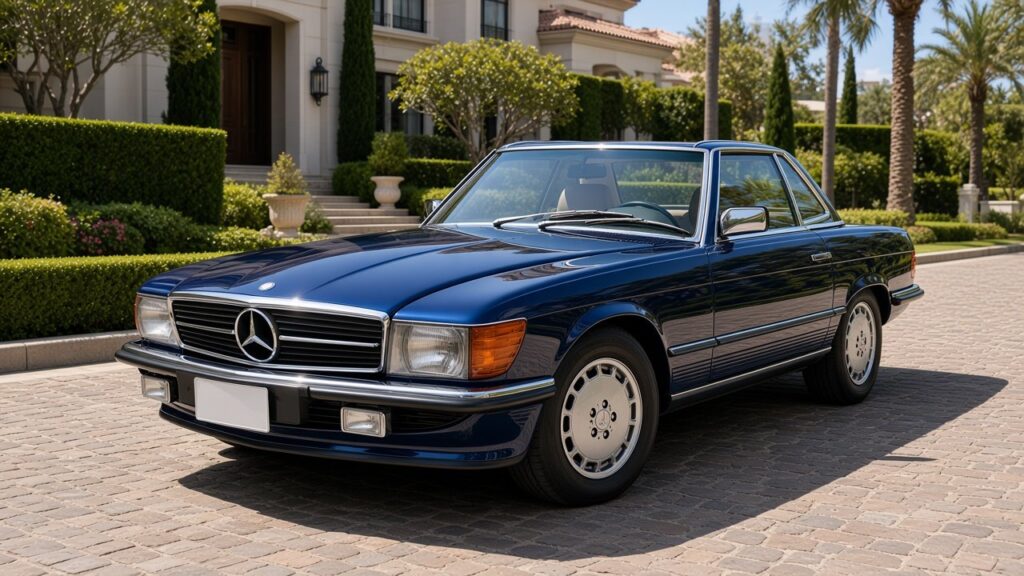
When someone asks what a 560SL is worth, I ask what condition they mean. Late R107 money concentrates here, but the spread between a tired driver and a documented 1989 car is large.
As an Amazon Associate I earn from qualifying purchases. See the Affiliate Disclosure.
Parent: R107 values 2026. Model: 560SL guide. Horsepower nuance: US vs Euro.
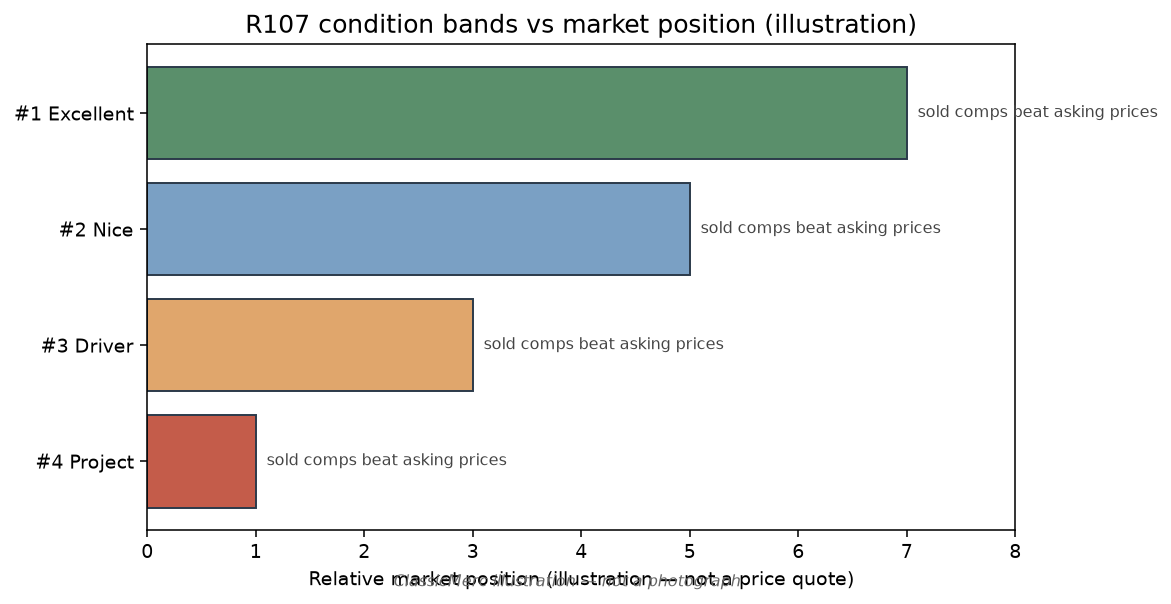
Condition bands
- #4 project — non-running or heavy rust
- #3 driver — usable, visible age, some deferred work (volume market)
- #2 nice — solid metal, sorted KE-Jetronic manners, presentable paint/interior, records
- #1 excellent — exceptional original or high-end restoration
1989 premium
Last-year cars with clean titles, honest mileage stories, and options in order often sit above earlier 560s. The premium shrinks fast if the soft top is shot, the ABS lamp is ignored, or the bulkhead is suspect.
Mileage and sitting
Ultra-low miles can mean a fuel system that needs everything after sitting. A driven 80–100k-mile car with invoices can be the better buy. Mileage without service history is just a number.
Color and options
Original colors per the data card help. Resprays in trendy colors without paperwork do not automatically add value. Working AC, both tops present, and limited-slip matter to drivers.
How to read the market
Track sold results on major auction sites and specialist dealers, then adjust for your photos. Subtract soft-top quotes, fuel-system work, and rust estimates. Asking prices are wishes.
Negotiation anchors
Arrive with three sold comps in the same condition band and a written list of work (top, fuel, rust). Sellers respond to paper better than to feelings. If they will not allow a bulkhead look, the price should assume the worst.
Topic checklist
- Condition bands
- 1989 premium
- mileage
- color
- recent sale examples
If any line above is still fuzzy on your car, verify against the factory manual for your engine code or ask an R107-literate shop before you buy parts.
Seller paperwork that protects you
Ask for maintenance invoices, rust repair photos (before/after), soft-top age, and any chain or timing work. A clean title in the seller’s name matters. Salvage history is not automatic rejection, but it must be priced and disclosed.
Inspection order that saves money
- Undercarriage and floor pans with a bright light
- Bulkhead and battery tray area
- Soft top frame and seals
- Engine bay for leaks and evidence of recent work
- Road test: idle, shifts, brakes, and heat soak restart
Walk away from cars where the seller will not allow a lift or a cold start. Those constraints usually hide expensive metal or fueling issues.


