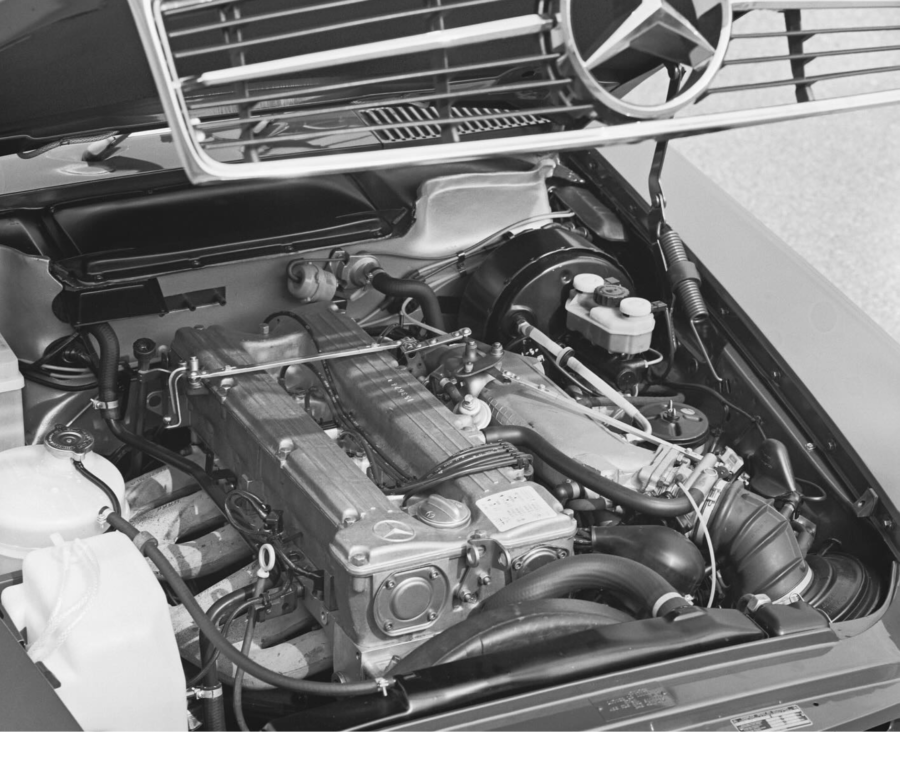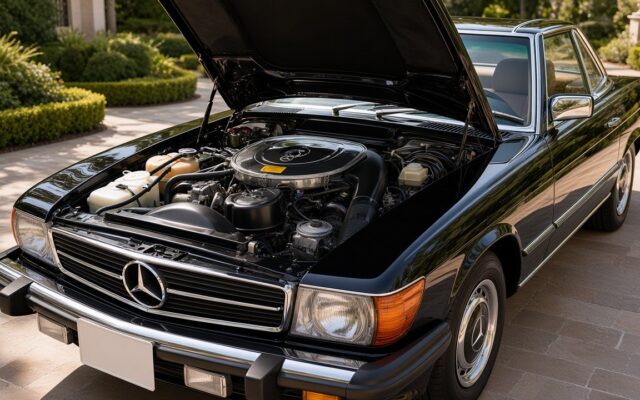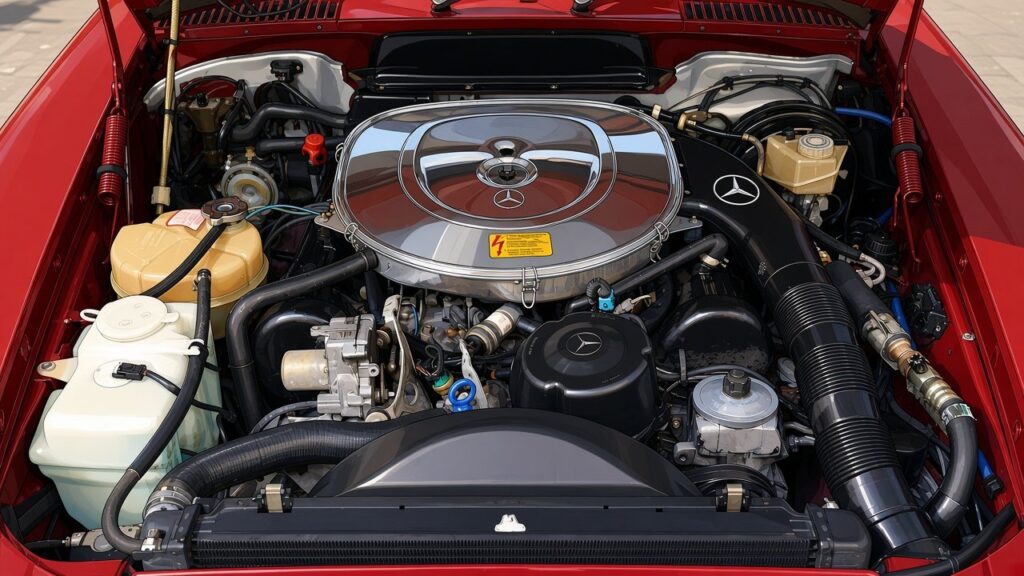
If you are shopping a Mercedes 380SL, the timing chain question comes up fast — and it should. Early US 380s used a single-row chain that can wear and fail with expensive consequences. Later cars moved to a double-row design. This guide covers how to tell them apart, symptoms, costs, and how I treat the risk when buying.
Engine context: R107 engines, 380SL guide.
Which years are the worry?
As a rule of thumb, roughly 1981–1983 380SLs are associated with the single-row chain. Later mid-1980s 380s used a more robust double-row setup. Do not trust a forum post about your exact car — verify on the engine or with invoices. Production changes do not always line up with calendar-year badges in classifieds.
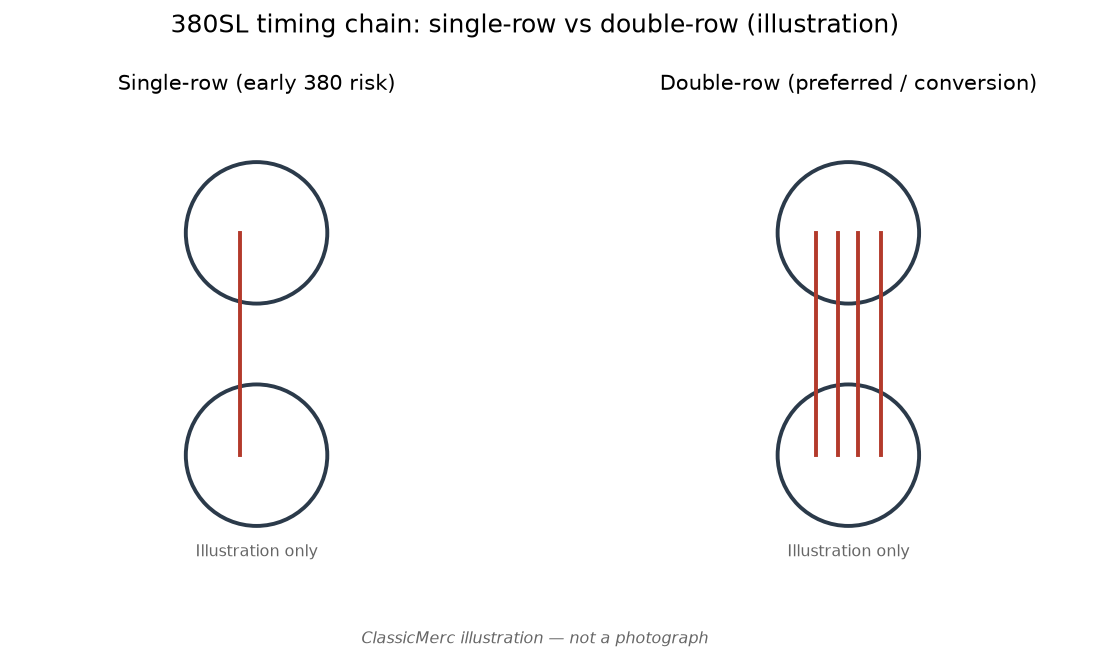
Single-row vs double-row
- Single-row: narrower chain; the design that earned the bad reputation when guides/rails wear and the chain stretches or breaks
- Double-row: wider duplex-style arrangement used later; the target for conversions
These V8s are interference engines. A broken chain can bend valves and turn a weekend car into a cylinder-head project.
Symptoms
- Light metallic rattle for a few seconds on cold start (often dismissed as “lifters”)
- Rattle that returns at hot idle or under load as wear progresses
- In worst cases: sudden silence of valvetrain, no-start, or ugly mechanical noises after a failure
Not every cold tick is a chain — but on an early 380 you do not get to ignore it.
How to tell what you have
- Service invoices that explicitly say single-to-double conversion, with parts listed
- Inspection by a Mercedes indie who has done the job (covers off)
- Engine number / production date correlation as a clue, not a verdict
Sellers who say “I think it’s fine” without paperwork are asking you to underwrite their optimism.
Conversion parts and job scope
A proper update typically includes the chain, guides/rails, sprockets/gears as required, tensioner components, and fresh gaskets — plus whatever oil leaks you wisely fix while you are in the front of the engine. This is not a thirty-minute parts-store chain slap.
DIY vs shop cost
Experienced DIY builders with the right tools do this job; most owners should budget professional labor. Shop costs vary by region, but you should think in terms of a major service bill, not a tune-up. Get a written estimate that lists parts brands and whether the timing cover, seals, and related wear items are included.
Interval / when to act
There is no cheerful “every X miles and you’re safe forever” sticker for a neglected single-row car. If history is unknown and the car is in the early-380 window, inspect immediately and price the work into the purchase. If a double-row conversion is already documented with receipts, file those receipts like titles.
Buying advice
A cheap early 380 without chain documentation is not cheap. A slightly more expensive late 380 with a documented double-row chain can be the better financial decision. Walk through the rest of the car with the buying guide either way — a new chain does not fix a rotten bulkhead.