As an Amazon Associate I earn from qualifying purchases.
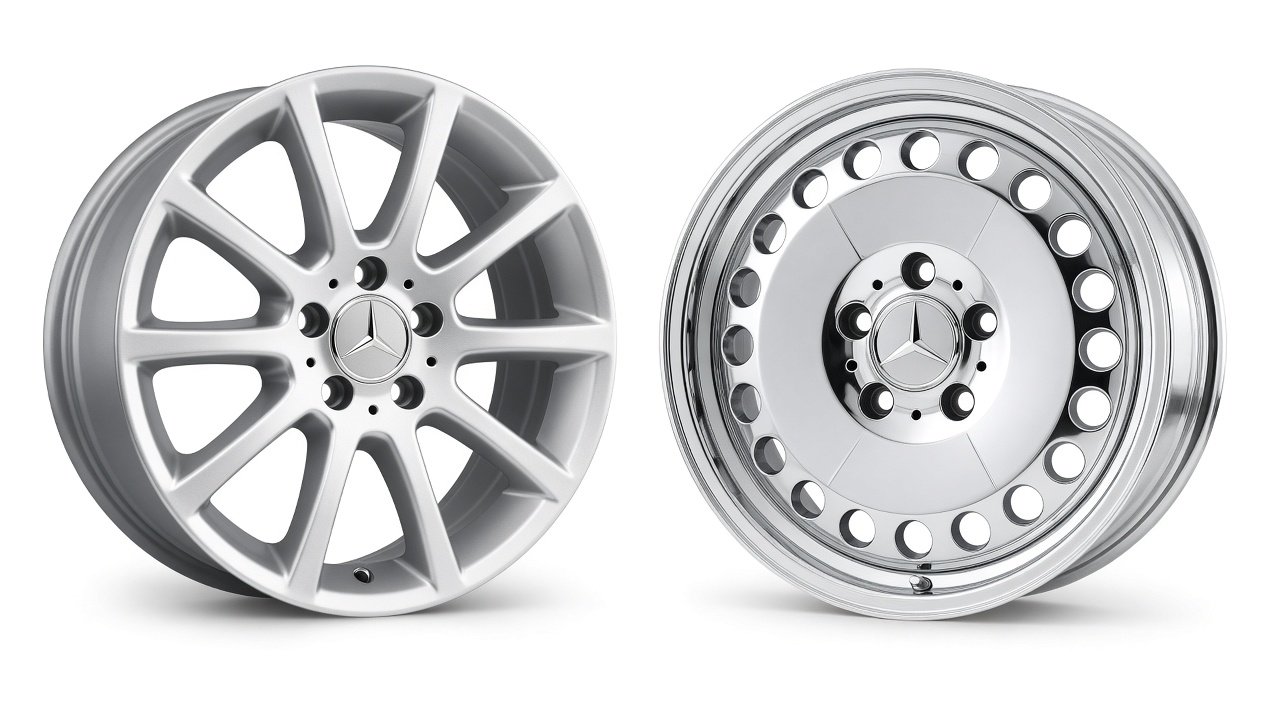
Bundt and 15-hole styles mark eras of R107 wheels. Size, offset, and center caps must match reality — later wheels are not always a bolt-on fantasy.
Related: tire and suspension posts.
Styles and sizes
Know what your year commonly wore; measure what is on the car now. Offset and tire diameter change speedometer and clearance.
Later wheels and caps
Some later styles can be fitted with attention to offset and brakes; test clearances. Center caps and nuts are easy to mismatch — buy the correct set.
Common mistakes
Skipping cold and hot tests, trusting verbal history without invoices, replacing parts before measuring, and ignoring rust while chasing mechanical gremlins. Photos from another market or year are not a parts catalog.
When to stop DIY
Stop when you lack the gauge, puller, or safe support the job needs — or when the first repair did not change the symptom. Pay for diagnosis with someone who sees R107s regularly.
Practical takeaway
Do not assume a photo of “SL wheels” clears your calipers.
Shop notes and paperwork
Keep invoices, pressure readings, part numbers, and dated photos of the area before and after work. The next owner — or future you — will ask what was actually done. Verbal “we took care of it” evaporates at sale time.
Safety and scope
Use jack stands on solid ground, relieve fuel/coolant pressure before opening systems, and disconnect the battery when the procedure calls for it. If a step needs a specialty tool you do not own, rent it or hire it — improvising with the wrong lever is how fasteners and fingers break.
Verify against the factory manual for your engine and chassis. No invented personal car details here — use your plates, invoices, and measured symptoms.
Shop notes and paperwork
Safety and scope
If this topic intersects fuel, rust, or safety systems, fix the safety and leak paths before cosmetic or convenience items. That order saves money twice.
R107 bolt pattern, lug bolts and offset
The R107 uses the Mercedes 5 × 112 mm bolt pattern with a 66.6 mm center bore. That’s why so many later Mercedes wheels physically bolt on. Bolting on and fitting correctly aren’t the same thing, though.
- Lug bolts, not nuts. Mercedes uses M12 × 1.5 wheel bolts with a ball (radius) seat. Never use conical-seat bolts made for aftermarket wheels on factory wheels, or the reverse. The seat shape must match the wheel. Bolt length also differs between alloy and steel wheels, and between wheels of different thicknesses.
- Offset (ET) controls fit. Factory R107 wheels use offsets chosen for the car’s fenders and suspension. Many later Mercedes wheels have different offsets and widths that can rub the fenders or suspension or change scrub radius. Check the ET and width stamped on the wheel against the factory specification for your year before buying.
- Torque. Tighten in a star pattern to the factory torque (commonly cited around 110 Nm / 80 ft-lb for Mercedes of this era; confirm it for your car) with a torque wrench, not an impact gun. Recheck after the first 50 miles.
- Hub-centric fit. With a 66.6 mm bore, factory and correct Mercedes wheels center on the hub. Aftermarket wheels with larger bores need correct centering rings.