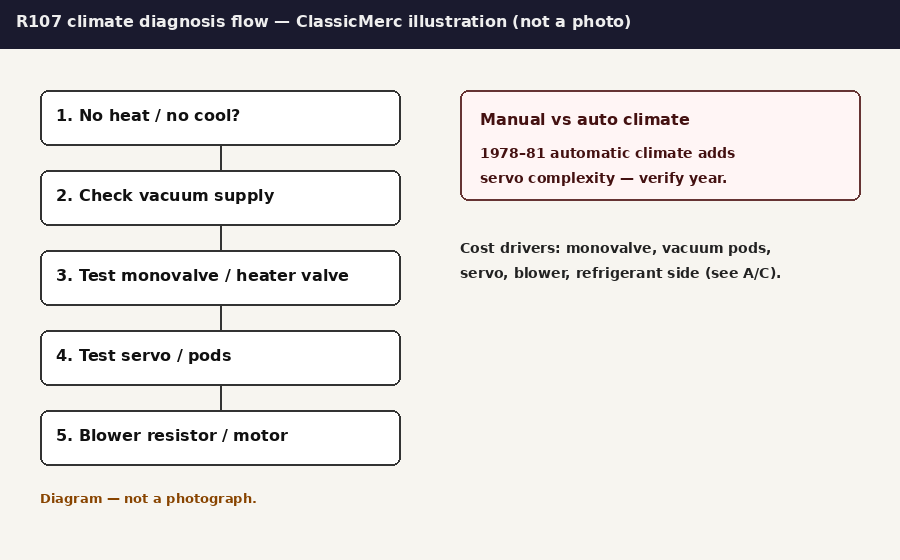
Climate complaints on an R107 split into refrigerant-side problems and control-side problems. This page is the control side: heat, blend, flaps, and vacuum. For cold air production, see the A/C article.
Related: A/C conversion and leaks.
Manual vs automatic climate
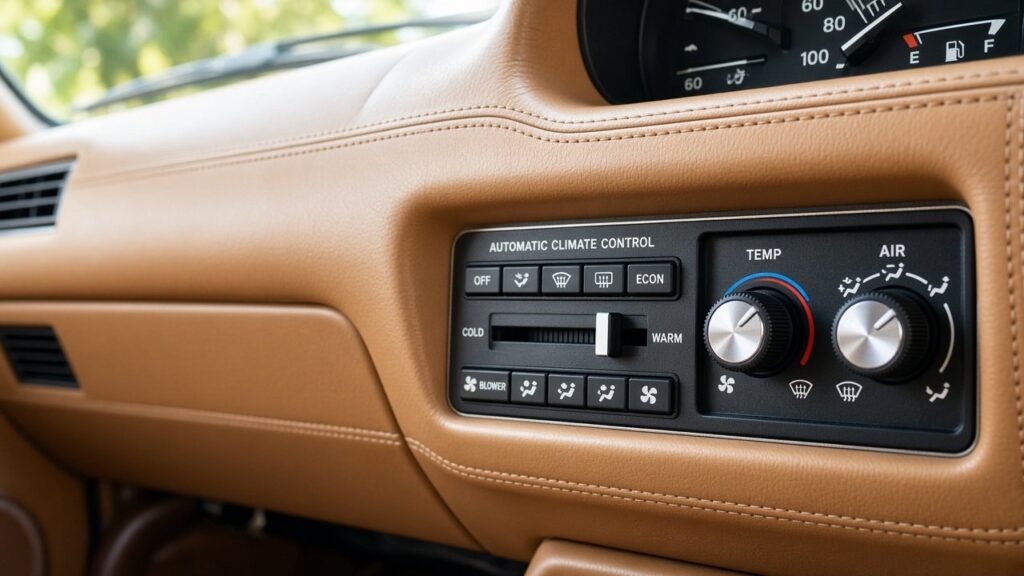
Many years use simpler manual controls. Some mid-run cars (notably late-1970s into early-1980s depending on market) add automatic climate complexity with a servo. Know which system you have before ordering parts from a random listing photo.
Symptoms → likely areas
- No heat: monovalve / heater control valve, vacuum supply, thermostat stuck open (engine never warm).
- Heat stuck on: valve stuck open or control signal wrong.
- Wrong vents / no defrost: vacuum pods and flap actuators.
- Blower dead on some speeds: resistor pack or switch; all speeds dead points at motor or power feed.
Vacuum is the quiet culprit
Pods need vacuum. A cracked hose or failed check path makes flaps limp. Listen for hissing behind the dash and test pods individually when possible.
Servo and monovalve
On automatic climate cars, a bad servo creates confusing blend behavior. Monovalve failures are classic “no heat” stories. Verify with basic electrical/vacuum checks before replacing the entire dash.
Diagnosis order I prefer
- Confirm engine reaches temperature
- Confirm refrigerant side if cooling is the complaint
- Check vacuum supply
- Test heater valve / monovalve
- Test pods and servo
- Blower motor / resistor
Cost drivers
Labor to reach some components exceeds the part price. Get a diagnosis fee and a written plan. Dash-out jobs should be scheduled, not discovered mid-weekend.
Blower diagnosis details
If only high speed works, suspect the resistor. If nothing works, check power, ground, and the motor. Cabin smell of hot electronics after blower failure means stop and inspect — do not keep hammering the switch.
Heater control valve / monovalve tests
With the engine warm, feel heater hoses and watch whether temperature changes when you command heat. A valve that never closes leaves you cooking in summer; one that never opens leaves you freezing. Electrical and vacuum commands differ by system — use the diagram for your year.
Vacuum pod failures
Pods fail by diaphragm leak. Modes that partially work (defrost ok, feet not) map to specific pods. Replacement often means glovebox or under-dash time. Label vacuum lines as you go; photos help.
Automatic climate quirks
Servo feedback problems create hunting or stuck temperature. Pushbutton units have their own failures. If a shop quotes “need entire pushbutton unit” without testing power and grounds, get a second opinion from an R107-literate tech.
Cost examples (planning, not quotes)
Pods and valves are usually parts-plus-moderate labor. Servo and deep dash work jump labor. Combine climate diagnosis with A/C leak repair when both are weak so you pay for dash access once where possible.
Tools that help
A decent digital multimeter helps verify power to blower motors, valves, and switches before you replace parts blind.
As an Amazon Associate I earn from qualifying purchases.
Owner quick checks before the shop
- Does the engine reach normal temperature?
- Do you hear vacuum hiss with the blower on?
- Which modes work (defrost / feet / face)?
- Does the blower work on all speeds?
Write those answers down. You will get a better diagnosis per dollar.