As an Amazon Associate I earn from qualifying purchases.
When an R107 starts to feel loose, clunks over bumps or wears the inside edges of the front tires, the front suspension is usually tired. The good news is that every part is still available, and a front-end refresh brings back the tight, planted feel these cars had when new.
Which parts wear
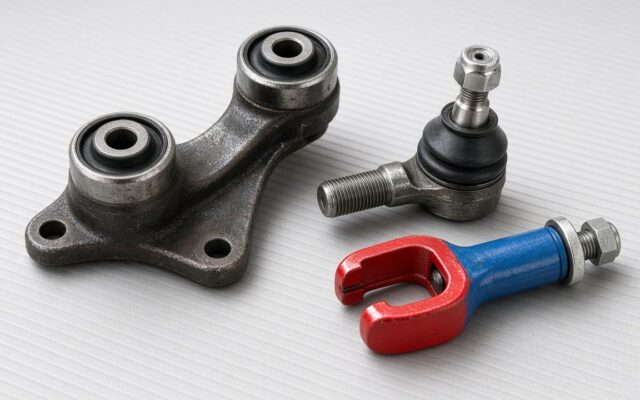
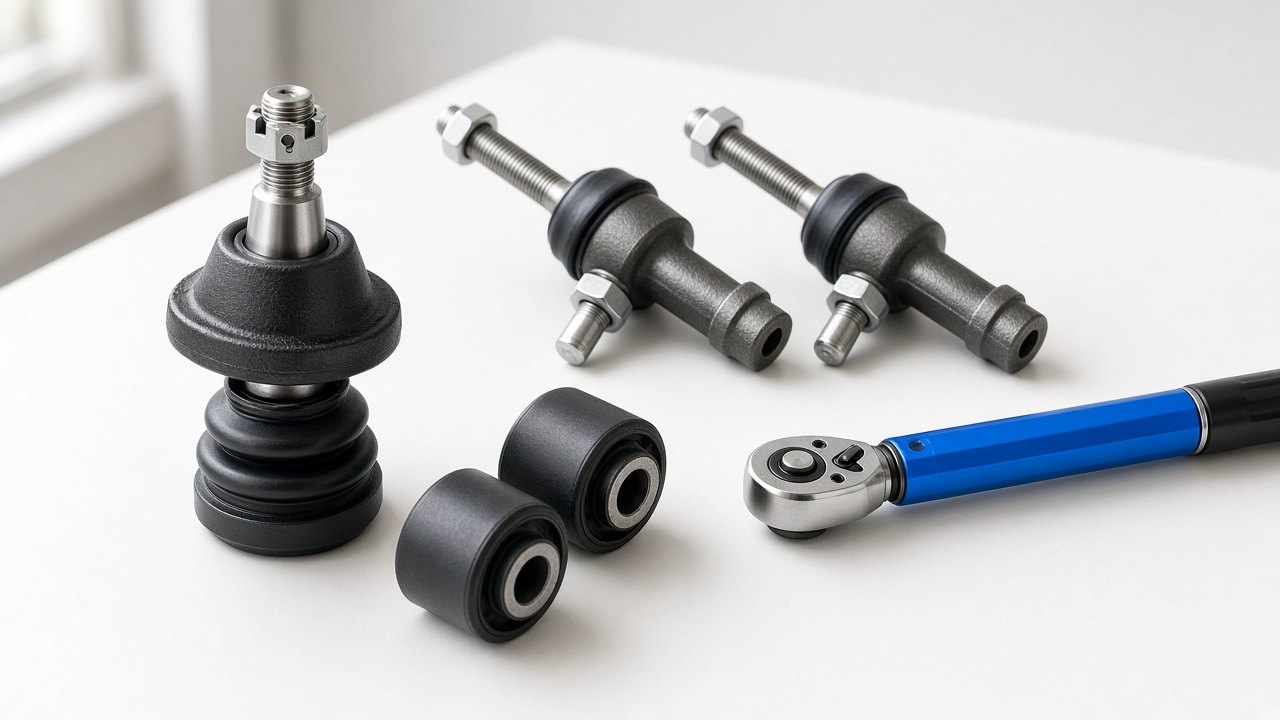
The R107 front suspension uses upper and lower control arms with ball joints, rubber control arm bushings, a steering linkage with tie rods and a center link, coil springs and shock absorbers. After forty years, the rubber parts are the first to go: control arm bushings crack and soften, and ball joint boots split and let dirt in.
- Lower ball joints carry most of the load and wear first.
- Upper ball joints last longer but should be checked at the same time.
- Control arm bushings cause clunks and a vague feel under braking.
- Tie rod ends cause play in the steering and uneven tire wear.
How to check ball joints
- Raise the front of the car and support it on stands under the lower control arms, so the suspension is loaded, or follow the manual’s check procedure for your car.
- Grab the tire at the top and bottom and rock it. Movement at the ball joint, rather than at the wheel bearing, points to a worn joint.
- Use a pry bar under the tire to lift it while watching the joint. Visible up-and-down movement means it is worn.
- Look at the rubber boots. Torn boots with grease thrown out mean the joint is on borrowed time.
If you are not sure whether play is in the wheel bearing or the ball joint, have a helper press the brake pedal. Bearing play disappears with the brake on; ball joint play does not. See front wheel bearings.
Control arm bushings
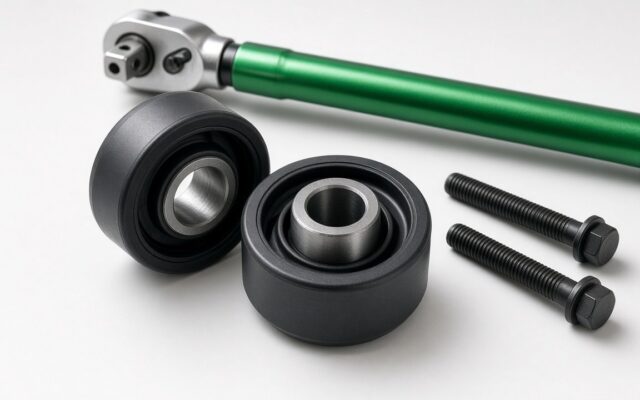
Look for cracked rubber, rubber pushed out of its sleeve, or shiny marks where metal has been rubbing. A clunk when you brake hard or go over a speed bump often comes from these. Pressing bushings out and in needs a press or the proper tools, so many owners replace complete control arms instead.
Tie rods
Have a helper rock the steering wheel while you hold each tie rod end. Any knocking or play means it needs replacing. Also check the idler arm at the same time.
What a full front-end rebuild includes
A typical refresh includes lower and upper ball joints, control arm bushings, tie rod ends, the center link, the idler arm bushings, the steering damper, shocks and, if they are sagging, springs and spring pads. Then a four-wheel alignment. Doing it all at once saves labor because the same parts come apart anyway.
Cost and parts
Parts kits from specialist suppliers cover most items. Shop labor depends on how seized the hardware is. Lemförder, Meyle and similar brands are common choices; buy from a supplier that knows the R107.
Quick answers
- Can I drive with a worn ball joint? A badly worn lower ball joint can separate, which is dangerous. Replace it.
- Do I need a spring compressor? For some jobs on the lower arm, yes. Use the correct tool and follow the manual; springs store a lot of energy.
- Will new parts fix wandering? Often, together with an alignment and correct tire pressures.
- How long does a rebuild last? With quality parts, many years of normal driving.