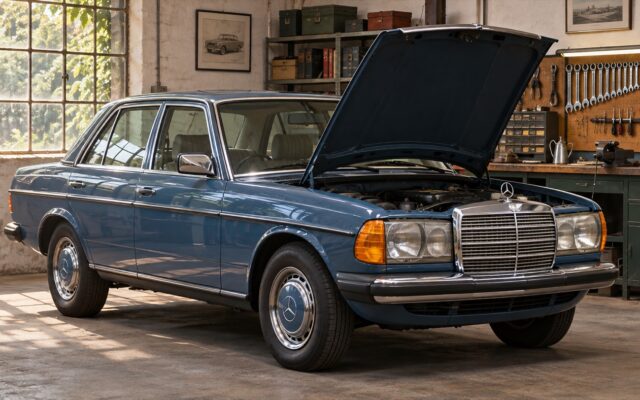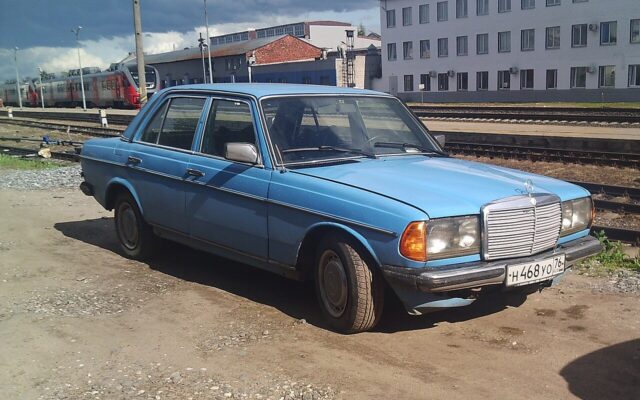
A falling dipstick reading is a reason to investigate, but it is not proof that a classic Mercedes diesel needs an overhaul. The important question is how much oil disappears over a known distance, under comparable conditions. Keep a record first; then decide whether there is an external leak, a problem inside the engine, or simply an inconsistent measurement.
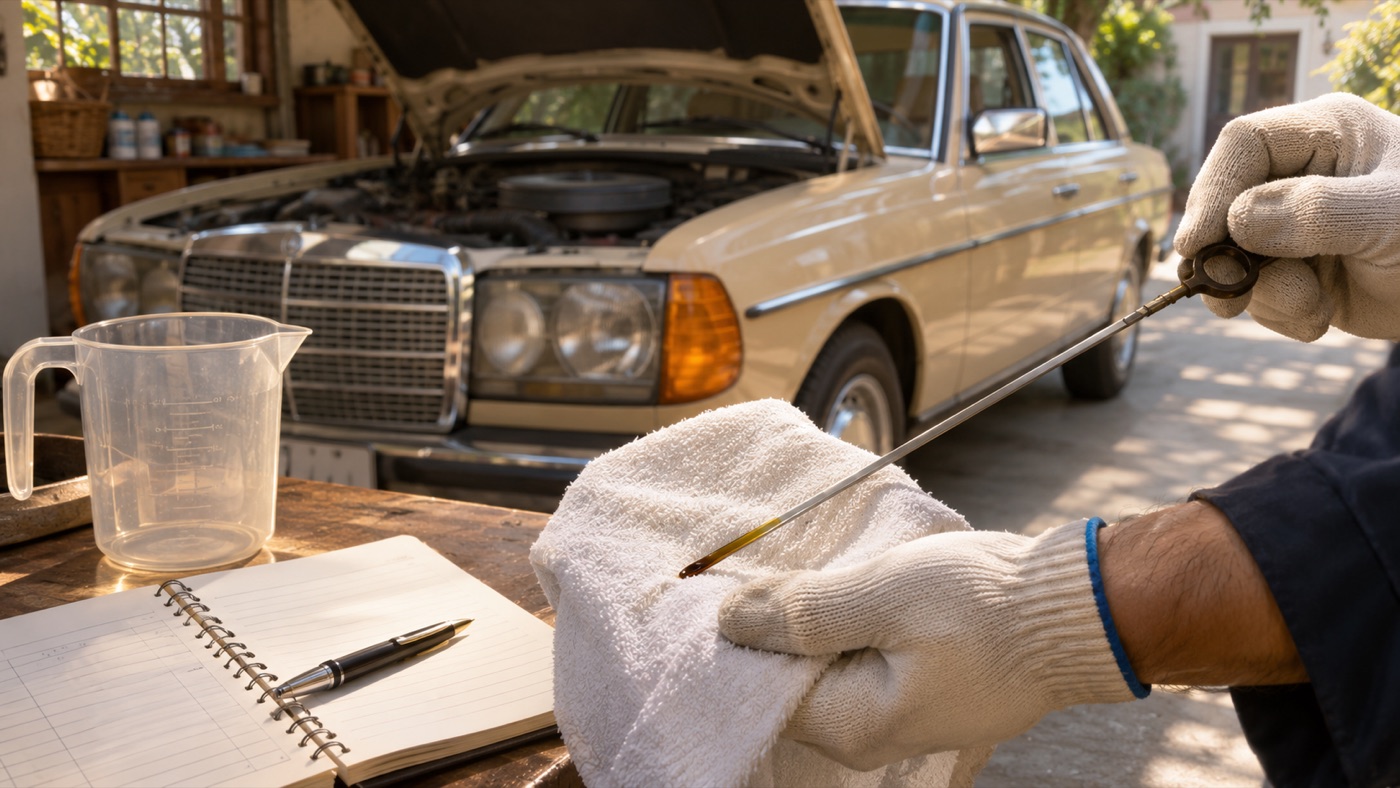
Mercedes put considerable care into measuring oil consumption on its four- and five-cylinder diesels. The classic W123 continued that approach with the naturally aspirated OM616 and OM617 engines. The factory workshop literature even specified separate measuring instruments for different dipstick tubes, because a seemingly minor difference in equipment could change the result. That is one reason I would not condemn an engine after a single dipstick reading.
Start with a comparable reading
Use the owner’s manual for your exact car to establish the recommended oil level checking conditions. Park on a level surface, follow the specified engine temperature and waiting period, and use the correct ordinary dipstick. Different parking slopes or different waits after shutting down can make the comparison misleading. Do not top up above the maximum mark.
Keep a notebook with the mileage, date, measured level and actual quantity of any oil added. Use the same units throughout. For example, adding one quart over a measured 1,000 miles is one quart per 1,000 miles, provided the start and final levels really match. This is an example of arithmetic, not a factory allowance. A log that includes the distances between additions is far more useful to a mechanic than a memory that the car seems to need oil more often.
Why the oil goes missing
Oil may leave the engine in two broad ways: it can leak externally, or it can enter the combustion process. The first can leave wet areas or spots on the driveway. The second may be associated with smoky exhaust, but smoke alone does not establish which component is responsible. Diesel smoke can have several causes. An oil smell after parking similarly warrants inspection rather than a guess at a particular seal.
If the reading suddenly rises, do not assume the engine has somehow stopped using oil. The factory procedure calls for a check for fuel dilution before measuring consumption. Contamination with diesel fuel can change the oil level and conceal consumption. If the level rises unexpectedly, seek diagnosis promptly rather than continuing to drive in an attempt to establish a trend.
What Mercedes measured differently
The factory operation 00-130 (printed 00.4-130/1–2) describes a workshop measurement system using a graduated service dipstick and corresponding recording chart. The correct tool depends on whether the dipstick tube has provision for oil extraction. The two factory tool handles are blue and red respectively; those labels describe the special measuring tools, not a universal color rule for ordinary production dipsticks.
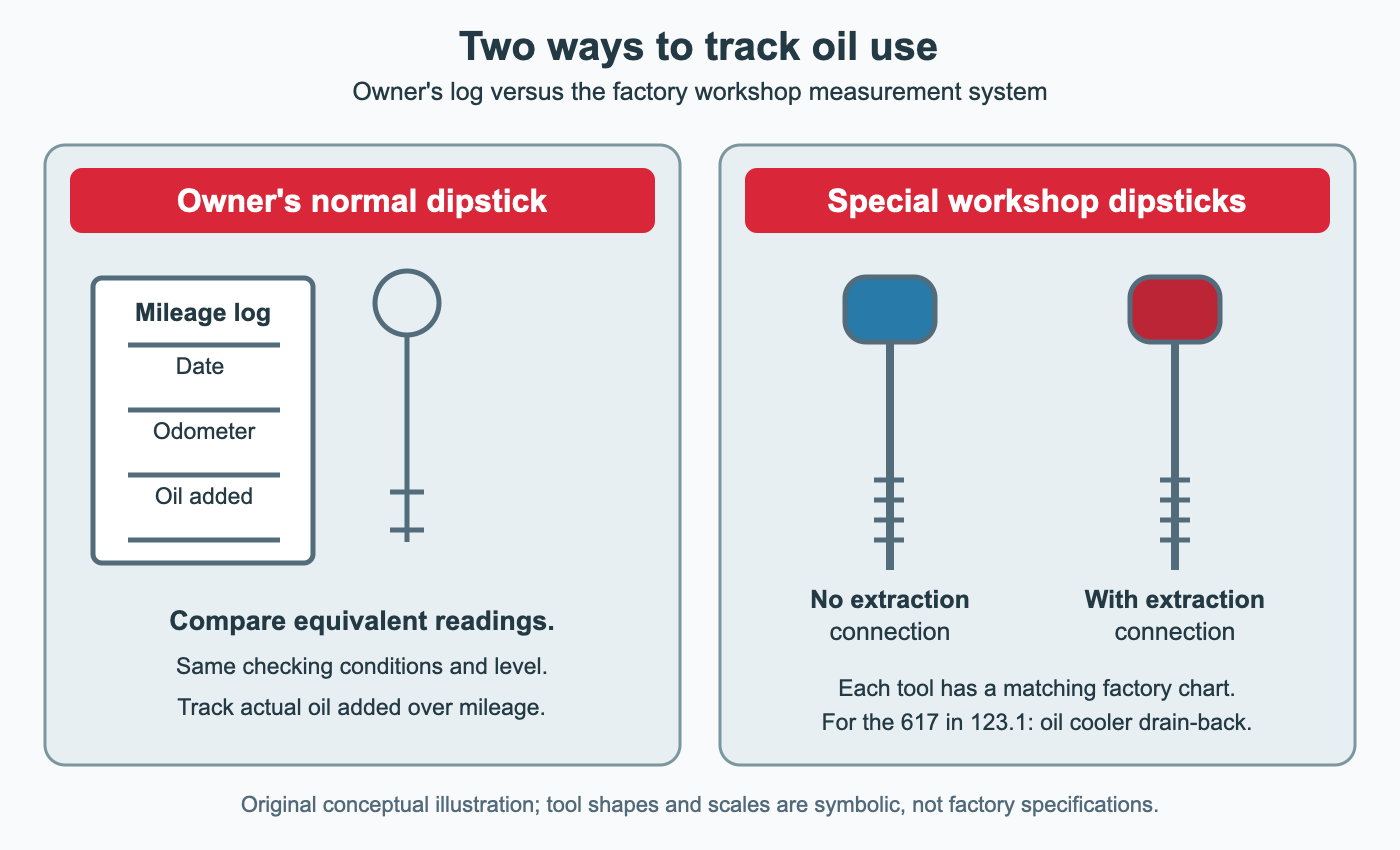
The factory also identifies an additional complication for the naturally aspirated five-cylinder 617 in model 123.1: oil returning from the external air-cooled oil cooler can affect the measurement. Its specialist test therefore accounts for that oil and specifies a check valve. This is a workshop procedure, not a modification to make at home.
The scan available for this guide includes the two-page description but not the separate chart with the full measurement procedure. Those pages do not establish a factory consumption limit or official test interval. Ask the workshop to use the correct engine-specific documentation, rather than accepting one supposed allowance for every W123 diesel.
What to ask your mechanic
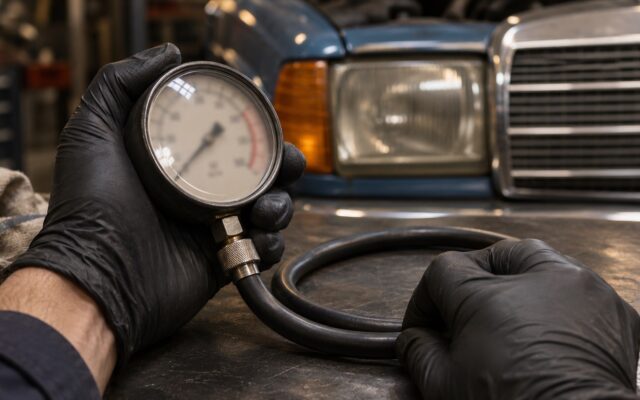
Bring the log, explain any leaks or changing exhaust symptoms, and give the exact engine number. A workshop can check the external condition, assess possible contamination and decide whether further testing is justified. Compression testing may help when there are other symptoms, but a compression reading by itself does not quantify oil consumption. Read our W123 diesel compression guide for the difference between measuring cylinder pressure and diagnosing a broader engine problem.
If you don’t already have supplies for tracking oil use, here are some useful options available on Amazon. I may earn a commission from purchases made through these links.
- Graduated oil measuring jug: A graduated jug lets you measure the exact amount of oil added instead of estimating from the bottle. Use its markings to record each top-up, then compare the total with the miles driven. That makes the consumption log far more useful to your mechanic.
- Automotive inspection flashlight: A bright inspection light helps you see wet oil around the engine and beneath accessible components. With the engine off and cool, illuminate the area from different angles. This can help distinguish an external leak from oil disappearing inside the engine.
- Maintenance logbook: A maintenance logbook keeps mileage, dates, dipstick readings and top-up quantities together. Record each addition under comparable checking conditions. Over time it reveals whether consumption is changing.
Which cars this source covers
The model survey in the factory engine scan identifies 240D 123.123 with engine 616.912, and naturally aspirated 300D, 300CD and 300TD with 617.912. Do not use the workshop tool instructions as a universal procedure for later turbocharged engines or other Mercedes models.
Factory reference: Mercedes-Benz workshop engine literature for OM615/616/617, model survey 0.8-005/1 and operation 00.4-130/1–2. General owner log advice is not presented as the factory measurement procedure.