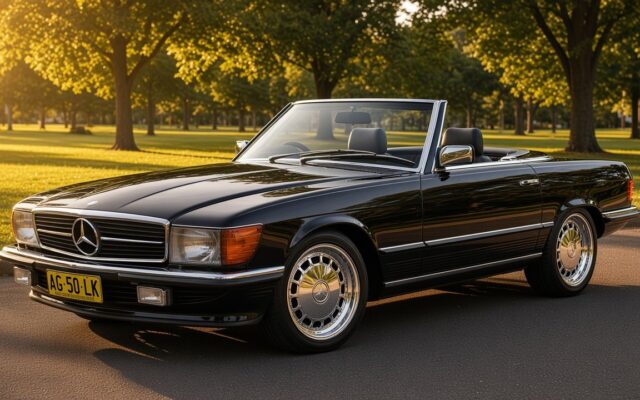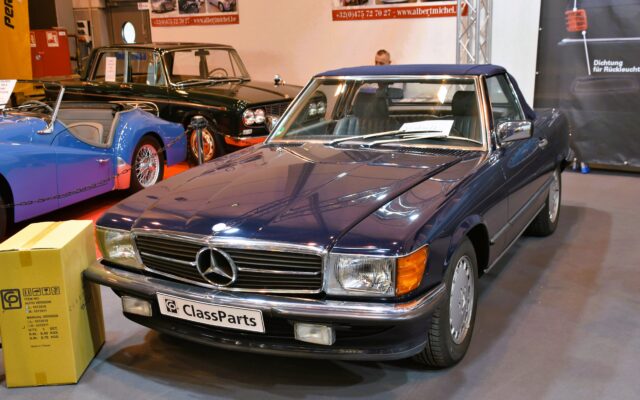
The 450SL is the R107 most Americans picture when they think “1970s Mercedes convertible”: chrome, a removable hardtop, and a V8 that idles like it has nowhere to be. It is also the model with the widest condition spread — from neglected bargains to carefully kept drivers that still make sense as weekend cars. This guide covers identity, years, the 350SL naming mess, ownership realities, and how I buy one.
Cross-links: models by year, values, buying checklist, common problems.
Years and badges
In the US, the 450SL covers the mid-1970s into 1980 before the 380SL arrives. Exact changeover dates belong on the data card and VIN, not on a Craigslist headline. The coupe sibling is the 450SLC (C107) — longer wheelbase, fixed roof, different market.
Early US advertising sometimes used 350SL while the engine was a 4.5-liter V8. That naming leftover still confuses buyers. If a seller says 350SL, ask for displacement, engine number, and the build sheet. European 350SL cars with smaller V8s are a different animal from a US 4.5 badged for marketing.
Engine, fuel, and transmission
US 450SLs use the iron-block M117 4.5 with Bosch K-Jetronic continuous injection. Most are automatics. Power is period-correct: easy highway torque, not modern on-ramp thrust. What ages out first is usually the fuel system rubber, accumulator, and vacuum accessories — not a grenaded crankshaft on a maintained engine.
Learn the injection basics in K-Jetronic on the R107 before you approve a “needs tune-up” asking price.
Body and bumper era
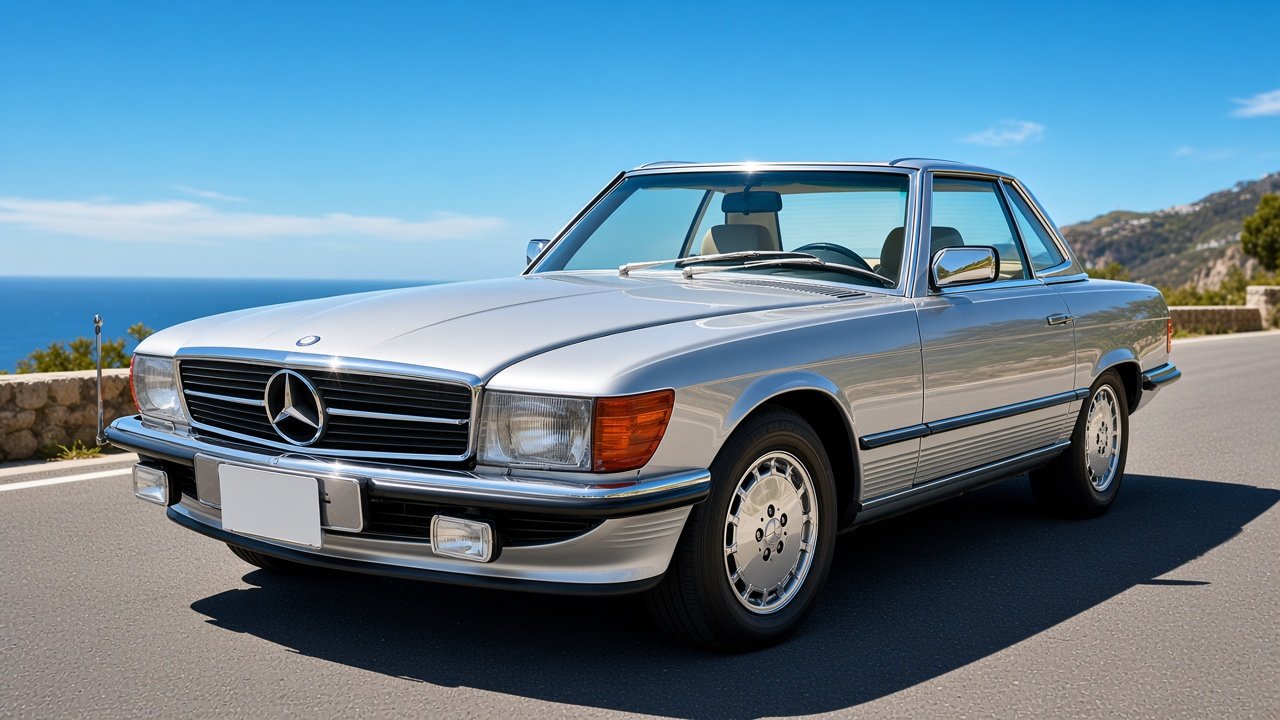
US cars wear the large aluminum 5-mph bumpers that define the look. Those bumpers hide steel mounts that rust. European cars with smaller bumpers look lighter up front and are not automatically rust-free. Paint quality varies wildly; panel fit around the hardtop and doors tells you more than shine under parking-lot lights.
What changed during the 450 years
Emissions equipment, interior fabrics, option packages, and minor trim evolved through the decade. For shopping, the meaningful splits are condition, rust, and documentation — not whether a brochure listed a slightly different clock. Still, matching options to the data card helps spot franken-cars.
Common problems specific to living with a 450
- Rust: same R107 map — bulkhead, sills, arches, trunk tray. Age means more years of drain neglect.
- Hot starts: classic K-Jet rest-pressure issues after a heat soak.
- Climate and locks: vacuum pods and pumps.
- Tops: hardtop seals and soft-top fabric from the disco era are tired unless replaced.
- Steering coupler: safety item on any of these.
Values and which 450 to chase
Excellent, documented cars bring money. Average drivers are plentiful, which caps prices — good for buyers, humbling for sellers who think every 450 is a collector unicorn. Color and originality help; solid metal helps more. See how much a 450SL is worth.
Buying tips I actually use
- Bulkhead and floors before chrome and Becker radios
- Cold start and hot restart — not one warm parking-lot loop
- PPI on a lift with someone who has seen 107s
- Soft-top and hardtop both present and sealing, or a price that funds what is missing
- Compare against 380 and 560 money — do not pay late-car prices for early-car work
Who the 450SL is for
Drivers who want the classic R107 silhouette and V8 character, who accept 1970s emissions manners, and who will fund sorting rather than chase a mythical “all original never touched” garage queen that somehow has perfect rubber. If you need ABS and an airbag, look at the 560SL instead.