As an Amazon Associate I earn from qualifying purchases.
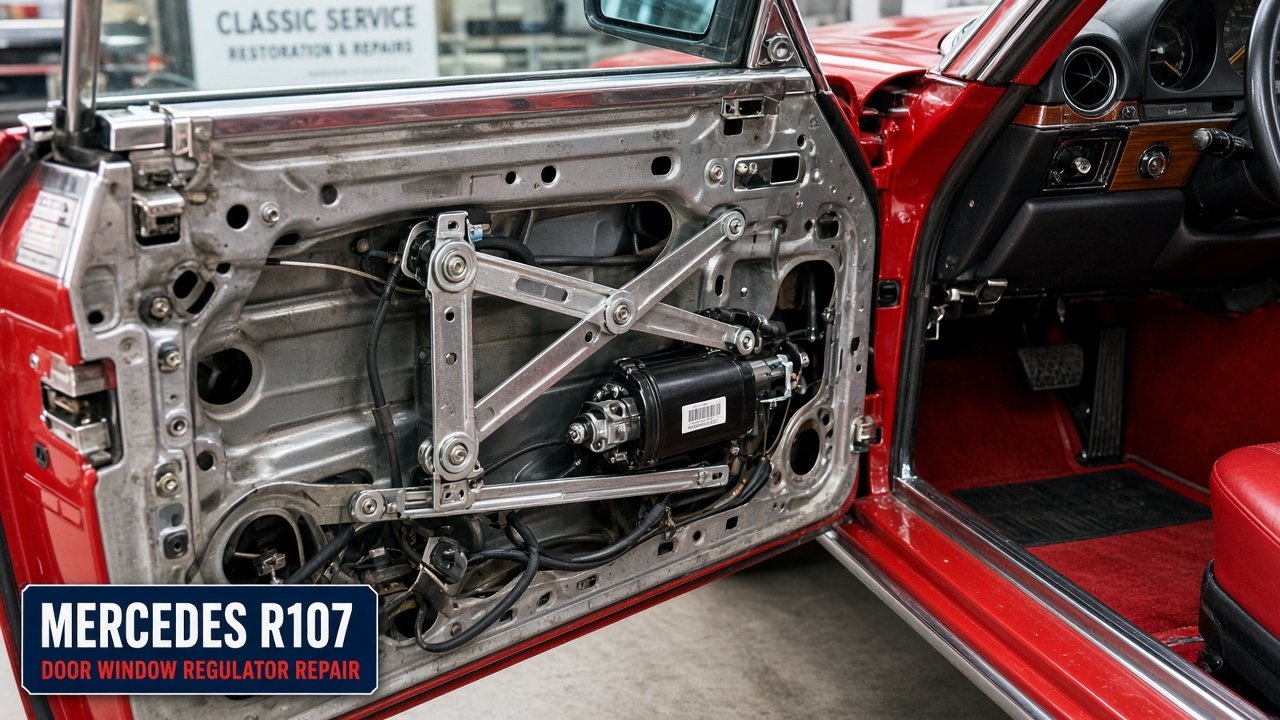
Slow or dead windows are motor, regulator, switch, or sticky channels — not always “needs a motor.”
Related: interior and door-related posts.
Diagnosis
Listen for motor hum without glass movement (regulator/cable). No hum: switch, power, or motor. Door panel removal needs patience; clips break once.
Lubrication and parts
Clean and lube channels; replace regulators with quality parts; test switches before condemning motors. Reassemble vapor barriers so doors do not grow wet footwell cousins.
Common mistakes
Skipping cold and hot tests, trusting verbal history without invoices, replacing parts before measuring, and ignoring rust while chasing mechanical gremlins. Photos from another market or year are not a parts catalog.
When to stop DIY
Stop when you lack the gauge, puller, or safe support the job needs — or when the first repair did not change the symptom. Pay for diagnosis with someone who sees R107s regularly.
Practical takeaway
Label screws and photograph connectors before the carpet of fasteners begins.
Shop notes and paperwork
Keep invoices, pressure readings, part numbers, and dated photos of the area before and after work. The next owner — or future you — will ask what was actually done. Verbal “we took care of it” evaporates at sale time.
Safety and scope
Use jack stands on solid ground, relieve fuel/coolant pressure before opening systems, and disconnect the battery when the procedure calls for it. If a step needs a specialty tool you do not own, rent it or hire it — improvising with the wrong lever is how fasteners and fingers break.
Verify against the factory manual for your engine and chassis. No invented personal car details here — use your plates, invoices, and measured symptoms.
Shop notes and paperwork
Safety and scope
If this topic intersects fuel, rust, or safety systems, fix the safety and leak paths before cosmetic or convenience items. That order saves money twice.